

Audio By Carbonatix
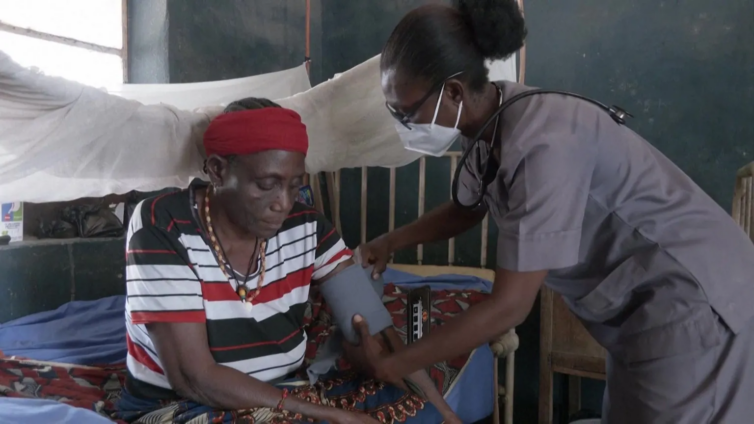
People affected by leprosy in Nigeria should be able to get hold of vital drugs to treat the disease for the first time in a year from this weekend, the World Health Organisation has said.
The country, which reports more than 2,000 new cases a year, ran out of supplies partly because drugs were held up after new regulations were introduced.
The WHO said it had asked Nigeria to briefly lift its new testing policy and it expects the drugs to arrive from India on Sunday.
Leprosy is curable with a combination of different antibiotics, but if left untreated, the patients' health can deteriorate with sores and nerve damage that cause deformities.
The treatment can last between six and 12 months.
But because of the lack of drugs in Nigeria, patients have been sent home from hospitals. As the drugs suppress transmission,n this increases the risk of the disease spreading.
Dr Samimu Msheliza, a public health expert and medical advisor at the Nigerian branch of the Leprosy Mission, highlighted the urgent need for medication.
"We have thousands of newly diagnosed leprosy patients across various cities who are just waiting for this drug," he told the BBC.
"The quicker we have [the drugs], the better, because currently these people are suffering, their transmission is ongoing because they are not being treated," Dr Msheliza said.
The Reuters news agency spoke to one woman at a hospital in Nasarawa state, who said her condition had got much worse since she was not able to get hold of the combination of drugs.
All Awwal Musa's fingers were clawed and her legs discharged pus. "Before last year, my wounds were getting healed but now they are getting worse. The pain is worse," Ms Musa is quoted as saying.
The nerve damage may be irreversible.
Nigeria's drug authority introduced new regulations for medicines aimed at tackling the importation of counterfeit and sub-standard drugs.
In recent years, several medicines have been recalled for failing to meet safety standards.
But the new measures have had an impact on the availability of crucial treatments, including those for leprosy.
Latest Stories
-
One seriously injured as four vehicles crash on Ofankor–Pokuase stretch days after fatal accident
3 minutes -
GES denies GH¢1,500 Free SHS payment directive, urges parents to ignore viral claim
2 hours -
The losses were necessary – Manteaw defends GoldBod’s costly push to win Ghana’s gold market
2 hours -
We are concerned about inflation outlook when it comes to MPC decisions – BoG Governor
2 hours -
GoldBod had to ‘pay more’ to beat Indians, Chinese in Ghana’s gold market – Manteaw
2 hours -
Gov’t pays GH¢10.8bn DDEP Coupon in full and on schedule
2 hours -
GCAA owes GMet over GH¢50m in statutory payments – Director-General
2 hours -
Accra Mall brings families together with back-to-school bonanza
3 hours -
GoldBod’s $1.7bn loss is worth it; forex gains have stabilised Ghana’s economy, Manteaw says
3 hours -
Pastor Mensa Otabil’s mother-in-law to be buried today
3 hours -
GoldBod losses: Why act like Ghana has never lost money on Gold? – Manteaw
3 hours -
Don’t credit GoldBod for Ghana’s macroeconomic stability – Bokpin
3 hours -
US lifts security restrictions on ships from Nigeria after 12 years
4 hours -
Oil edges up on uncertainty over exports through Hormuz
4 hours -
US judge allows Trump to end thousands of Ethiopians’ deportation protections
4 hours