

Audio By Carbonatix
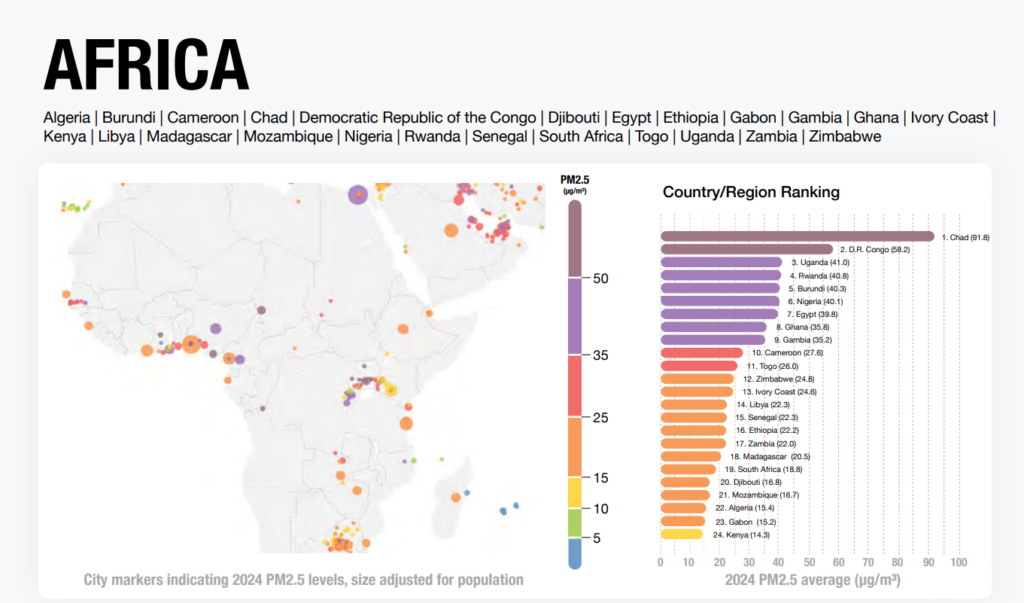
The latest 2024 World Air Quality Report has revealed alarming levels of pollution across Africa, with Ghana, Nigeria, Chad, and Rwanda ranking among the most polluted countries in the world.
The findings highlight a worsening air quality crisis that continues to endanger millions of lives.
Africa’s Pollution Crisis: A Data-Driven Disaster
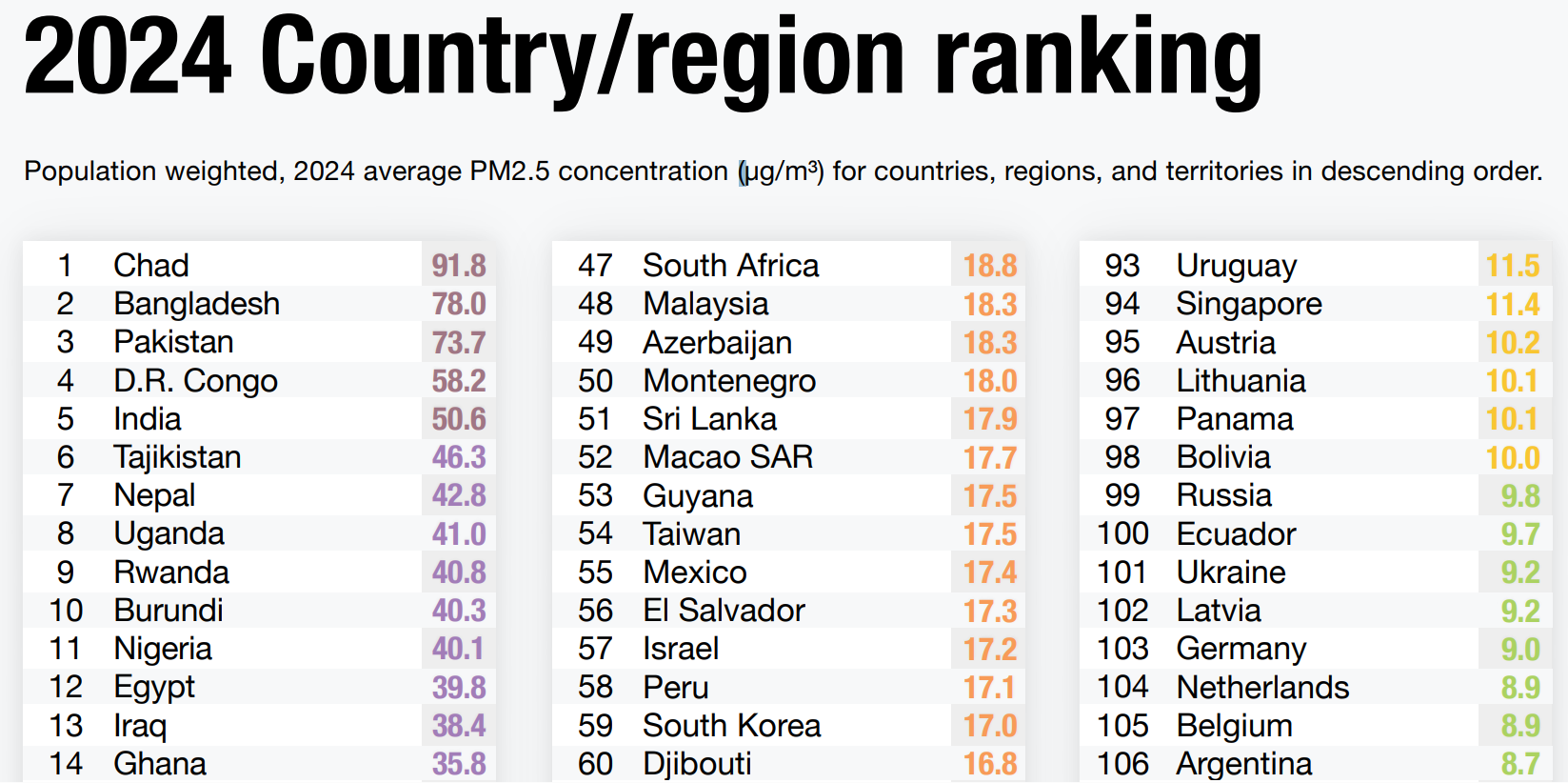
Topping the global list of the most polluted countries, Chad recorded a shocking PM2.5 concentration of 91.8 µg/m³, nearly 18 times above the World Health Organization's (WHO) recommended annual guideline of 5 µg/m³. Nigeria placed 11th with 40.1 µg/m³, Rwanda 9th with 40.8 µg/m³, while Ghana was ranked the 14th most polluted country globally, registering 35.8 µg/m³.
PM2.5 particles are some of the most dangerous pollutants, penetrating deep into the lungs and bloodstream, leading to severe respiratory and cardiovascular diseases. These microscopic pollutants are more than four times smaller than dust particles and over ten times thinner than human hair, making them nearly invisible yet highly toxic.
According to the University of Chicago’s AQLI data, air pollution now shortens lifespans in highly polluted areas by 2.7 years. In Ghana, WHO estimates in 2019 showed that 28,000 people die annually from air pollution. In 2021, air pollution caused 8.1 million deaths globally or roughly 22,192 deaths daily. Alarmingly, one child dies every minute due to air pollution. If no action is taken, this silent killer will continue claiming thousands more lives each year.
Ghana’s Growing Pollution Problem
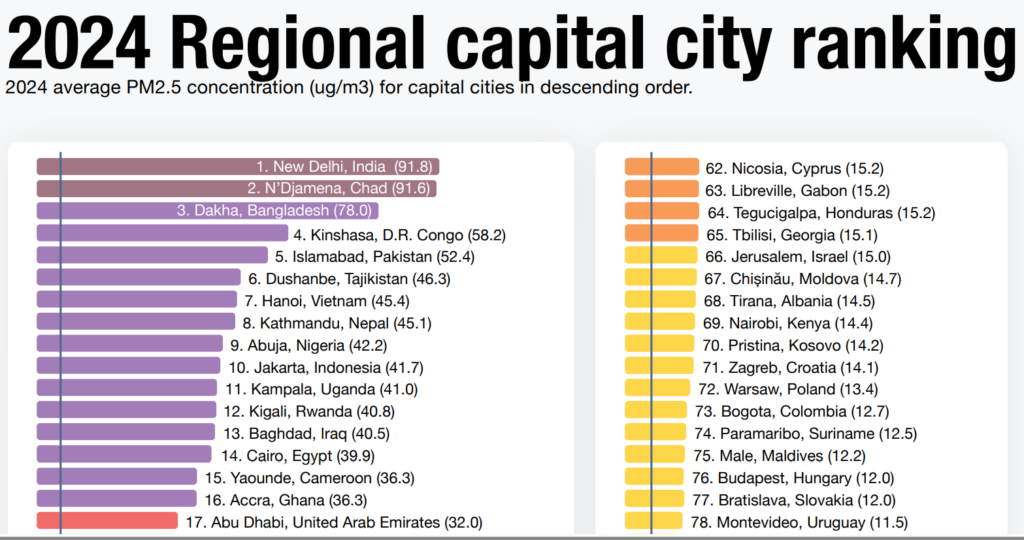
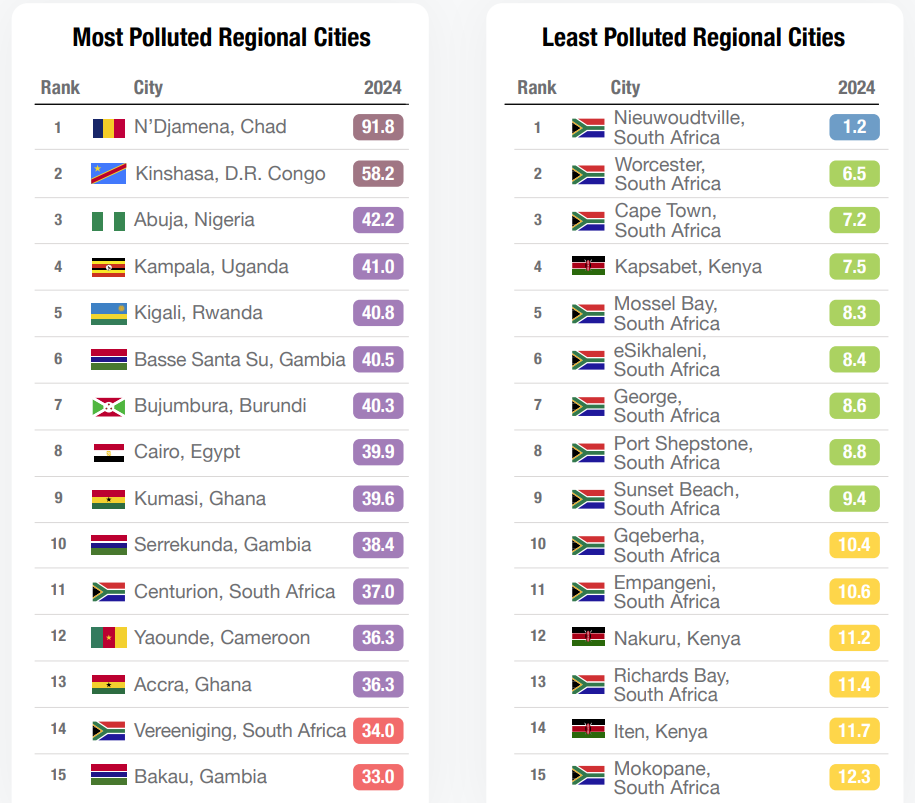
Ghana’s air pollution is now seven times higher than the WHO’s safe limit, reflecting a worrying trend of deteriorating air quality. The capital, Accra, was ranked the 16th most polluted capital city worldwide, with an annual PM2.5 level of 36.3 µg/m³. But in a shocking revelation, Kumasi, which is featuring for the first time in this report, surpassed Accra as the most polluted city in Ghana, recording 39.5 µg/m³.
Compared to previous years, Ghana’s pollution levels have seen a drastic rise:
- In 2022, Ghana with 30.2 µg/m³ ranked 27th most polluted country globally.
- In 2023, it jumped to 17th place, with PM2.5 levels rising to 33.2 µg/m³.
- In 2024, Ghana set a new record of 35.8 µg/m³, moving up to 14th place among the most polluted nations worldwide.
How Bad is Africa’s Air?
Africa continues to struggle with severe pollution and limited air quality monitoring. The 2024 report highlights:
- Five of the world’s top 10 most polluted countries are in Africa (Chad, D.R. Congo, Uganda, Rwanda, Nigeria).
- Only 24 out of 54 African countries reported air quality data due to a lack of monitoring infrastructure.
- 34% of African cities reported PM2.5 levels 3-5 times the WHO guideline, while 24% recorded levels 5-7 times higher.
- Lagos, Africa’s second-most populous city, was missing from the rankings due to insufficient data, raising concerns about data gaps in major urban centers.
Public Health Emergency: The Silent Killer in the Air
Air pollution in Ghana is not just an environmental issue—it is a national health crisis. WHO estimates in 2019 suggest that 28,000 Ghanaians die annually due to air pollution, equivalent to one death every 19 minutes. If this trend continues, at least 2,333 people will die every month due to toxic air exposure.
Meanwhile, Ghana’s air pollution crisis is accelerating at an alarming pace. In just two years, the country jumped from the 27th most polluted nation (2022) to the 14th (2024), with PM2.5 levels rising from 30.2 µg/m³ to a record 35.8 µg/m³—pushing millions into daily exposure to toxic air.
Exposure to PM2.5 pollutants has been linked to respiratory diseases, heart conditions, cognitive decline, and even premature death. The economic cost of this crisis is equally staggering. A report by the Clean Air Fund warns that without urgent action, air pollution in Ghana’s urban centers could cost the economy a crippling $137.8 billion by 2040.
Global Context: The Cleanest vs. Dirtiest Air
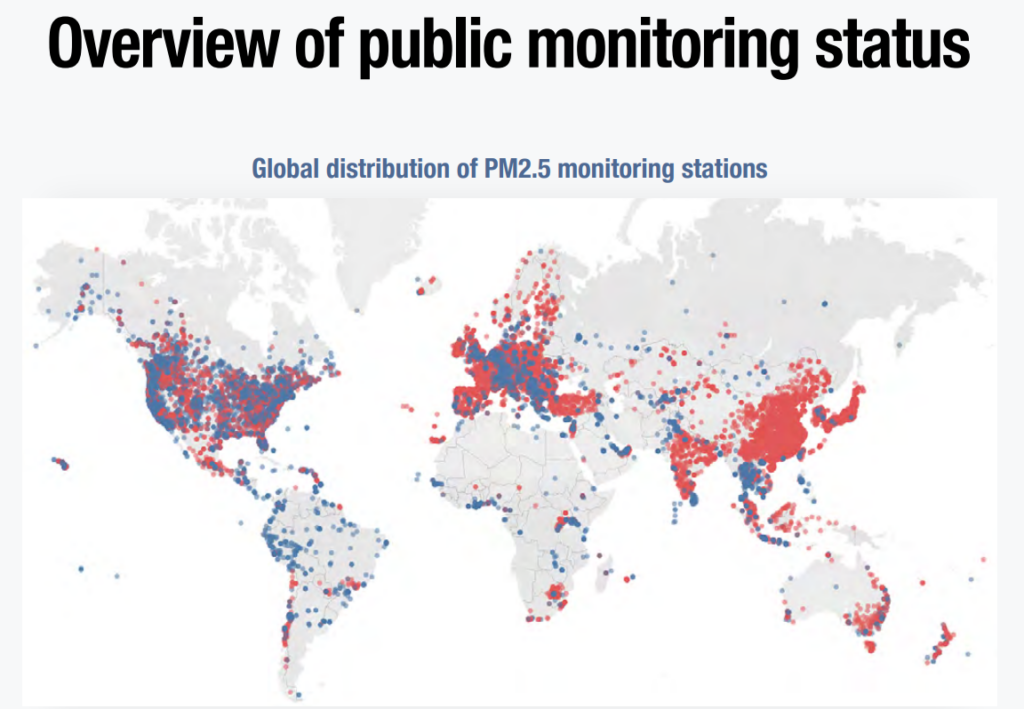
While only 17% of global cities meet the WHO air pollution guideline, some regions still manage to maintain relatively clean air.
The World’s Most Polluted Countries (2024 Rankings)
- Chad (91.8 µg/m³) – 18 times above WHO’s safe limit.
- Bangladesh (78.0 µg/m³) – 15 times higher.
- Pakistan (73.7 µg/m³) – 14 times higher.
- Democratic Republic of the Congo (58.2 µg/m³) – 11 times higher.
- India (50.6 µg/m³) – 10 times higher.
The World’s Cleanest Countries
Only seven countries met the WHO’s PM2.5 guideline in 2024:
- Australia, Bahamas, Barbados, Estonia, Grenada, Iceland, and New Zealand.
In Africa, Nieuwoudtville, South Africa (1.2 µg/m³) was the only city to meet WHO air quality standards.
What’s Driving Africa’s Air Pollution?
The IQAir report points to rapid urbanization, population growth, industrial emissions, and unregulated burning of waste as key factors worsening air quality across Africa. In Kinshasa, the PM2.5 level surged by 40% from the previous year, partly due to increased industrial activity and expanded data monitoring.
Meanwhile, non-governmental organizations (NGOs) now provide 67% of all air quality data in Africa, a massive increase from 42% in 2023, highlighting the need for stronger government-led air monitoring initiatives.
Will Ghana and Africa Take Action?
As Ghana’s air quality worsens, there is growing pressure on the government to enforce stricter environmental policies. Experts are calling for:
- Stronger vehicle emission regulations to reduce pollution from transport.
- Increased investment in renewable energy to cut reliance on fossil fuels.
- Expansion of air quality monitoring stations to provide more accurate data.
- Strict anti-burning policies to curb the impact of industrial and household emissions.
With Ghana now among the top 15 most polluted countries in the world, the time for action is now. If no urgent measures are taken, the air we breathe could become an even deadlier crisis in the years to come.
Latest Stories
-
More than 20 African countries fail WHO air pollution guideline in 2025 – AfriCAN 2026 Report
30 seconds -
PTA council demands technical review of 2026 BECE results
4 minutes -
Senegal, Cape Verde breathed unsafe air for more than 120 days in 2025 – AfriCAN 2026 Report
5 minutes -
AFCON 2027Q: Carlos Queiroz to ‘soon submit’ Black Stars squad
6 minutes -
KATH CEO praises Ghana Medical Trust Fund for its impact in just a year
6 minutes -
‘NPP should stop being hypocritical’ – Nukpenu challenges calls for GH¢49.7m evacuation procurement details
8 minutes -
Loans and advances increased by 39% to GH¢124.3bn in June 2026
10 minutes -
Private citizen sues Mahama over failure to replace Sophia Akuffo on Council of State
19 minutes -
Guinness Ghana DJ Awards 2026 opens public nominations
29 minutes -
Banking industry profit moderate to GH¢7.2bn in June 2026
37 minutes -
Evacuate to forestall any eventuality – GWL urges Weija residents ahead of spillage
38 minutes -
Gov’t repatriates Barosky from UK, offers psychosocial and financial support
38 minutes -
Jordan Ayew prioritised Europe over going to Saudi Arabia – Henry Asante Twum
44 minutes -
Tarkwa court jails man 15 years for defiling 14-year-old after posing as pastor
48 minutes -
Pragyia rider jailed three months for biting Community Police Assistant
57 minutes