

Audio By Carbonatix
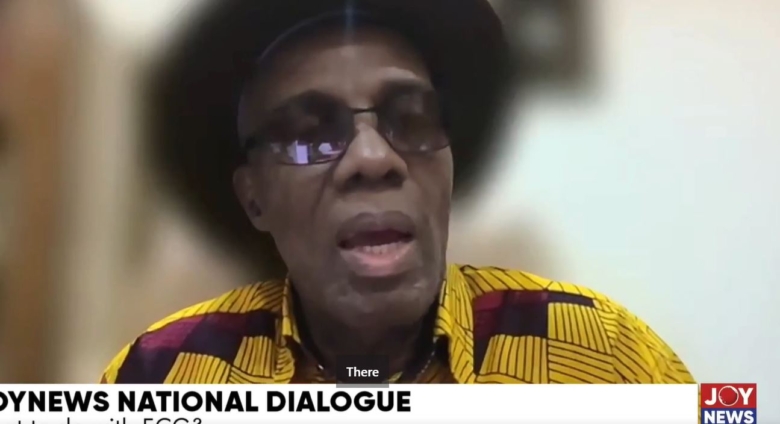
The chairman of the Technical Committee on the Privatisation of the Electricity Company of Ghana (ECG), Jabesh Amissah-Arthur, has advised Chief Executive Officers (CEOs) of public institutions to develop the courage and skills to withstand external political interference in their line of duty.
His remarks come amid growing concerns about the politicisation of state-owned enterprises in Ghana, including the energy sector, where political influence is often cited as a barrier to efficiency and sound decision-making.
Speaking at the JoyNews National Dialogue on Thursday, April 10, Mr Amissah-Arthur acknowledged that political interference in state institutions is inevitable but stressed that it is the responsibility of top management to protect their organisations from undue political pressure that could compromise their operations.
Read also: ECG was never at the table in terms of revenue – Dubik Mahama
He explained that the ability to minimise the negative impact of political influence is a key test of leadership, especially for CEOs in the public sector.
“A lot of people have talked about political interference, but what I will say is that political interference is everywhere, and it is the duty of top management to keep political interference to a minimum and away from it. If you are a CEO and you cannot protect the company from external influences that let it do things that it shouldn't do, then maybe you should ask yourself if you are in the right place," he noted.
Mr Amissah-Arthur noted that while leaders cannot outrightly ignore directives from political authorities, they must find ways to advise, negotiate, or propose alternative solutions that serve the best interests of the company and the country.
“You have to be able to point out to the person who is giving you the instruction that this will not work and will not be to the benefit of the organisation,” he said.
He urged public servants to always act in the best interest of the people of Ghana, adding that it is not enough to hide behind the excuse of “orders from above” to implement harmful policies.
According to Mr Amissah-Arthur, the real test of leadership lies in a CEO’s ability to protect institutional integrity while finding innovative ways to meet government expectations without compromising the organization’s values or sustainability.
Latest Stories
-
DVLA to expand mobile services to underserved communities in Ghana’s Eastern Corridor of the Northern Region
7 minutes -
GUTA urges GPHA to act swiftly to end Tema Port congestion to avert rising business costs
7 minutes -
Port congestion could undermine 24-hour economy policy – GUTA
7 minutes -
NSA opens three-day window to resolve national service biodata mismatches
17 minutes -
Abu Jinapor highlights increased gold exports after Domestic Gold Purchase Programme
21 minutes -
NPP UK branch calls for independent audit into gold purchasing operations and parliamentary probe
55 minutes -
Zanetor Agyeman-Rawlings pledges decisive action on climate change, galamsey and environmental degradation
59 minutes -
Bawumia was brainchild behind Domestic Gold Purchase Programme – Samuel Jinapor
1 hour -
Fuel prices set to go up from September 1, Petrol to sell at GHC 16.69 and Diesel, GHC 17.90 – COMAC
1 hour -
Our World Our People withdrawn due to curriculum duplication, not politics – Adutwum’s spokesperson
1 hour -
GANRAP is essentially a rebranding of Domestic Gold Purchase Programme – Abu Jinapor
1 hour -
I am tired of being in opposition, my goal is to win in 2028 – Boakye Agyarko
1 hour -
Ghana’s road maintenance funding gap deepens as only 37% of needs met – World Bank
1 hour -
Roland Europe Group appoints Opoku Sanaa as Head of Sales, Middle East & Africa
1 hour -
Sammyflex TV’s Roland Amartey girds up for 2026 Ghana Music Awards UK coverage
2 hours