

Audio By Carbonatix
As Ghana strides boldly toward a digital future, it is important to recognise that the foundation of our nation's digital transformation lies in the quality of education we offer at the basic level.
Addressing a critical gap that threatens the very Success of our digitalisation policy: the lack of computers in our basic schools, particularly those in rural and poor communities is very crucial.
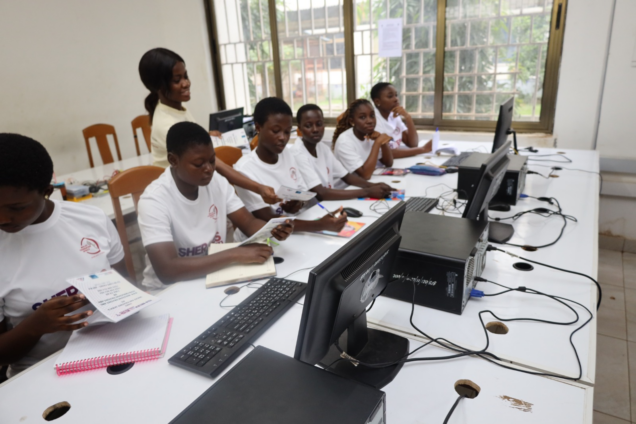
Today, ICT (Information and Communication Technology) is a compulsory subject across all basic schools in Ghana. However, the painful reality is that most pupils are being taught ICT concepts without ever seeing, let alone using, a real computer.
In many rural and underserved communities, ICT education is reduced to theoretical teaching students memorise the parts of a computer without experiencing its operations firsthand.
This situation is alarming and must be addressed with urgency and intentionality.
How can we genuinely prepare our children for the 21st-century global economy if we continue to deprive them of basic digital tools and experiences?
Teaching ICT without computers is like teaching swimming without water; it simply defeats the purpose.
The digital divide between urban and rural schools is widening, and unless we act decisively, we risk leaving an entire generation behind.
I am therefore proposing, and strongly appealing to the Minister of Education, Haruna Iddrisu and the entire government, to prioritise the provision of computers and laptops for basic schools across the country.

Special attention must be given to rural and economically disadvantaged communities, ensuring that no child is left behind because of their location or economic status.
We need a national intervention program to equip every circuit, district, and community with fully functioning computer laboratories.
This initiative must not be selective; it must cover everyone in the country to fulfill the objectives of our national digitalisation policy.
Equally important is the need for specialised and qualified ICT teachers at the basic school level. Training teachers to be confident, skilled, and innovative in delivering ICT lessons is fundamental.
Without well-prepared educators, even the best facilities will fall short of their intended impact.
Government, in partnership with teacher training colleges and universities, should design specialised ICT education programs to ensure that every basic school has at least one trained ICT teacher.
Capacity-building programs, continuous professional development workshops, and incentive packages must also be incorporated to attract and retain talent in this critical field.
If we commit ourselves to this vision, the results will be transformative. Our high school graduates will no longer be basic computer illiterates but young people equipped with essential digital skills aligned with 21st-century competencies.
They will be ready to innovate, create, and compete in a world increasingly driven by technology.
The benefits extend beyond individual success; they will accelerate Ghana's socio-economic development, strengthen our global competitiveness, and foster a new era of innovation and entrepreneurship.
It is time for decisive action. Ghana's digitalisation journey must start from the roots with our children. Let us ensure that every basic schoolchild, irrespective of their background, has access to the tools and training necessary to thrive in a digital world.
The Writer, Dr Patrick Essien, is a Lecturer at the University of Cape Coast, Founder of Molex Foundation Africa and an expert in Technical and Vocational Education and Training (TVET), and STEM Education.
Latest Stories
-
La Beach demolition: Senyo Hosi condemns lack of consultation
4 seconds -
Russian glide bomb attack on Zaporizhzhia kills at least 15 people
15 minutes -
Jinapor warns underperforming energy sector CEOs of consequences, says no protection for failure
16 minutes -
Fire destroys head of tipper truck on Lower Volta Bridge
21 minutes -
Palmer signs new Chelsea contract until 2034
22 minutes -
World Cup visa scandal: Mahama will act on corruption allegations – Abass Nurudeen
24 minutes -
Abass Nurudeen accuses Minority of ‘scandal scavenging’ over World Cup visa controversy
26 minutes -
US Embassy recognised NSA, GFA and GTA as separate entities for visa applications – Sports Minister’s aide
32 minutes -
Only 30% of Ghanaian teachers satisfied with their jobs – CAPCOE data reveals
43 minutes -
Communities affected by construction of Akosombo Dam urge government to speed up compensation process
1 hour -
World Cup visa scandal: Sports Ministry not shielding anyone – Sports Minister’s special aide
1 hour -
World Cup visa scandal: Over 30 people misrepresented as GTA board members to US Embassy – Vincent Assafuah alleges
1 hour -
Fire destroys wooden structure near Yesu Mo Villa at Bush Road
1 hour -
NDC threatens sanctions over oversized campaign posters, gives aspirants 5 days to comply
2 hours -
Star Oil paid GH¢2.7bn in taxes, levies in nine months of 2026
3 hours