

Audio By Carbonatix
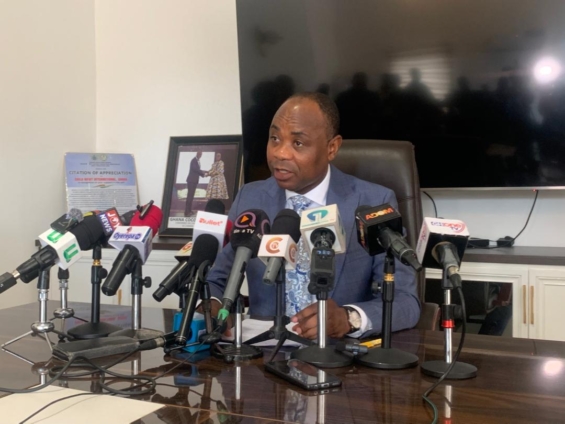
The Executive Director of Child Rights International, Bright Appiah, has called on the government to adhere to the appropriate protocols and procedures in addressing the situation of street children, most of whom are foreign nationals.
He said this formed part of the State’s obligations under social protection and should not be overlooked in the ongoing repatriation efforts.
Speaking at a news conference in Accra, Mr Appiah raised concerns over the methods employed by the Ghana Immigration Service during its recent operations to evacuate beggars from key hotspots in the capital, including Kaneshie, Abossey Okai and Kwame Nkrumah Circle.
He noted that most of the individuals involved had entered Ghana through the northern sector and Aflao in the Volta Region and were quickly absorbed into informal networks that facilitated street begging.
“They find accommodation, and the next morning, they’re out on the streets. Buses pick them up and take them to various traffic lights to beg. At the end of the day, they return to those who organised this for them. This implies that, in effect, we are allowing these children to be here,” he said.
Mr Appiah said whether the children were in Ghana by choice or coercion, the State had a duty to provide them with the appropriate accommodation and care, in line with national and international child protection laws.
“This isn’t the first time the state has attempted repatriation. We saw similar efforts in 2022, but the focus needs to shift towards the children, who constitute nearly 60 per cent of those rescued from the streets,” he stated.
He cited the United Nations Convention on the Rights of the Child and Ghana’s Children’s Act, emphasising the need for due diligence and humane treatment during such operations.
The Child Rights International Executive Director questioned the capacity of the Ghana Immigration Service to manage child protection responsibilities, suggesting that such functions be led by institutions like the Department of Social Welfare.
He called for the collection of biodata, thorough needs assessments, and detailed documentation on the rescued individuals, particularly the children, to ensure that interventions were targeted and effective.
“The state must prioritise the best interests of the child, regardless of nationality, and engage in bilateral discussions with the countries of origin to develop sustainable and respectful solutions,” he said.
The Government, Mr Appiah noted, must review its current approach to avoid legal challenges from affected individuals or human rights organisations in the future.
Latest Stories
-
Lekzy DeComic to feature four generations of comedians on upcoming show
21 minutes -
Xhaka under investigation over Covid-19 certificate
39 minutes -
FAW chief questions Infantino’s Fifa reform claims
50 minutes -
La Liga chief dismisses Real’s ref conspiracy claims
51 minutes -
GMA rejects claims its vessel monitoring system is ineffective
1 hour -
I was close to joining Liverpool in 2016 – Mbappe
1 hour -
Ministry of Sports and Recreation holds national validation workshop on National Sports Policy Draft
1 hour -
‘Do you want me to be happy with this poor performance?’ – Bono East Minister fumes over Kintampo market project with less than 1% work done
1 hour -
London screening honours Nkrumah and 103 years of Ghana cinema
1 hour -
Founder’s Day: Is Nkrumah’s glory fading? – Nkrumah’s iconic fountain at Circle runs dry
1 hour -
GHS calls for stronger systems to ensure safe care for NCD patients
1 hour -
Kufuor calls for Africa’s resources and youthful population to be transformed into opportunities
2 hours -
Mahama administration not clamping down on free speech – Shamima Muslim
2 hours -
Ghana TVET Service, UNESCO, KPMG, Microsoft to train 100,000 facilitators in AI
2 hours -
Kejetia traders demand controls as shop owners resell spaces at inflated prices
2 hours