

Audio By Carbonatix
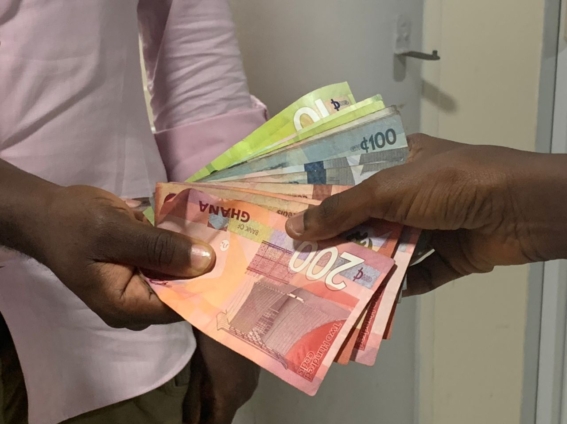
A new report released by the Ghana Statistical Service (GSS) has revealed that 18.4% of Ghanaians who interacted with public officials in 2024 paid bribes mostly in the form of cash to access essential services.
The findings, part of GSS’s latest report on governance, exposed the persistent nature of corruption in public institutions.
Titled “Governance Series Wave 1 Report by Ghana Statistical Service”, the report highlighted widespread dissatisfaction with citizen engagement in governance, with 70% of respondents saying the current system offers little or no space for the public to influence decision-making.
Bribery was more prevalent among men, who accounted for 68.3% of those who admitted to giving gifts or money to public officials, compared to 31.7% among women.
Urban residents were also more likely to pay bribes, representing 64.3% of reported cases, as opposed to 35.7% among rural dwellers.
Persons living with disabilities were not exempt from the trend. An estimated 21.1% reported paying bribes, with those having physical impairments recording the highest rate at 40.1%, followed by individuals with visual impairments at 32.5%.
At the regional level, Greater Accra recorded the highest incidence of bribery at 22.0%, closely followed by the Ashanti Region with 18.1%.
In stark contrast, the Savannah and North East regions reported the lowest rates, at just 1.0% and 1.1% respectively.
The Head of Social Statistics at the GSS, Omar Seidu, emphasized the urgent need for structural reforms and stronger anti-corruption measures to rebuild public trust in state institutions.
"The data points to a worrying disconnect between citizens and the institutions meant to serve them. Reducing corruption is not just a legal obligation it’s a social imperative," Seidu stated.
The GSS report serves as a critical tool for policymakers, civil society, and the general public in the fight against corruption and in efforts to create a more inclusive and accountable governance system in Ghana.
Latest Stories
-
Mahama’s proposed airline looks to South America, Caribbean as Ghana confronts mounting drug trafficking cases
5 minutes -
5% progress on Suame Interchange Phase One inadequate – Roads Minister tasks contractor to speed up work
8 minutes -
Photos: Vice President joins GAAS Awards to celebrate outstanding women leaders
9 minutes -
OSP vs Ken Ofori-Atta, SML and others: Court gives OSP four more weeks to serve Ofori-Atta with summons
11 minutes -
High Commission sends caution to Ghanaians in South Africa ahead of planned protests
13 minutes -
Okai Mintah outlines vision for NDC Youth Wing as he engages MMDCEs
19 minutes -
Mahama Ayariga leads renewed push for stronger local governance through partnerships
23 minutes -
NDC youth organiser aspirant Okai Mintah consults MMDCEs ahead of elections
24 minutes -
PHOTOS: Ayikuma Methodist Basic School wins National Juniors Challenge
26 minutes -
Silence has entered our homes : Salomey Awiti Bafoh and the chilling effect of free expression in Ghana
27 minutes -
UG Pro-VC calls for stronger research funding to curb brain drain
29 minutes -
Woman in critical condition after shooting at funeral grounds in Yeji
31 minutes -
Breast Cancer awareness must lead to action – Deputy Health Minister
33 minutes -
UK identified as leading destination for Ghana’s illicit cannabis exports – Report
35 minutes -
Drug money allegedly finances Ghana’s political parties and real estate – Global Organised Crime Index
40 minutes