

Audio By Carbonatix
Plan International Ghana has urged journalists to move beyond sensational headlines and political propaganda and embrace responsible, rights-based reporting on children, girls and vulnerable communities.
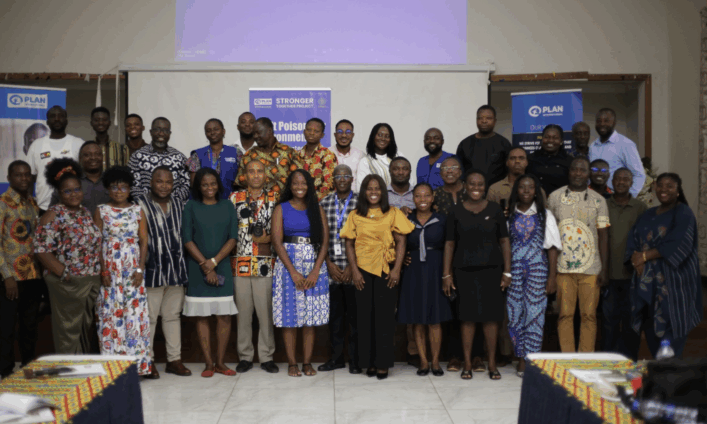
At the opening of a three-day media training on gender and children in Koforidua on Monday, Mr Eric Ayaba, the Head of Programmes and Influencing at Plan International Ghana, said although there were countless untold stories about children and girls across the country, many media practitioners often prioritised political and sensational narratives over development and rights issues.
It was on the theme: “Journalism with Purpose: Reporting Responsibly on Children, Gender, Equity and Vulnerable Communities,” held at the Eastern Premier Hotel in Koforidua.
“Telling the story of children and girls is in itself a development issue. It is also an issue of rights for people to know,” he said.
He expressed concern over reportage that perpetuated stereotyping and victim-blaming, particularly in cases of sexual and gender-based violence.
“The moment you begin to blame the victim, you are almost cutting off the most important information needed to tell the truth about the story,” Mr Ayaba stated.
He urged journalists to uphold the “do no harm” principle, stressing that reportage must not endanger or retraumatise children and vulnerable persons.
Mr Ayaba underscored the importance of informed and ongoing consent, noting that consent could be withdrawn at any time. He emphasised safeguarding anonymity to protect sources from further harm.
“As journalists, you are the bridge between reality and public perception. The goal is not just to be better reporters, but responsible reporters,” he said, adding that professional competence must go hand in hand with ethical responsibility.
He noted that Plan International Ghana had, over the past three years, consistently engaged the media to build capacity in gender-transformative reporting and would continue to invest in the partnership if it yielded measurable outcomes.
Plan International, founded in 1937, is a global humanitarian and development organisation working to advance children’s rights and equality for girls.
In Ghana, the organisation implements programmes focused on education, child protection, youth empowerment, sexual and reproductive health and rights, and gender equality.
Its collaboration with the media forms part of a broader influencing strategy to shape public discourse and policies affecting children and marginalised groups.
Ms Theodora Asare, Project Manager of the Renewed Women’s Voice and Leadership (RWVL) Ghana Project, highlighted structural inequalities and limited access to resources as persistent barriers to gender equality.
She said the project, funded by Global Affairs Canada with support from Plan International Canada, aimed to strengthen the capacity of 120 local, regional and national women’s rights organisations, youth-led groups and human rights defenders between March 2025 and December 2031.
With an allocation of about 1.9 million dollars, more than half of which would go directly to grantees, the project would provide flexible funding, advocacy support and research-based interventions to drive legal and social change.
“We want to enhance organisational sustainability. If your organisation is not properly structured, you cannot mobilise resources to serve women and girls,” Ms Asare said.
The project is being implemented in partnership with the Network for Human Rights in Ghana and AfriYan Ghana to support both established and emerging organisations, particularly those representing structurally excluded groups.
Ms Asare noted that strengthening feminist and intersectional approaches, promoting transparency and accountability, and investing in collective care and well-being were central to the initiative.
She emphasised the media’s role in amplifying research findings and policy advocacy efforts, stating that evidence-based reporting was critical to advancing gender equality and influencing reforms.
Ms Regina Asamoah, an award-winning journalist and communications specialist, highlighted practical safeguarding measures, including disabling geolocation features on mobile devices when covering sensitive stories in communities.
She advised journalists to obtain consent before taking photographs or videos and to use inclusive language, replacing terms such as “beneficiaries” with “participants” to avoid reinforcing top-down narratives.
Ms Asamoah also outlined several ongoing initiatives under Plan International Ghana, including education, digital skills, youth empowerment and humanitarian interventions, urging journalists to explore development-focused angles in their coverage.
The training forms part of Plan International Ghana’s broader commitment to promoting ethical journalism that prioritising dignity over headlines, safety over hate and development over propaganda.
Participants are expected to leave the workshop with strengthened skills in gender-transformative reporting, safeguarding and rights-based storytelling to ensure media coverage contributed positively to national development and the protection of children and vulnerable populations.
Latest Stories
-
IMMILAC president recounts personal losses as security women lead breast cancer awareness campaign in Wa
2 minutes -
University of Ghana postpones October 12 reopening as GAUA strike persists
16 minutes -
Bahass Foundation launches vocational skills training to support mental health recovery in Wa
48 minutes -
NPP orders parliamentary aspirants and their supporters to suspend campaign activities
1 hour -
Techiman unites against child marriage: Joy Impact Makers Awardee leads charge on International Day of the Girl Child
2 hours -
Ghana Psychological Association calls for greater involvement of people with lived experience in mental health care
3 hours -
Ablakwa says Ghana could evacuate more citizens from South Africa if the situation worsens
3 hours -
Violence against girls must be tackled through individual responsibility – Gender advocate
3 hours -
Ghana’s BRICS bid must be guided by national interest – International Affairs Analyst
3 hours -
Journalists look back on a decade of breast cancer reporting in Ghana
4 hours -
President Mahama ends Resetting Ghana tour of Ahafo Region
6 hours -
African negotiators seek delivery of climate commitments at COP31
6 hours -
BoG develops AI rules for financial sector
6 hours -
‘Big Push’: Government assures contractors of prompt payments
6 hours -
Court fines miner for breaking into gold buying shop
6 hours