

Audio By Carbonatix
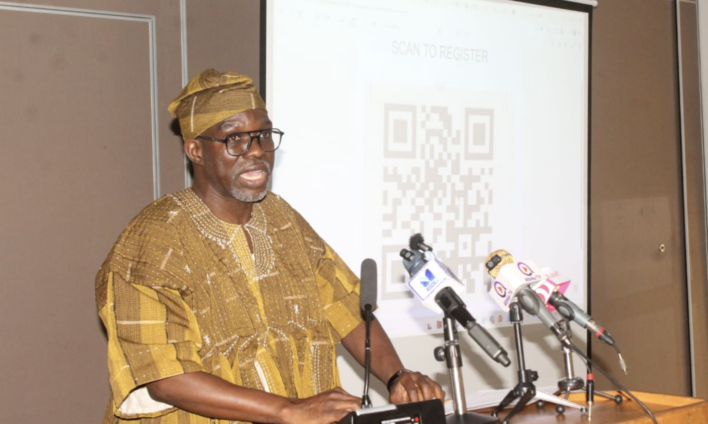
Dr Gameli Kewuribe Hoedoafia, Executive Secretary of the Inter-Ministerial Coordinating Committee on Decentralisation (IMCCoD), has urged the media to intensify its watchdog and public education roles to strengthen accountability and citizen participation in Ghana’s decentralisation reforms.
He said the media remained a critical partner in promoting transparency and informed public engagement as the Government prepared to implement the new National Decentralisation Policy and Strategic Framework (NDPS) 2026–2030.
“The media acquires a very strategic position in our governance ecosystem. It is the essential bridge between government and citizens, reinforcing diagonal accountability and enabling informed public dialogue,” Dr Hoedoafia said.
He made the call at a Sensitisation and Policy Orientation Workshop on Decentralisation and Local Governance for editorial heads and editors in Accra on Tuesday.
The workshop sought to deepen the media’s understanding of the NDPS 2026–2030 and strengthen its role in making decentralisation beneficial to citizens.
The policy framework is anchored on six thematic areas: political, administrative and fiscal decentralisation, decentralised planning, local economic development and popular participation, alongside strengthened accountability systems and inclusive governance.
Its implementation would involve Parliament, Ministries, Departments and Agencies, Metropolitan, Municipal and District Assemblies (MMDAs), traditional authorities, civil society organisations, development partners, the private sector and citizens.
Dr Hoedoafia said the new framework reflected a renewed national commitment to deepen democratic decentralisation, strengthen accountable public service delivery and accelerate local development.
He said the policy sought to build “a transformed and inclusive local governance system that empowers communities while ensuring equitable and responsive service delivery.”
Strong local governance systems remained the foundation of inclusive development and democratic participation, he emphasised.
“Decentralisation was anchored on the principle of bringing governance closer to the people,” he noted, adding that effective institutions must be efficient, accountable, participatory and responsive to citizens’ needs.
Dr Hoedoafia said the success of the reforms would depend on effective communication, civic education and sustained public engagement.
“For decentralisation reforms to succeed, they must be understood, owned and supported by citizens,” he said.
He, therefore, urged journalists and editors to place greater emphasis on reporting issues at the district and community levels instead of focusing mainly on national-level officials.
He noted that many local governance challenges, including sanitation and service delivery, fell within the mandate of MMDAs and should be interrogated at that level.
“If implementation takes place at the local level and we fail to question the people responsible there, then we are losing something important,” he stated.
Dr Hoedoafia said the IMCCoD had institutionalised engagement with the media through journalism awards and sponsorship initiatives to encourage sustained coverage of decentralisation issues.
Dr Esther Ofei Aboagye, a Member of the IMCC Technical Committee, who presented an overview of the new policy, described the framework as a continuation of more than three decades of local governance reforms since the introduction of the district assembly system in 1988.
She said the NDPS 2026–2030 was developed following extensive consultations in 2025 after the expiration of the previous framework and was shaped by emerging governance, economic and technological challenges.
Dr Aboagye said the policy aimed to “reset democratic decentralisation for accountable public service delivery and accelerated local level development.”
She explained that the framework would strengthen citizen participation, inclusiveness and accountability under political decentralisation.
She observed that voter turnout in district-level elections had remained around 35 per cent, requiring renewed civic engagement strategies.
“We want to strengthen citizens’ participation. Citizens are not just consultees; they are co-creators of governance,” she said.
Dr Aboagye said the policy also sought to improve administrative decentralisation through integrated service delivery, enhanced human resource capacity and digital literacy among local government staff.
Fiscal decentralisation, she noted, would prioritise improved revenue mobilisation and greater financial autonomy for local assemblies.
“Funds must follow functions,” she said, adding that effective service delivery could not be achieved without adequate resourcing of local authorities.
On local economic development, Dr Aboagye said the policy promoted district-level job creation, climate-resilient livelihoods and alignment with Ghana’s emerging 24-hour economy agenda.
She also highlighted technology, ethics, social inclusion and mindset change as cross-cutting priorities, noting that digital platforms, dashboards and feedback systems would improve citizen engagement and transparency.
Dr Aboagye called for stronger collaboration with the media to simplify policy and budget information, amplify citizens’ voices, counter misinformation and promote accountability at the local level.
Some participants asked questions to deepen their understanding on the issues and expressed their commitment to support the national agenda.
Latest Stories
-
The 7-foot giant of Ngleshie Amanfro: Seven-foot Ghanaian Ephraim Saawa dreams of joining the national basketball team
20 minutes -
Government promises support for Kumasi Central Market fire victims
27 minutes -
Vibes The Movie: Big Ghun’s Ghanaian film earns five nominations at 2026 REFFA
57 minutes -
MamaCare CEO warns unresolved conflicts among health workers could undermine maternal and neonatal care
1 hour -
Health professionals urged to translate medical knowledge into practice to save mothers
1 hour -
Conflicts among care providers linked to maternal, neonatal deaths – Expert
3 hours -
GIS marks 10th TIME conference, champions improved teaching practices
3 hours -
BRICS Or Balance? What Ghana’s bid really means
4 hours -
GPRTU wants full TRAFFITECH-GH implementation to start in 2027
4 hours -
Mahama announces plans to import electric wheelchairs for PWDs
4 hours -
KGL U17 Colts 2026: Western beat Prempeh Elite Academy to set up final final with Greater Accra Region
4 hours -
Late Solanke strike salvages 10-man Spurs draw at Man United
4 hours -
Gender Ministry to monitor welfare of Nana Akua Addo’s children amid domestic violence case
5 hours -
Benedict Okyere Yeboah: Ghana’s football problem goes beyond sacking a coach
5 hours -
GPL 2026/27: Darkwah Wiafe’s winner sees All Blacks beat Kotoko
5 hours