

Audio By Carbonatix
The United States has imposed sanctions on a senior Tanzanian police official over his alleged involvement in the torture and sexual assault of East African rights activists. In a statement released late on Thursday, US Secretary of State Marco Rubio announced the designation of Faustine Jackson Mafwele. Rubio stated the decision was based on "credible information that he was involved in gross violations of human rights."
Mafwele serves as Tanzania's senior assistant commissioner of police. He is the first senior government official under President Samia Suluhu Hassan's administration to face foreign sanctions. The formal designation bars Mafwele from entering the United States, marking a sharp shift in Washington’s approach to the East African nation.
Tanzania's Foreign Affairs Minister, Mahmoud Thabit Kombo, told the media that the government had yet to receive the formal designation. The Tanzanian police have not responded to requests for comment.
Activists Detail Accounts of Detention and Abuse
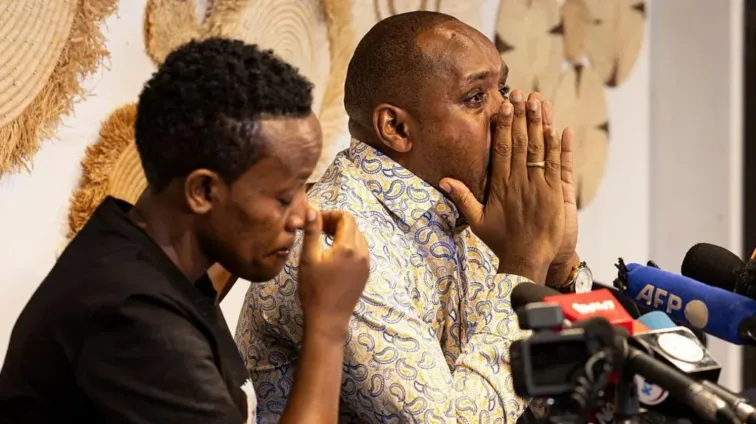
The sanctions stem from the detention of Kenyan activist Boniface Mwangi and Ugandan activist Agather Atuhaire in May last year. The two activists had travelled to Tanzania to observe the trial of opposition leader Tundu Lissu. They were arrested, detained incommunicado, and later forcibly deported. They alleged that they were tortured by Mafwele while in detention before being abandoned near the Kenya–Tanzania border.
Secretary Rubio confirmed the administration's stance on the incident in his statement. Rubio said that "one year ago, members of the (Tanzanian police) detained, tortured, and sexually assaulted Ugandan activist Agather Atuhaire and Kenyan activist Boniface Mwangi, who were in Dar es Salaam to observe the trial of opposition leader Tundu Lissu."
The survivors previously detailed their experiences, describing a harrowing ordeal where they found themselves struggling to be alive. Mwangi alleged that he was stripped naked, hung upside down, beaten on his feet, and sexually assaulted in detention. Atuhaire also said she was raped during her detention. Tanzanian police at the time dismissed the torture allegations, describing the activists' accounts as "opinions" and "hearsay."
Media and Rights Groups Document State Fear
Amnesty International previously called for an urgent investigation into what it described as the arbitrary arrest, torture, incommunicado detention, and forcible deportation of the two activists. Human Rights Watch also cited the case in this year's report on Tanzania, pointing to a broader crackdown on opposition figures, activists, and free expression.
The allegations gained wider attention through international broadcasting. In February, BBC Africa Eye released a documentary, Tanzania's State of Fear, on a wave of kidnappings in Tanzania. In the documentary, survivors, including Atuhaire and Mwangi, named Mafwele as the main perpetrator. A separate abduction survivor interviewed for the project noted that a bullet went through my skull during their encounter with security personnel. Mafwele did not comment on the allegations at the time.
Assistant Secretary of State for Democracy, Human Rights, and Labour Riley Barnes addressed the diplomatic response to the documented abuses. Barnes said the US was "taking action to promote accountability for this heinous act."
Election Violence and Rising Death Tolls
The sanctions come as Tanzania continues to investigate reports of political repression and abuses surrounding the general election held last October. President Samia was declared the winner of the poll with 98% of the vote in initial tallies, though final state declarations placed her full-term victory margin at 97%. The opposition described the outcome as a "mockery" of democracy after her main challengers were excluded.
A commission Hassan appointed to investigate post-election violence found 518 people were killed and thousands were injured. The commission of inquiry announced last month that a total of 518 people died, including 197 who were shot dead, in the widespread protests that followed the disputed election. The commission’s report, released in April, recommended further investigation of police conduct during the protests, during which unarmed civilians were reportedly shot in their homes.
The commission did not say who was responsible for the killings but did blame foreign-sponsored groups for the violence. However, the opposition and human rights groups believe the casualty figures are much higher in the first major violent protests in the East African nation in decades. They accuse the security forces of shooting unarmed protesters.
Government Defends Actions Amid Internet Disruption
At the time of the election, President Samia said the election was fair and transparent. She blamed foreigners for the violence, saying it was part of a plot to overthrow her. The authorities have admitted using force against protesters, claiming that some groups were attempting to forcefully change the regime.
The crackdown extended to the digital sphere during the unrest. Internet access in the country remained disrupted for several days after the polls. Videos of the shootings were shared on social media after the restoration of internet access, despite police warning people not to share videos online.
President Samia came into office in 2021 as Tanzania's first female president following the death of President John Magufuli. She was initially praised for easing political repression, but the political space has since narrowed.
Diplomatic Ties Strain Under Lawmaker Scrutiny
On Tuesday, US lawmakers called for tougher action against the East African nation to reverse what they describe as democratic backsliding. This follows earlier warnings from the Biden administration regarding the trajectory of the Tanzanian government.
Last December, Washington accused the Tanzanian government of repressing religious freedom and free speech, blocking US investment, and failing to prevent violence before and after last year's elections. US officials stated that these actions had put American citizens, tourists, and US interests at risk and threatened decades of security and development cooperation. The Tanzanian authorities did not respond to those accusations.
Secretary Rubio indicated in December that the country was reviewing its ties with Tanzania over repression and election violence. The newly implemented sanctions represent the latest escalation in pressure from Washington.
Regional Implications and the Cost of Inaction
The diplomatic fallout extends beyond bilateral ties between Washington and Dodoma, reverberating directly across West and East African political corridors. U.S. Senators Jeanne Shaheen and Ted Cruz introduced the Reassessing the United States-Tanzania Bilateral Relationship Act to completely overhaul American assistance. This sweeping bipartisan bill explicitly threatens to suspend critical U.S. security, economic, and trade support. Furthermore, it halts Millennium Challenge Corporation funds until the country implements verifiable democratic changes. For West African countries like Ghana, where democratic institutions face their own economic and legislative challenges, this development serves as an explicit warning regarding the vulnerabilities of tying national infrastructure funding to international governance baselines.
The crisis also challenges the internal peer-review mechanisms of the continent. The African Commission on Human and Peoples' Rights issued an official condemnation citing deep concerns over the state-enforced digital blackout and disproportionate police violence during the electoral cycle. This active pushback from regional oversight bodies highlights a growing regional friction. While African heads of state frequently lean heavily on sovereignty defences, their citizens and sub-regional organisations increasingly demand internal accountability. How the African Union navigates Dodoma's crisis will likely set the precedent for handling state-sponsored crackdowns and internet manipulation across the continent.
The targeting of a high-ranking official like Mafwele places the Hassan administration at a critical geopolitical crossroads. While Dodoma maintains that its post-election measures were necessary interventions against foreign-backed destabilisation, the financial and travel restrictions from Washington signal that the U.S. is increasingly willing to attach tangible diplomatic costs to human rights violations. How President Hassan navigates this friction will likely dictate the future of Western developmental aid, tourism, and security partnerships across East Africa.
Latest Stories
-
T-bills auction: Demand improves as government exceeds target by about 76%; interest rates soften
29 seconds -
Ziope undertakes initiative to build a technologically inclined community, commissions self-help ICT lab
25 minutes -
ECG announces power outage in parts of Tema, Central Region due to network fault, maintenance
52 minutes -
When the Gospel Becomes a Weapon: The church, blackmail and the abuse of faith
1 hour -
JoyNews’ Jacqueline Ansomah Yeboah selected for UK Media Excellence for Emerging Technology Fellowship
2 hours -
Mental Health Alliance urges government to operationalise Mental Health Fund
2 hours -
Ghana–Holy See agreement heads to Parliament after Cabinet approval
2 hours -
Luv FM Corporate Games 2026: Kumasi Central Prisons, Amanfiman Bank win big amid fun
2 hours -
WAFU B U17: Ghana top Group A after win over Togo
3 hours -
Ho Central Mosque reopens amid unresolved leadership dispute that led to closure
4 hours -
Minority caucus questions GH¢16.4m in Ablakwa’s SA evacuation spending, demands independent audit
4 hours -
Gender Ministry meets Nana Akua Addo’s husband over domestic violence after hospital discharge
5 hours -
UG Vice-Chancellor urges swift operationalisation of National Research Fund
5 hours -
Pope Leo to have surgery after lump found in lung
5 hours -
Joseph Cudjoe writes: Ghana must break free from the dangerous mindset that natural resources are the foundation for wealth
6 hours