


Audio By Carbonatix
The Africa University of Communications and Business (AUCB) in collaboration with the HBCU Africa Coalition (HAEC), successfully held its 2025 Capstone Project Presentations on June 11, showcasing the ingenuity and applied knowledge of its final year students.
The event marked the culmination of a rigorous academic journey and was evaluated by an esteemed panel comprising the Chancellor, Vice Chancellor, Governing Council Chair, AUCB HACE/HBCU faculty members, and guest evaluators drawn from industry and academia.
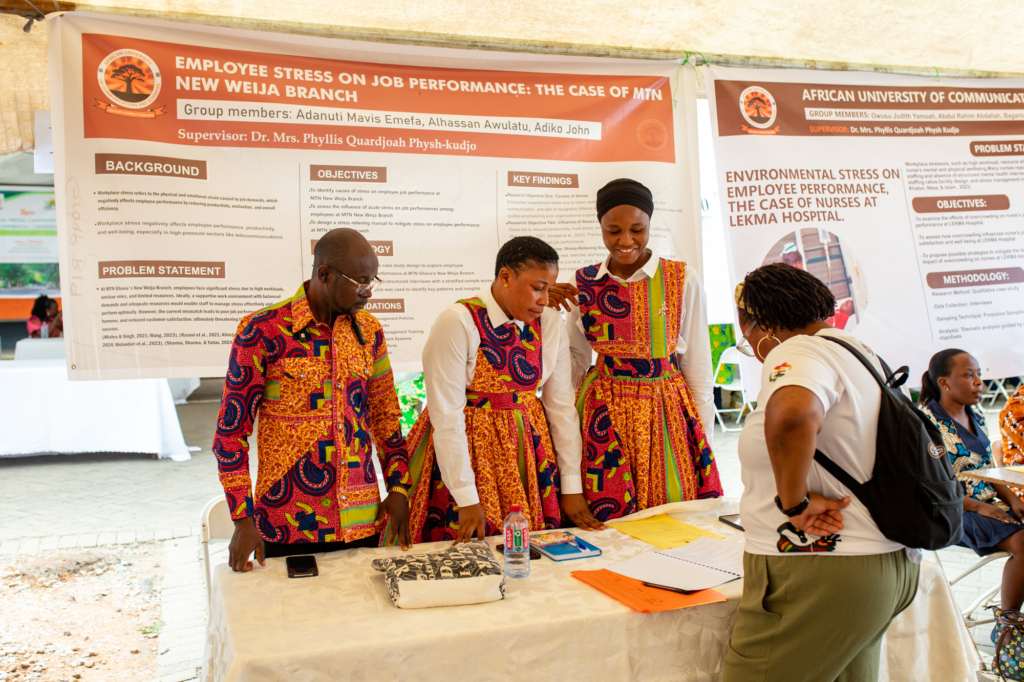
The Level 400 Project at AUCB represents a unique and progressive approach to final year academic requirements. Unlike the traditional model of submitting long essays that often remain shelved in academic libraries, AUCB has reimagined the capstone experience to be more practical, solution-oriented, and deeply connected to Ghanaian challenges.
In a statement during the event, the Vice Chancellor, Prof Abeku Blankson highlighted the transformative nature of this initiative.
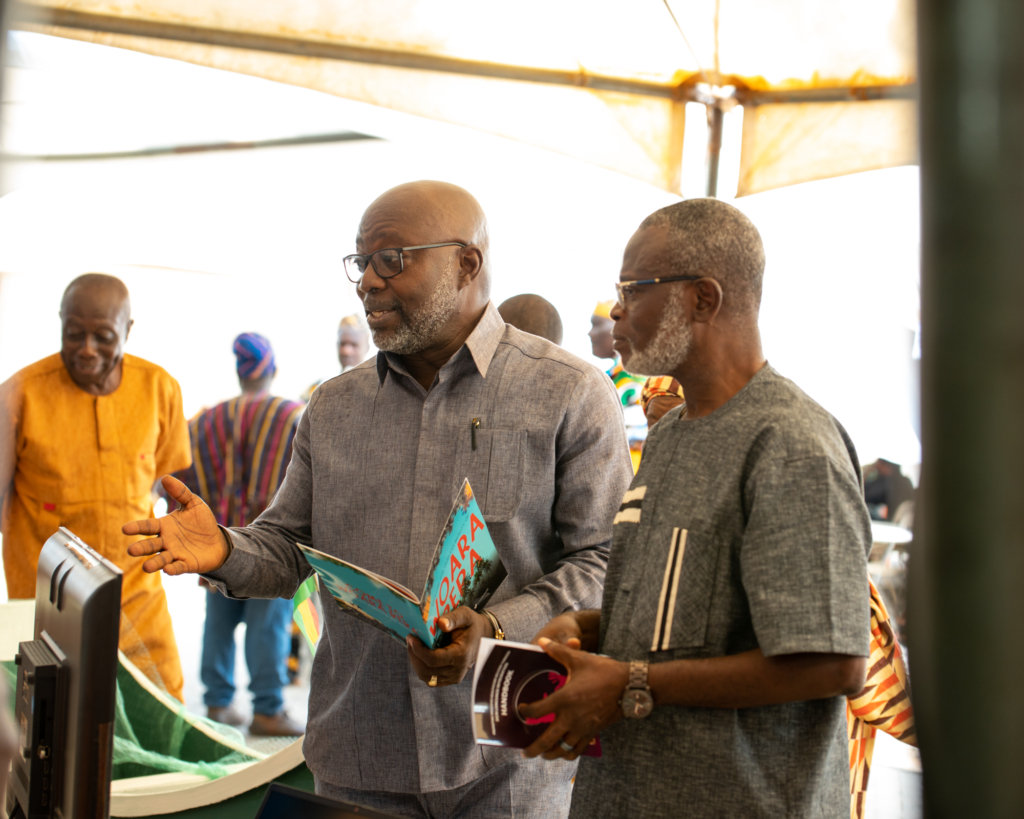
“This method of final year projects departs from the conventional practice of writing lengthy essays that are seldom utilized after submission. Instead, this exercise is designed to prepare our students for the future of work by equipping them with problem-solving skills that start within their own environments and communities.”
The capstone project, a six-credit course spread across the final academic year, is divided into two phases: the first involves research and project proposal development, while the second focuses on implementation, evaluation, and presentation.
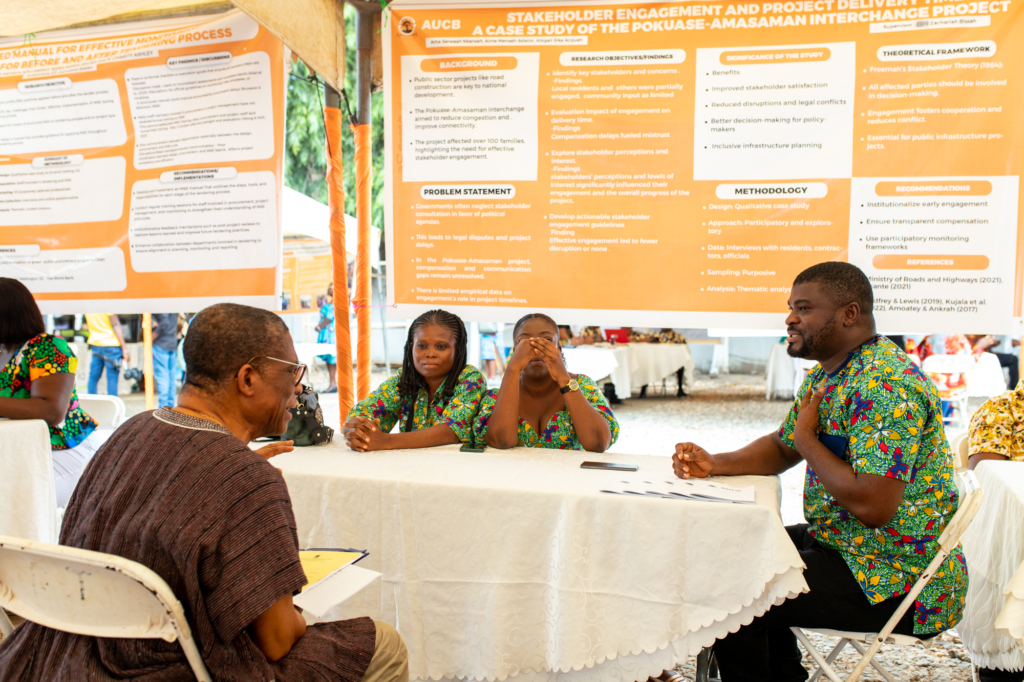
This format ensures that students not only propose ideas but also carry them through to practical application. AUCB’s approach emphasizes group work, innovation, and problem-based learning.
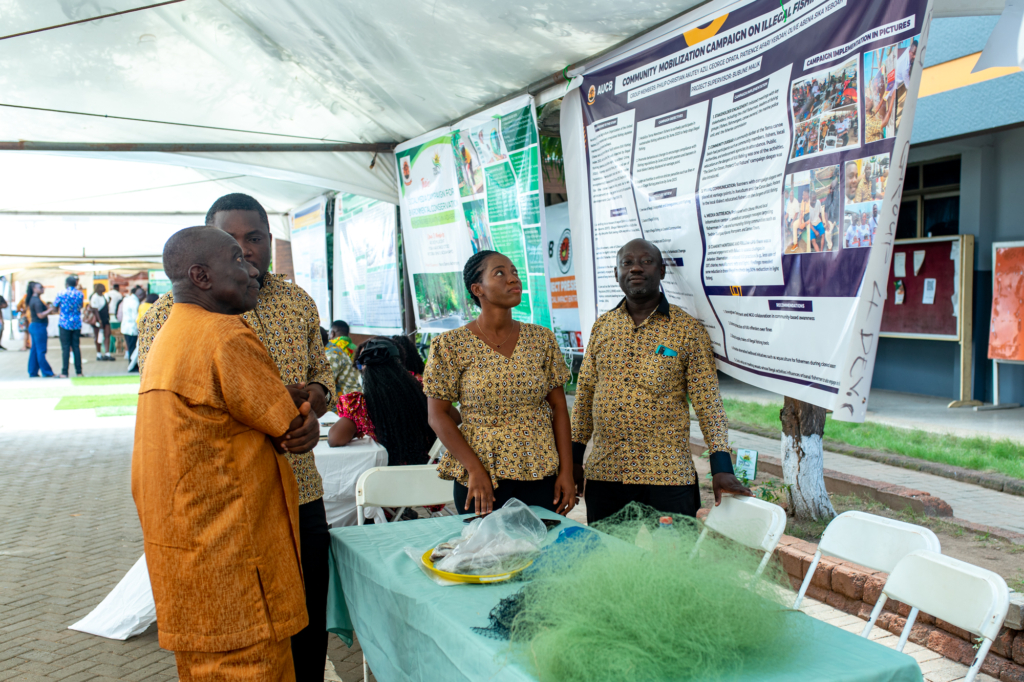
Students apply their academic knowledge in business, communication, journalism, media, visual communication, development communication, strategic communication, and business administration to address pressing human, societal, industrial, and organizational challenges, particularly those prevalent in Ghana.
The presentations featured a variety of tangible outputs such as documentaries, campaign manuals, posters, and other creative media. These works reflect the students’ deep engagement with issues ranging from economic and social development to environmental and political advocacy.
This year’s event underscored AUCB’s and HAEC’s shared vision of education as a force for national development, and their commitment to producing graduates who are not only academically proficient but also socially responsive and industry ready. By aligning academic work with the practical demands of the modern world, AUCB continues to lead in shaping the next generation of solution-driven professionals.
Latest Stories
-
NPP’s new executives will not alter our 2028 preparations – Tanko-Computer
28 minutes -
Tema East MP urges men to take active role in breast cancer awareness
33 minutes -
Hawa Koomson vows to bring experience and maturity to NPP women’s wing
37 minutes -
Opare Addo cautions NDC against adopting NPP’s aggressive politics
39 minutes -
NPP has 35 months to prepare for 2028 after early reorganisation – Political strategist
44 minutes -
All six passengers presumed dead after plane went missing off US coast
55 minutes -
Teachers’ promotion arrears to be paid by Oct. 30 – Education Minister
1 hour -
Stop talking too much on stage – Kafui Dey warns MCs
1 hour -
Government has Ho, Volta Region at Heart — Warlord of Asogli
1 hour -
Mahama reaffirms commitment to Volta development at Asogli Te Za
1 hour -
REGSEC orders immediate demolition of fire-ravaged building at Koforidua Jackson Park
1 hour -
Ambassador Boateng congratulates new NPP leadership, urges reconciliation, rebuilding
2 hours -
50 vetted to contest Effutu NDC executive positions
2 hours -
GACL enhances security screening at Accra International Airport
2 hours -
COCOBOD raises GH¢3.39bn at 11% in first Commercial Paper tranche
2 hours