

Audio By Carbonatix
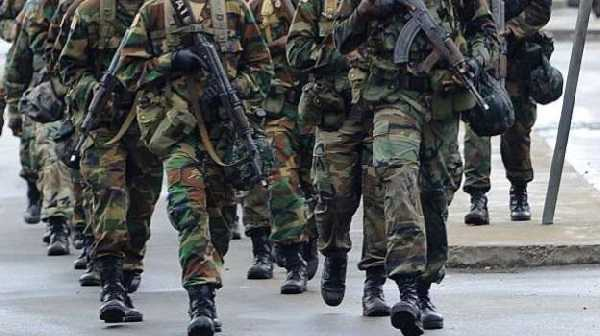
The National Service Authority (NSA) has announced a significant development in the forthcoming 2025/2026 national service cycle with the introduction of a six-week Basic Military Training (BMT) programme.
This initiative, which forms part of a broader strategy to enhance national cohesion and civic responsibility among graduates, will be rolled out on a limited scale during a pilot phase.
According to a statement released on Tuesday, June 17, a select number of graduates from the upcoming cohort will be deployed to participate in the pilot phase of the BMT programme.
The NSA emphasised that participation is voluntary, with interested applicants invited to express their interest during the standard online registration process.
The training, to be delivered in collaboration with the Ministry of Defence and other relevant agencies, is designed to equip young graduates with essential skills in discipline, resilience, and teamwork, while fostering a greater appreciation of national security imperatives.
According to the Authority, final postings to user agencies – where graduates typically serve in civil institutions, educational establishments, or healthcare settings – will only take place after the completion of the military orientation.
The NSA has assured that this phased approach will ensure that no participant forfeits their assigned work placement due to involvement in the BMT.
The NSA has reiterated that it will review outcomes from the pilot phase thoroughly before considering a wider rollout.
The NSA, on May 3, 2025, announced that it will pilot a military training programme for at least 10,000 National Service personnel beginning August 3, 2025, with plans to make it mandatory for all personnel starting next year.
The acting Director-General of the Authority, Felix Gyamfi, said in an interview with JoyNews on #GhanaConnect that the training will instill discipline, patriotism, and a readiness to support national development goals.
He stated that the training aims to prepare young people not just for emergencies and disaster response but also to combat societal challenges like illegal mining, poor sanitation, and environmental degradation.
This year, over 132,000 PIN codes have been issued for prospective national service personnel—a sharp decline from last year’s 176,000. The reduction follows improved data validation processes and the elimination of exaggerated institutional submissions.
More than 3,500 graduates from 22 tertiary institutions without valid accreditation have been disqualified from participating in the upcoming 2025/2026 national service programme, pending the regularisation of their schools’ status with the Ghana Tertiary Education Commission (GTEC).
Read Also: Over 3,500 graduates barred from National Service over unaccredited institutions
Latest Stories
-
ICC London rules in favor of Ghana against Tullow over $400m tax charge
8 minutes -
We are disappointed in ICC’s ruling over our corporate income tax assessment in Ghana – Tullow Oil
19 minutes -
Cost of building inflation for August 2026 increases to 4.6% – GSS
20 minutes -
Today’s front pages: Wednesday, September 30, 2026
51 minutes -
Bawumia highlights agricultural, compulsory insurance reforms in IBAG engagement
52 minutes -
Ghana will secure Tullow tax revenues while protecting Jubilee, TEN investments – Ato Forson
1 hour -
Ghana wins $393m Tullow tax arbitration as tribunal upholds GRA assessment
1 hour -
Gender Minister assures women’s group of action on Affirmative Action, Development Bank
2 hours -
Over 2,000 teachers in Dormaa comply with strike – GNAT Secretary
2 hours -
Food Buffer Stock seeks stronger liquidity buffer despite record profit
2 hours -
LPG investments key to achieving 50% access target by 2030 – Energy Minister
2 hours -
Jinapor: New LPG terminal strengthens Ghana’s energy security
2 hours -
Agbodza directs road agencies to fast-track design approvals to prevent project delays
2 hours -
Housing Minister urges stakeholders to prioritise quality education in Banda District
2 hours -
Government redeems pledge to complete abandoned projects – Kofi Buah
2 hours