


Audio By Carbonatix
Youth Ambassador for Peace and Development, Ambassador Alhaji Salamu Amadu, has said that Africa is the richest continent, not merely because of its natural resources, but due to its people and vast untapped potential.
However, he cautioned that unless Africans undergo a fundamental mindset shift, this wealth will remain dormant and unutilised.
Speaking at a captivating panel discussion during the African Economic Exchange Forum (AFEX) 2025, organised by the Turkish-African Business Association (TABA), Ambassador Amadu emphasised that Africa’s true wealth lies in its human capital, youthful vigour, and creativity.
He urged an urgent transformation in thought to propel the continent forward.
“Africa is the richest continent, not only in minerals or money, but in ideas, in culture, in people. Yet many still live in poverty. Why? The problem is not a lack of potential, but the way we think,” he stated.
The panel, which explored whether Africa’s most pressing developmental need is capital, infrastructure, or mindset, witnessed Ambassador Amadu passionately champion thought leadership and psychological emancipation.
“We speak of roads and funding, but nothing will work unless our people are mentally prepared. A nation may have highways, but if its people don’t believe they can build, own, or innovate, those roads lead nowhere,” he explained.
As founder of the Yaa Salaam Opportunity Centre, Ambassador Amadu has spent years implementing grassroots empowerment programmes, particularly for underprivileged youth. Drawing from his experiences, he lamented how too many African youths have been conditioned to feel inferior or dependent on external aid.
“We must cease viewing ourselves as victims or perennial aid recipients. We are not poor—we are powerful. But the first step is to change our self-perception. We must believe that we deserve to lead, to create, and to succeed,” he declared.
His rousing message received resounding applause from an audience comprising high-ranking officials, investors, and members of the African diaspora. Many hailed his frank and stirring remarks as a refreshing departure from the over-reliance on aid and external interventions.
“Mindset is everything,” Ambassador Amadu reiterated. “If our people believe in their ideas, they will build industries. If they believe in their worth, they will fight corruption. If they believe in their future, they will stay and transform Africa—instead of fleeing it.”
He warned that Africa risks remaining in a cycle of dependency unless deliberate steps are taken to reframe national consciousness. Without this, even the best-funded infrastructure projects may fail to deliver lasting transformation.
“We’ve filled banks, paved roads, and signed trade deals. But what about the minds of our people? What are we doing to nurture confidence, innovation, and critical thinking?” he questioned.
Ambassador Amadu called upon African governments, educators, and community leaders to prioritise mindset transformation within development strategies. He advocated for a new educational model that equips young people not merely to pass exams, but to generate employment, devise solutions, and lead boldly.
“We need schools that teach entrepreneurship, innovation, and values—not just theory,” he urged. “Our young people should graduate believing they can build the next global enterprise, not merely work for someone else.”
He also addressed the role of African media and cultural institutions in moulding the minds of the youth. According to him, the narratives and images disseminated daily influence how future generations view their place in the world.
“What we see and hear informs how we think. Let us begin to celebrate our own success stories. Let us honour thinkers, creators, and problem-solvers—not only celebrities and politicians,” he stressed.
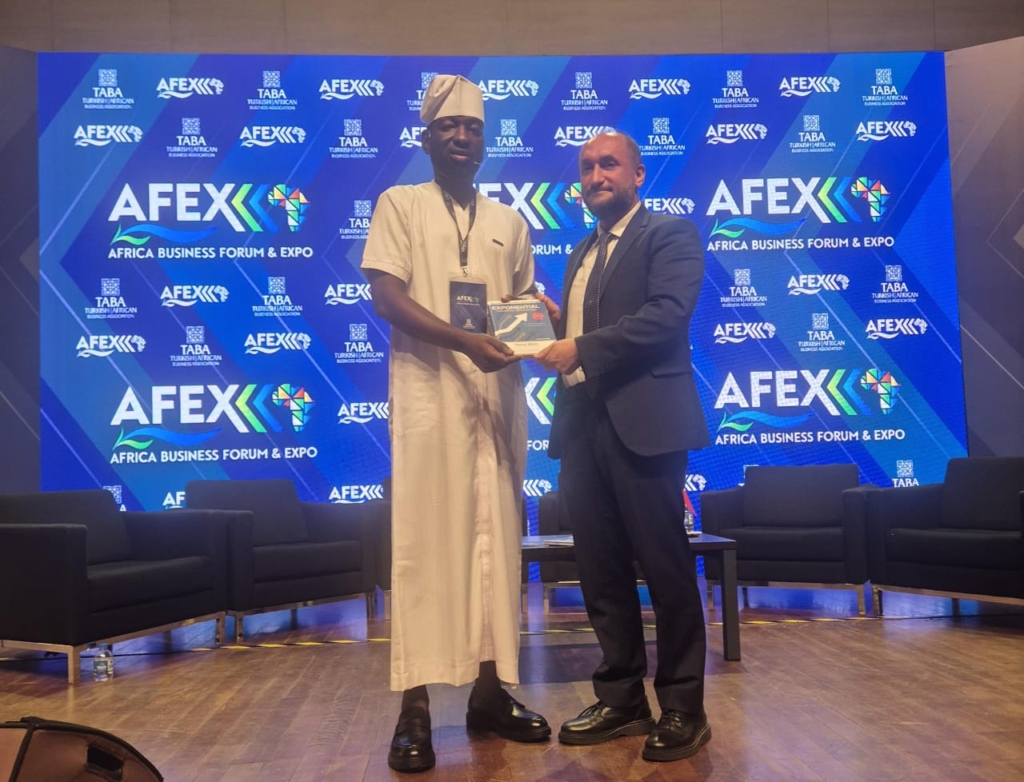
Although AFEX 2025 featured numerous trade and investment sessions, Ambassador Amadu’s message stood out for its focus on the human spirit as the engine of progress. His remarks underscored that the most essential revolution in Africa is not technological or financial, but psychological.
“We already possess what it takes. The true revolution Africa needs is of the mind. The moment we change our thinking, we change our destiny,” he affirmed.
He concluded with a poignant call to action for leaders across the continent:
“Africa is already rich. But that richness must be recognised, nurtured, and activated from within. If we invest in mindset, we shall build a continent that stands tall, pens its narrative, and leads with dignity.”
His remarks continue to resonate with young delegates and policymakers, many of whom have taken to social media to amplify his message. As Africa contemplates a bold new path forward, Ambassador Amadu’s voice serves as a vital reminder: the continent’s truest wealth is not beneath the soil, but within its people.
Latest Stories
-
Ghanaian evacuee from South Africa dies on arrival in Accra
14 minutes -
POS Foundation raises alarm over student cohabitation, sexual harassment on university campuses
1 hour -
Nandom NPP primary heats up as four candidates enter 2028 race
1 hour -
Mangione admits killing healthcare CEO and pleads guilty to federal charges
2 hours -
The Invite to The Odyssey: 12 of the best films of 2026 so far
2 hours -
Ayra Starr on her secret relationship and teasing Stevie Wonder
2 hours -
NPP Ashanti holds vigil in support of Wontumi as lawyers appeal conviction
2 hours -
TCDA targets higher crop yields as farmers receive inputs
2 hours -
Kofi Amoako Attah inducted into 11th Corporate Ghana Hall of Fame
2 hours -
Newsfile to discuss AKSA energy deal, legal vacation and GoldBod losses
3 hours -
Gushegu MCE says slain Yiidana was targeted as police investigate killing of chief and son
3 hours -
President Mahama reiterates commitment to link regional capitals with good roads
3 hours -
Ex-Cambridge professor at centre of plagiarism row found dead
3 hours -
ORAL doing fantastic job, Ghanaians will see results soon – Attorney General
3 hours -
TEWU gives government two weeks to address non-teaching staff grievances or face industrial action
4 hours