

Audio By Carbonatix
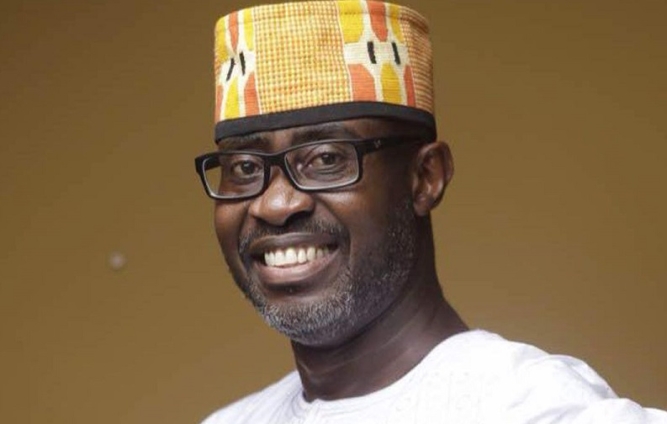
Renowned lawyer and thought leader Ace Anan Ankomah, has issued a powerful call for Africa to dismantle internal borders, reclaim its agency in global affairs and urgently reposition itself in a rapidly changing world order, warning that continued fragmentation will consign the continent to perpetual vulnerability.
Speaking at the Africa Prosperity Dialogues on Friday under the theme “Make Africa Borderless Now”, Mr Ankomah argued that Africa’s historical exclusion from global decision-making continues to shape its economic weakness, political insecurity and developmental challenges.
Drawing parallels with the 1884–1885 Berlin Conference, where Africa was partitioned without representation, Mr Ankomah said the continent has long been treated as a “menu item” rather than a participant at the global table.
“For 104 days, the world’s most powerful nations met in Berlin. Africa was not invited. Africa was not consulted. Africa was not represented,” he said. “Africa was on the menu.”
He described the colonial-era borders imposed on Africa as a form of “continental balkanisation” that split communities, undermined economic viability and entrenched conflict — consequences that remain evident in weak markets, chronic insecurity and underdevelopment despite vast natural wealth.
Mr Ankomah noted that even middle powers that once benefited from Africa’s fragmentation are now grappling with the breakdown of the so-called rules-based international order, as global politics increasingly shifts towards self-interest.
“This is our lived reality,” he said, adding that neutrality and passivity no longer offer protection in a world dominated by strategic competition.
Borderless Africa, not fragmented sovereignty
Turning to present-day Africa, Mr Ankomah criticised the contradiction of rigidly policing African borders while allowing external actors easy access to the continent’s resources.
Using the example of a short journey from Accra to Lomé, he highlighted the bureaucratic and logistical hurdles facing Africans under existing free-movement frameworks, despite decades-old regional protocols.
“We police one another fiercely, yet open our doors wide to outsiders who extract our wealth with ease,” he said. “This is not sovereignty. It is fragmentation masquerading as independence.”
He argued that the most damaging borders are not geographical but psychological — rooted in artificial national divisions inherited from colonial rule.
Urgency of industrial transformation
Warning that Africa risks missing both the Fourth and Fifth Industrial Revolutions, Mr Ankomah stressed that science, technology, digitisation and artificial intelligence are no longer optional but essential for survival.
“Africa might have missed the first three industrial revolutions, but we cannot afford to miss this one,” he said, describing technology as a “lifeline” capable of helping the continent leapfrog historical delays.
However, he cautioned against importing solutions designed for other societies, insisting that Africa must generate its own answers.
“Brains develop a nation, not natural resources,” he said, lamenting the loss of innovation as research and student ideas are routinely shelved instead of commercialised.
He called on African governments to actively support innovation by creating campus-based incubators, linking research to industry, protecting intellectual property and making science and engineering viable career paths.
A call to action
Mr Ankomah urged Africans to transform poverty and inefficiency into catalysts for decisive action, stressing that ideas alone are no longer enough.
“Africa’s ideas have always been here. What is missing is action,” he said.
He outlined a framework for sustainable prosperity rooted in self-reliance, scientific thinking and the development of industries that add value to everyday life.
“We do not need to be at someone else’s table. We do not need to be on someone else’s menu,” he said. “We can and must build our own table. We can and must write our own menu.”
Concluding his address, Mr Ankomah challenged Africans to reject narratives of impossibility and assert confidence in their collective potential.
“It must never be said that every major civilisation conquered poverty, except Africa,” he said, urging the continent to answer lingering doubts not with promises, but with results.
“Africa must not just rise. Africa must shine.”
Latest Stories
-
University of Ghana postpones October 12 reopening as GAUA strike persists
9 minutes -
Bahass Foundation launches vocational skills training to support mental health recovery in Wa
41 minutes -
NPP orders parliamentary aspirants and their supporters to suspend campaign activities
1 hour -
Techiman unites against child marriage: Joy Impact Makers Awardee leads charge on International Day of the Girl Child
1 hour -
Ghana Psychological Association calls for greater involvement of people with lived experience in mental health care
3 hours -
Ablakwa says Ghana could evacuate more citizens from South Africa if the situation worsens
3 hours -
Violence against girls must be tackled through individual responsibility – Gender advocate
3 hours -
Ghana’s BRICS bid must be guided by national interest – International Affairs Analyst
3 hours -
Journalists look back on a decade of breast cancer reporting in Ghana
4 hours -
President Mahama ends Resetting Ghana tour of Ahafo Region
6 hours -
African negotiators seek delivery of climate commitments at COP31
6 hours -
BoG develops AI rules for financial sector
6 hours -
‘Big Push’: Government assures contractors of prompt payments
6 hours -
Court fines miner for breaking into gold buying shop
6 hours -
Tarkwa court jails labourer for three years over GH¢123,000 theft
7 hours