

Audio By Carbonatix
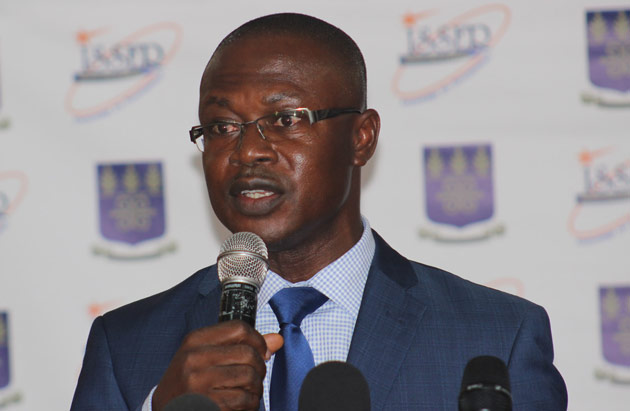
The 2025 Mid-Year Budget Review offers no real excitement for jobs or the fight against poverty, according to Professor of Finance and Economics at the University of Ghana, Charles Godfred Ackah.
He believes that while the economic managers can claim credit for some positive indicators, the deeper issues facing Ghanaians remain untouched.
“The statistics are showing some good performance,” Prof. Ackah said.
“If you measure them in the context of normal, orthodox economics, you will see a reduction or some form of consolidation.”
He pointed to the primary surplus, inflation trending down, and exchange rate stability as evidence of fiscal consolidation.
“So I think that is good to some extent,” he noted. “But you have to ask yourself, at what cost? What is our vision as a nation? What do we want to achieve?”
For him, the metrics may look impressive on paper, but they fall short of addressing the real economic needs of the people.
“If it’s just to appear to be achieving some good statistics, then I think we should give congratulations to the managers of the economy,” he said.
“But if the bottom line, or the vision, is to create jobs, to build a competitive, resilient economy, to improve the welfare of the Ghanaian, to reduce poverty and inequality, then I don’t think this mid-year budget review gives any excitement.”
Prof. Ackah argued that the gains being highlighted by the Finance Ministry are largely the result of favourable global conditions rather than sound domestic policy.
“Because if you look at what has actually happened, I think it’s mainly resulting from the external sector. The external sector, because of the increase in gold production and export of gold, we are getting a lot of external advantage from there in terms of foreign exchange revenue,” he said.
“Also, the cocoa is doing well in terms of the price, and the oil price has stabilised, and, therefore, all of these are giving us some windfall.”
He warned against presenting such outcomes as achievements rooted in domestic competence.
“To which the managers of the economy could claim advantage and say it’s purely as a result of their own doing, as we normally do. But I think most of the results are externally driven, and if things change, we have seen this before.”
Citing historical examples, he said Ghana’s vulnerability to global commodity shocks remains unchanged.
“If you look at the 2013 budget, 2014 budget, 2015 budget, when President Mahama was still there, we recorded some 2.8% budget surplus,” he said.
“But if we don’t prefer to build a resilient economy, [it] is susceptible to shocks, and if the gold prices fall all of a sudden, crude oil price goes through the roof all of a sudden, then we will be back to square one.”
Latest Stories
-
Challenging Heights rescues 25 trafficked children from Lake Volta in weekend operation
7 minutes -
‘Nobody has any video of me embarrassing myself’ – Afenyo-Markin on ‘extortion’ allegation
13 minutes -
Government listening to ordinary Ghanaians with diesel relief – Duncan Amoah
14 minutes -
Photos: Manya Krobo Ngmayem Festival turns 133
24 minutes -
Government must go beyond short-term fuel relief – COPEC
25 minutes -
‘Revive traditional values to fight plastic pollution’ – EPA CEO
29 minutes -
Mahama’s administration is Ghana’s worst ever – Amin Adam
37 minutes -
BSIFF 2026 puts local language cinema at the centre of African film conversation
43 minutes -
MMFL makes strong showing at 2026 JoySports Invitational
45 minutes -
NPP vetting was candid and went beyond routine questions – Afoko
45 minutes -
CIIG 6th Insurance Excellence Awards highlights need to protect professional standards
51 minutes -
GEXIM Bank’s interest income surges 90% to GH¢153.9m – SIGA report
52 minutes -
GNFS rescues man trapped beneath loaded truck after it overturns at Kibi
53 minutes -
African Union backs Sudanese-led dialogue to end conflict
54 minutes -
VRA reverses GH¢106m loss to record GH¢88m profit in 2025
56 minutes