

Audio By Carbonatix
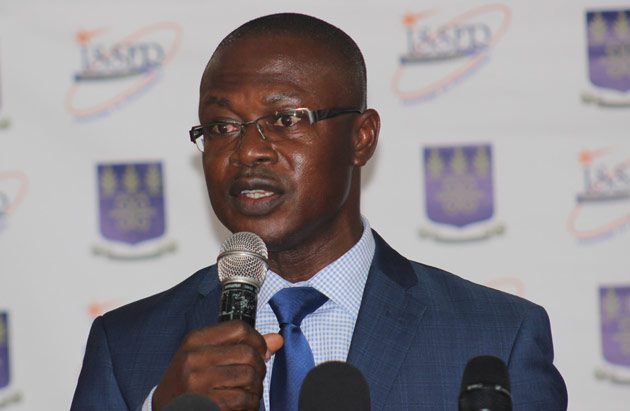
A professor of Finance and Economics at the University of Ghana has criticised government’s approach to fiscal discipline, warning that Ghana’s economic problems require decisive spending, not celebration of restraint.
Charles Godfred Ackah, speaking on JoyNews’ PM Express Business Edition on Thursday, questioned the logic behind what government touts as prudent financial management.
“Well, fiscal discipline is good if it’s defined as a way of reducing waste of resources, corruption, and then improving on expense efficiency, then it’s good,” he said.
“But if fiscal discipline means that you should run a budget surplus as a developing country that has so much waste, so much idle resources, manpower, resources wasting… then no.”
According to him, the nation cannot afford to boast about spending cuts when critical sectors are starved of funds and infrastructure remains poor across the country.
“People have finished university in five years, six years not getting jobs, nurses are sitting at home, teachers are still home, universities cannot employ lecturers when there are so many students, and roads are terrible from here to Kumasi and all over the country,” he pointed out.
“You need to invest in infrastructure. You need to invest in the productive capacity of the country.”
Prof. Ackah insists the conversation should not be about achieving a budget surplus at all costs, but about channelling spending into projects that directly address the country’s economic stagnation.
“If that means you must run a reasonable budget deficit and… this budget deficit is going into investing… even in the private sector, or have households and individuals… to invest in real estate, to invest in businesses, then that’s not imprudence,” he said.
He dismissed any narrative that prioritises fiscal tightening while leaving behind the urgency of job creation, public sector enhancement, and infrastructure delivery.
He noted that deficit spending can be justified if it leads to tangible development outcomes.
“So if we are borrowing from the central bank, or borrowing from Treasury, even external borrowing… and it’s not for salaries and wages, it’s not for buying V8 to run high budget deficits that you don’t see any value for… and it’s to invest in the economy, particularly infrastructure, which is terrible across the country… then that’s what we should be doing.”
He cited examples of developed nations like the U.S., Malaysia, and Singapore that continue to run budget deficits to power their economies.
“Even America is running a budget deficit, Malaysia, Singapore—tell me how many countries in the world run a budget surplus. So why will a poor country like us seem to be happy that you are cutting your coat according to your cloth? What does that mean?”
He challenged government to ask whether the core problems confronting the country—healthcare, unemployment, poor pay, inflation—have been resolved before celebrating budget cuts.
“Have you finished solving our infrastructure problems? By the way, you can check and see that we have so many problems, and we need to invest. Government needs to spend.
"The private sector needs to spend. The government needs to spend to crowd in the private sector. And that is not happening.”
Prof. Ackah emphasised that no amount of fiscal restraint can justify the neglect of critical social investments and economic stimulation.
“Go to hospitals. There are no beds, and people are dying in the hospitals. There are a lot of challenges—even wages, which are lagging behind labour productivity,” he said.
“Look at the average salary paid to public sector earners. Look at inflation, look at the cost of rent, look at the cost of food. And people are being paid ¢1,000 and ¢1,200 after graduating from the university.”
He concluded with a sharp rebuke of what he sees as misplaced priorities.
“So if all of these things are problems to solve, and the government sit down and says why we are trying to be disciplined, I don’t know what that means.”
Latest Stories
-
I don’t mind being insulted; I have a crocodile skin – President Mahama
9 minutes -
Samson’s Take: Verify the badge – and verify the story
20 minutes -
President Mahama explains why Ghana must rethink regulation of TikTok, other new media platforms
32 minutes -
Rule of law must be protected – GBA condemns EOCO action against Baffour Awuah
2 hours -
950,000 barrels of Sankofa crude head to TOR as GNPC deepens domestic refining
2 hours -
Scales of deception removed – Annoh-Dompreh attacks new cocoa price
2 hours -
Young Positivist Writes : My Experience with GCLP
4 hours -
Strong Day 1 turnout sets tone for Day 2 of Republic Bank-JoyNews Habitat Fair Clinic
4 hours -
Ghana Army warns new soldiers against social media misuse, uniform abuse
4 hours -
AMA calls for science-led action to tackle environmental health risks in Accra
4 hours -
NPP Canada Organizer BigMo urges Diaspora to support Kodua Frimpong
5 hours -
He entered at eight; he is now 16: Ghana’s children growing up in prayer camps
8 hours -
‘Development must not always begin from Accra’ — Anwelle Foundation launched in Jirapa
8 hours -
PKO trio eye victories at Odwira Festival
11 hours -
346 Ghana Navy recruits pass out after 26 weeks of intensive training
11 hours