


Audio By Carbonatix
The KNUST Nutrition and Sustainable Agri-food Collaborative, in partnership with the Mastercard Foundation (Nkabom Project), has launched its maiden Trainer of Trainers programme. This initiative aims to equip 30 tutors from agricultural institutions nationwide with the essential skills to advance agribusiness in Ghana.
The 10-day training programme is designed to empower tutors with the knowledge and tools needed to transform the mindset of students in agricultural and farm institutes across the country, fostering a stronger orientation toward agribusiness.
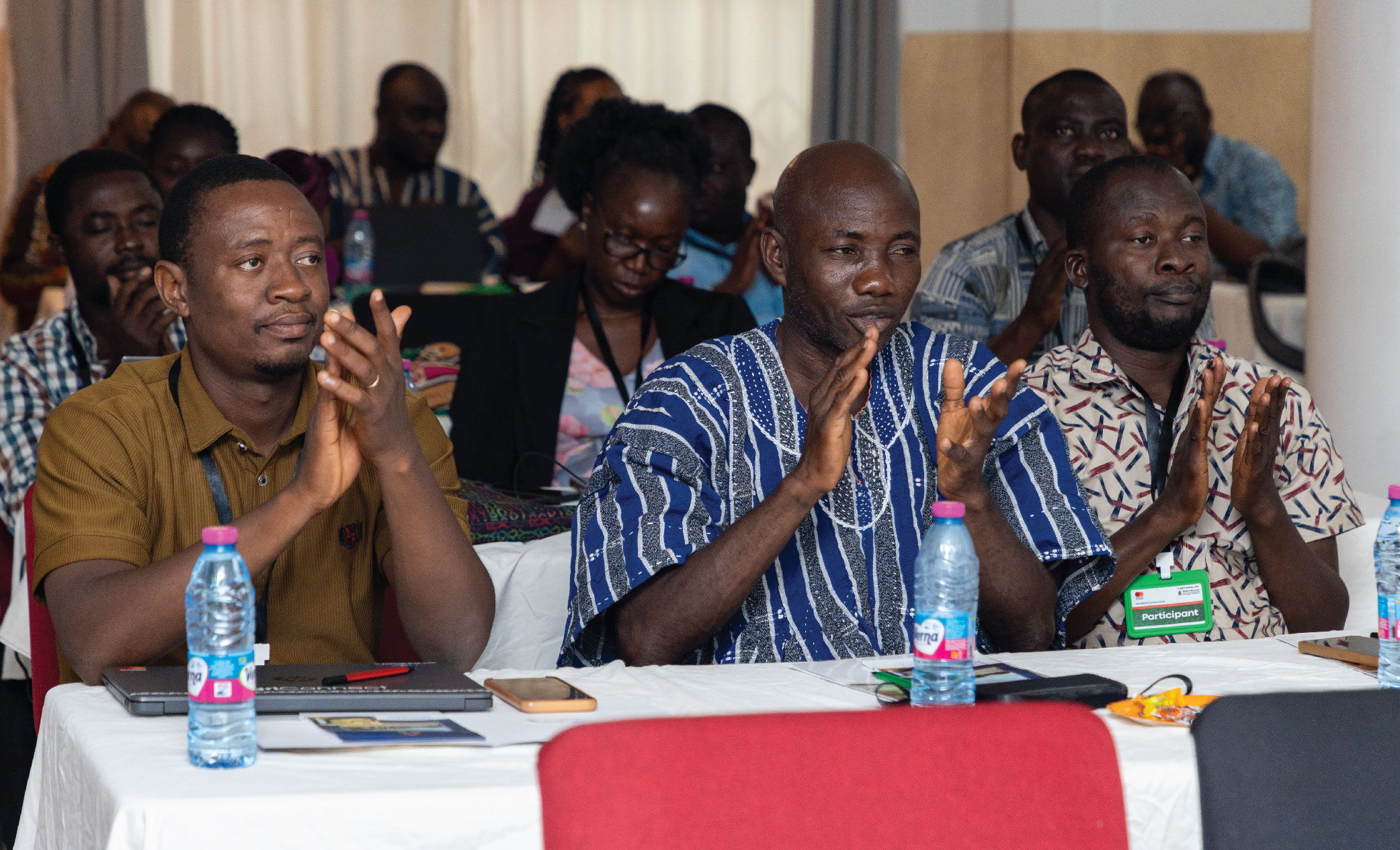

Professor William Otoo Ellis, the Principal Investigator for the Nkabom project, expressed belief in agriculture’s potential to transform the Ghana’s economy.
“I believed agriculture is the way to change the fortunes of this country,” Prof. Ellis stated.
He acknowledged that agriculture is often seen as unappealing venture, particularly to the youth, due to its perceived labour-intensive activities.
However, he stressed that the agrifood value chain offers vast opportunities for individuals to find their niche in this technological era.
“Agriculture is our future as a people and as a nation. There is money in agriculture, but it requires hard work. Together, we can change the landscape of agriculture in Ghana and make it a sector that people can rely on,” he said.

Prof. Wilberforce Owusu-Ansah, the Pillar Lead for Entrepreneurship under the Nkabom project and lead facilitator, elaborated on the programme’s approach.
“We believe that by training these agricultural tutors, we can reach a larger group of students across the country and help them realise the potential of agribusiness,” he explained.
“After the training, the tutors will return to their institutions, where they will pass on their newly acquired skills, enabling students to set up businesses in agriculture.”
Prof. Owusu-Ansah further outlined the importance of providing wraparound services, including mentorship and opportunities for funding, to ensure that agricultural students see agribusiness as a dignified career.
“We want the youths to realise that they do not have to wait for government jobs or employment in other institutions. Agribusiness offers an opportunity for them to create their own fulfilling careers,” he noted.

Dr. Isaac Tweneboah-Koduah, a facilitator of the training, provided insights into the critical components of successful agribusinesses. He emphasised that technical knowledge in farming must be complemented by solid business management skills.
“Farmers may know how to grow maize or cocoa, but turning that knowledge into a sustainable business requires understanding business models and financial management,” Dr. Tweneboah-Koduah stated.
He elaborated that the training would cover topics such as business planning, brand positioning, and marketing, all essential to transforming farming into a profitable business. “Agriculture is not just about producing crops, it’s about understanding the business behind it,” he added.
Latest Stories
-
Cedi was worst African currency in quarter 2, 2026 – World Bank
11 minutes -
AI gains can lift three times as many people out of poverty in Ghana – World Bank
39 minutes -
Police arrest suspect over jewellery theft during fire outbreak
3 hours -
EOCO returns Hanan’s £6,700, GH¢2,750 and devices after defence challenge
3 hours -
Opplift Youth Entrepreneurs Summit 2026 equips entrepreneurs with skills, mentorship and support
3 hours -
Rival clubs want range of punishments for Man City
4 hours -
Tear gas in Paris and Marseille as school protests grow across France
4 hours -
Kane inspires England to win over Czech Republic in UEFA Nations League
4 hours -
Finland orders halt to work on two Google data centres
4 hours -
Substitute Merino scores twice as Spain win in Croatia
4 hours -
Ronaldo wants Portugal ‘punishment’ but not retiring
4 hours -
White House defends Trump comment to let Iran ‘take out’ LA and San Diego
4 hours -
Asos confirms hackers sent ‘unauthorised’ notification to app users
4 hours -
US televangelist Jim Bakker, disgraced from sex scandal and fraud, dies at 86
5 hours -
Congolese-born golfer to represent Ghana at Turkish Airlines World Cup grand final
5 hours