

Audio By Carbonatix
For years, residents of Woe, Kporkporgbor, Fuveme, Anloga, and Dzita-Agbledomi have watched the sea inch closer to their homes.
Each tide brings with it more than waves; it carries the fears of families who have lost land to erosion, the anxiety of fishermen whose livelihoods depend on a coastline under siege, and the uncertainty of a future shaped by climate change.
Now, hope is arriving in the form of a global partnership. The United Nations Human Settlements Programme (UN-Habitat), working with the Anloga District Assembly, is rolling out a climate change and urban resilience project aimed at transforming the way these coastal communities live, work, and protect themselves against the environment’s growing threats.
The initiative was formally introduced on Thursday when the District Chief Executive for Anloga, Sandra Seyram Kpedor, welcomed the Program Specialist for Climate Change and Urban Resilience, Daniel Kofi Abu, UN-Habitat, and his team to her office.
“This program is more than a development project—it’s a lifeline,” Ms. Kpedor said. “It will help us address sea-level rise, coastal erosion, and flooding, while also creating green jobs, building eco-friendly infrastructure, and strengthening our people’s ability to adapt.”
For fishermen in Woe and Tegbi, the project’s promise of sustainable urban planning could mean better protection for landing beaches, and eco-friendly infrastructure could safeguard livelihoods from tidal destruction.
In Dzita-Agbledomi and Anloga, green job opportunities could help keep young people employed within their communities instead of seeking work elsewhere.
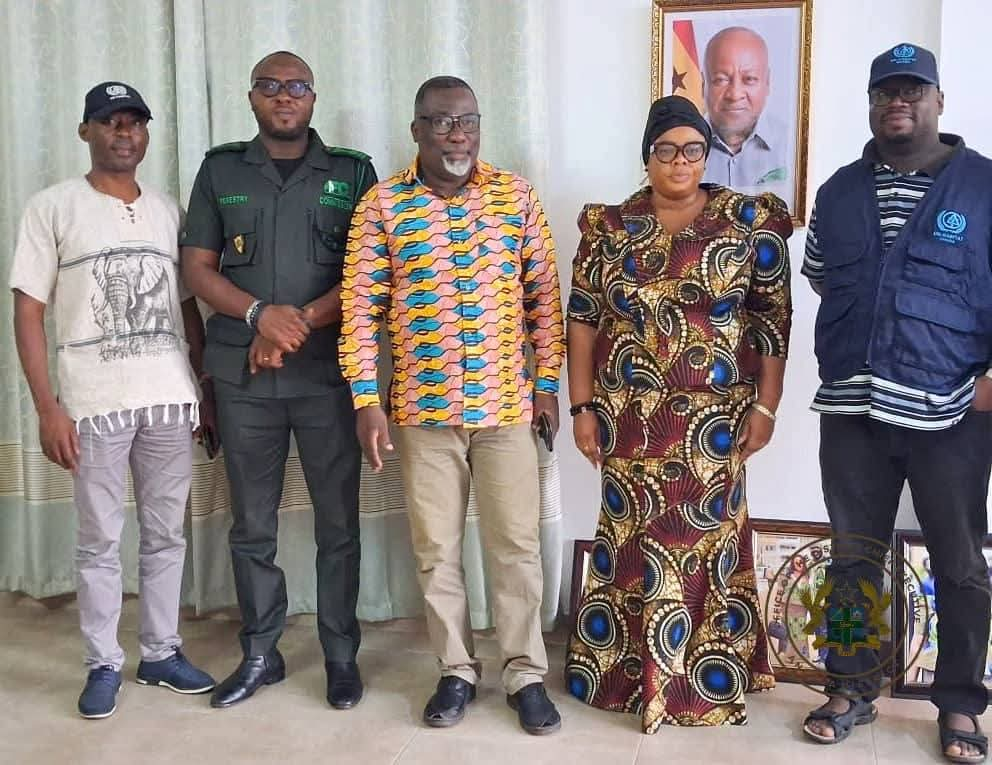
Mr. Abu stressed that the program’s success will depend on active collaboration with local leaders and residents.
“Resilience is not built from the top down—it grows from within communities. That is why we are working closely with stakeholders here to ensure the solutions we develop are locally driven and lasting,” he explained.
As the waves continue to lap at the shores, the people of these coastal towns are now looking to a future where science, planning, and community effort converge to safeguard their homes.
With UN-Habitat and the Anloga District Assembly joining forces, the vision is clear: safer, more inclusive towns that can stand strong against the forces of climate change
Latest Stories
-
Two lorry station masters arrested over alleged plot to kill creditor over ₵91k debt
26 minutes -
SIGA’s claim on highest audited proportion inaccurate – Bright Simons
27 minutes -
Money bouquets, spraying and dancing on cash unlawful – BoG warns
53 minutes -
Sam George pushes for nationwide 4G upgrade of rural telephony sites
53 minutes -
Local Government Ministry to support MMDAs to deliver gov’t agenda
1 hour -
At least five killed in Sudan’s South Kordofan in attack by rebel group
1 hour -
“Music is so stressful” – Headless YouTuber on why he won’t return
1 hour -
Cleveland police chief proud of force but being ‘let down’ by funding
2 hours -
Black Sherif drops new 6-track EP ‘Sun Sherif’
2 hours -
GTA partners Africa’s Brain Bank for Medical City groundbreaking
3 hours -
How to check 2026 WASSCE results on mobile phone
3 hours -
President Mahama is a professional comedian – DKB
3 hours -
Final day of Joy FM Back-to-School Fair: Come shop, save and prepare for the new school year
4 hours -
GSE showed strong performance in August 2026 despite recording more stock losses
6 hours -
If CJ needs ethics law to know SOE comments were wrong, he may not be worthy of office – Arthur Kennedy
7 hours