

Audio By Carbonatix
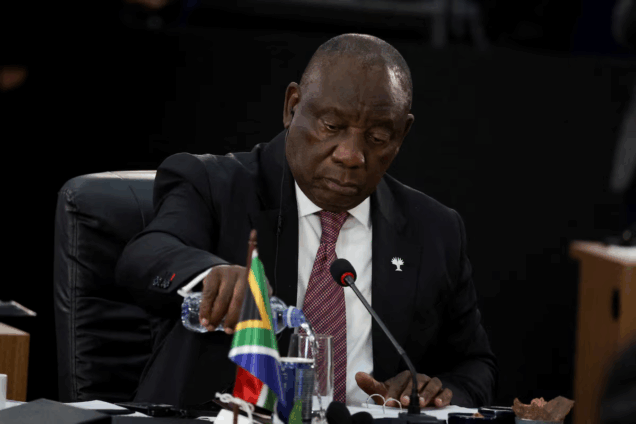
South African President Cyril Ramaphosa on Thursday launched a G20 experts taskforce to examine global wealth inequality and its impact on growth, poverty and multilateralism — the first initiative of its kind for the G20.
The six-member taskforce, chaired by Nobel Economics Prize laureate Joseph Stiglitz, is expected to present its findings to G20 leaders due to convene in Johannesburg in November.
South Africa has sought to use its Group of 20 presidency this year to highlight issues affecting poorer nations, including rising inequality and sovereign debt burdens.
"South Africa's G20 presidency today is proud to launch an initiative that will target this issue of global wealth inequality - a first for the G20 - and offer a practical way forward," Ramaphosa said in a statement.
He said people globally were aware of how inequality undermines dignity and the chance for a better future, citing unfair vaccine distribution during the COVID-19 pandemic as an example.
"They see the impacts of rising food and energy prices, of debt, of trade wars, all driving this growing gap between the rich and the rest of the world, undermining progress and economic dynamism," Ramaphosa added. "A new oligarchy in our global economy is becoming apparent."
Stiglitz said the task force's goal is to turn public frustration over inequality into actionable policy proposals for G20 leaders. "Inequality was always a choice – and G20 nations have the power to choose a different path on a range of economic and social policies," Stiglitz said.
According to the World Inequality Report, the poorest half of the world's population owned just 2% of global wealth in 2021, while the richest 10% controlled 76% of it.
The task force includes other prominent figures such as UNAIDS Executive Director Winnie Byanyima and Jayati Ghosh, a development economist and professor at the University of Massachusetts Amherst.
The United States is set to take over the rotating G20 presidency at the end of this year.
The G20 was founded to coordinate financial policy after the Asian financial crisis of the late 1990s, before expanding to state leaders during the 2008 global financial crisis.
Latest Stories
-
A look at the ‘Okada’ architecture under the new road traffic regulations, 2026 (L.I. 2519)
1 minute -
Wontumi’s GH¢30m EXIM Bank case heads to trial as plea bargain talks collapse
9 minutes -
John Boadu is NPP’s ‘only guarantee’ for 2028 victory – Joseph Cudjoe
16 minutes -
I will be fair and impartial in my duties – Ayariga assures Mamprugu Traditional Council
17 minutes -
Ghana’s road infrastructure rating declines from D3 to D1 — GhIE
20 minutes -
Assemblies should self-finance, Common Fund is for development – Ayariga
22 minutes -
Ayariga calls for stronger engagement with mining regulators
24 minutes -
Ayariga praises Afenyo-Markin for integrity and forthrightness in Parliament
25 minutes -
I have no problem with National Cathedral, but its implementation was flawed – Ayariga
28 minutes -
GMTF, Sweden Ghana Medical Centre sign MoU to improve access to cancer care
30 minutes -
Minority demands deferment of Supreme Court nominees’ vetting
30 minutes -
Mahama Ayariga outlines role of Local Government Minister in chieftaincy affairs
31 minutes -
I’ll seek increased funding for Chieftaincy Institution if approved – Ayariga
34 minutes -
Deploy mining engineers to every district to strengthen mining regulation – Ayariga
35 minutes -
I will respect constitutional limits on chieftaincy matters – Ayariga
36 minutes