

Audio By Carbonatix
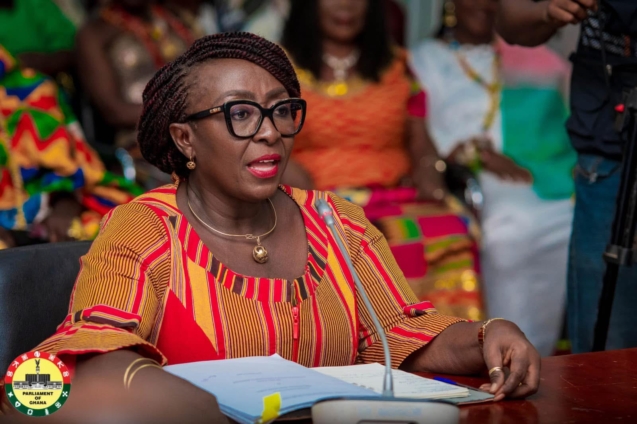
Ghana’s marine and coastal resources must be safeguarded and harnessed sustainably as they remain vital to national prosperity, Abla Dzifa Gomashie, the Minister of Tourism, Culture and Creative Arts, said.
Speaking at the opening of a three-day national consultation workshop on Ghana’s draft Blue Economy Strategy in Accra on Wednesday, she stressed the need for a holistic approach that balanced economic growth with environmental stewardship and cultural preservation.
The workshop presents a unique opportunity to reaffirm the immense importance of ocean resources to the collective prosperity and wellbeing of all.
It brought together more than 260 participants from government ministries, civil society, academia, private sector organisations, and development partners.
It forms a crucial step towards finalising Ghana’s first-ever Blue Economy Strategy – a national framework to promote sustainable ocean-based development.
“Our ocean heritage, livelihoods, and ecosystems must be developed with foresight and protected for future generations,” Madam Gomashie said.
She said it was important to protect underwater cultural heritage and support sustainable coastal tourism and reiterated her ministry’s commitment to community-led marine conservation initiatives.
Madam Emilia Arthur, Minister of Fisheries and Aquaculture Development, described the Blue Economy as “a national vision” with transformative potential for job creation, food security, environmental protection, and innovation.
She said: “This is not merely a technical exercise. It is a national vision,” commending the collaborative work of a 16-member expert committee, led by Senior Presidential Advisor, Dr Valerie E. Sawyerr.
The committee’s work was supported by the African Union – InterAfrican Bureau for Animal Resources, the Fisheries Commission, the National Development Planning Commission, and key academic partners.
The workshop has been structured to facilitate in-depth discussions across sectors.
The Blue Economy Strategy is aligned with key Sustainable Development Goals (SDGs) – notably SDG 14 (Life Below Water), SDG 8 (Decent Work and Economic Growth), and SDG 13 (Climate Action), and positions Ghana to lead in sustainable ocean governance within the West African sub-region.
The strategy seeks to integrate economic growth with climate resilience, social inclusion, and environmental sustainability, with stakeholders expected to validate its contents and align on actionable next steps.
These include the establishment of a Blue Economy Commission (BEC), creation of a Stakeholder Forum, and drafting of supporting legislation for Parliamentary consideration.
By finalising this strategy, Ghana aims to unlock the full potential of its ocean resources while ensuring long-term benefits for its people, environment, and economy.
Latest Stories
-
Finance Minister advises African governments to strengthen regional tax cooperation
60 minutes -
NPP accuses NDC of master-minding demolition of Ho regional office fence
1 hour -
Ghana plans stronger regional power trade with Nigeria
1 hour -
GRA Commissioner-General calls for stronger tax cooperation to boost regional revenue mobilisation
1 hour -
NACOC needs more personnel to tackle drug trafficking – Toobu
1 hour -
Railway workers resist KMA eviction order, demand consultation
1 hour -
Legacy Leadership Africa Institute to host boardroom women’s leadership programme
1 hour -
Ghana needs a law to sustain constitutional reforms – CDD-Ghana
5 hours -
COVID fumigation audit: Auditor-General has a lot of questions to answer – Akwatia MP
5 hours -
Stranded Ghanaian medical graduates in Cuba appeal to Mahama for immediate return
5 hours -
GNFS contains fire outbreak at Teshie Lekma Road near Lekma Hospital
11 hours -
Samia Nkrumah rejects the narrative that Ghanaians were happy after Nkrumah’s overthrow
12 hours -
A Mother’s pain: Tribute by Ivan Baidoo’s mother
12 hours -
‘Forgive us for staying away’ — Samia Nkrumah leads family back to Nkroful, pledges to preserve Nkrumah’s legacy
12 hours -
Ernest Nuamah scores twice as Lyon beat Rennes
13 hours