

Audio By Carbonatix
In the cement industry, where production assets run continuously and downtime carries significant financial consequences, attention is increasingly shifting from plant construction to after-market services and operational optimisation. Across Africa’s cement sector, operators are rethinking how maintenance, spare-parts logistics, and service delivery are managed with data and mathematical modelling playing a growing role.
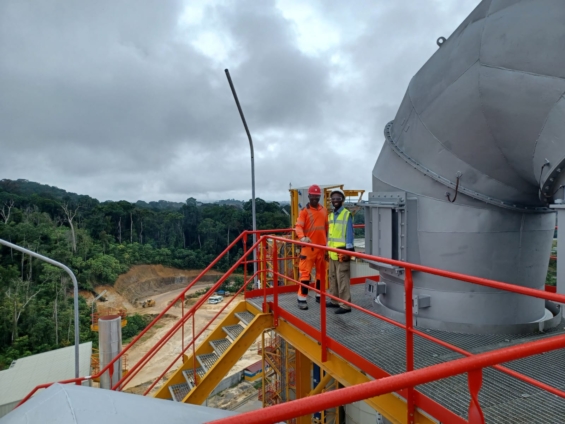
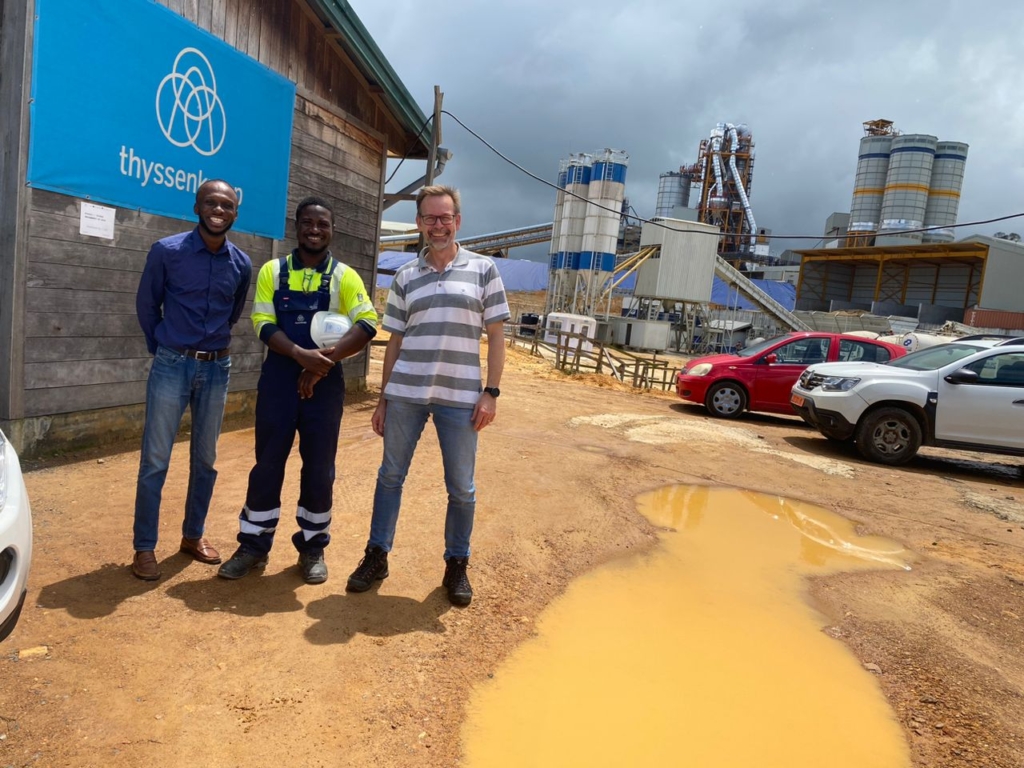
One industrial leader whose work reflects this shift is Seth Afari-Boateng, a Ghanaian professional whose career spans analytical science and heavy industry operations. Mr. Afari-Boateng who is currently the Regional Manager for the Sub-Saharan Africa Region at thyssenkrupp Polysius GmbH (a recognized technology leader in the cement equipment manufacturing sector) focuses on applying mathematical models and data-driven frameworks to improve cement plant after-market services and long-term operational performance.
Why After-Market Services Matter in Cement Production
After-market services, including maintenance planning, equipment reliability management, spare-parts supply, and technical support, account for a significant portion of a cement plant’s lifetime operating costs. Inefficiencies in these areas often result in unplanned shutdowns, delayed repairs, and inflated inventory levels, particularly in emerging markets where supply chains and technical resources are constrained. Rather than relying solely on reactive maintenance or experience-based decision-making, operators are increasingly turning to predictive and optimisation-based approaches to manage these complexities.
Applying Mathematical Models to Industrial Services
Mr. Afari-Boateng’s professional approach is grounded in advanced training in mathematical sciences and analytical modelling, which he has carried into industrial service environments. Instead of treating maintenance and service delivery as isolated technical activities, his work frames them as interconnected systems that can be measured, analysed, and optimised.
In practical terms, this involves using historical operational data to identify patterns in equipment performance, service response times, and spare-parts usage. These insights are then translated into structured planning tools that support more accurate forecasting and resource allocation.
Improving After-Market Performance Through Data
Across cement plant operations in Sub-Saharan Africa, Mr. Afari-Boateng implemented initiatives aimed at improving after-market service effectiveness through data-driven methods. These include:
●Using consumption and failure-rate data to model spare-parts demand, reducing excess inventory while maintaining availability of critical components
●Introducing maintenance planning frameworks aligned with equipment condition and usage patterns rather than fixed schedules
●Tracking service performance metrics to identify bottlenecks and prioritise high-impact operational interventions
These measures are designed to reduce variability in service delivery and improve plant availability over time.
Operational Optimisation Beyond Maintenance
Beyond after-market services, mathematical modelling has also been applied to broader operational optimisation efforts. By consolidating maintenance records, service logs, and production data into integrated performance dashboards, operational teams are better able to monitor trends, detect anomalies, and make informed decisions.
In cement manufacturing, incremental improvements in equipment uptime and service efficiency can translate into meaningful gains in output consistency, cost control, and energy utilisation.
A Data-Driven Approach to Industrial Leadership
Mr. Afari-Boateng’s work reflects a wider transformation underway in heavy industry, where leaders with analytical and quantitative skills are increasingly influencing operational strategy. As cement producers face rising cost pressures and higher performance expectations, the ability to translate data into actionable operational insights is becoming a key competitive factor.
While much of this work occurs behind the scenes i.e. in service models, maintenance plans, and optimization tools, its impact is visible in how cement plants operate, maintain reliability, and plan for long-term performance.
Mr. Afari-Boateng’s models and initiatives implemented in the after-market cement industry have resulted in improved after-market service, system-based known maintenance intervals of equipment and several spare parts consignment stock agreements with top cement producers such as Dangote Cement, BUA Cement, Lafarge Africa PLC, PPC Africa, Afrisam South Africa, Heidelberg Materials and others across Sub-Saharan Africa.
Latest Stories
-
Parliamentary Sports Committee to ‘interrogate’ Black Stars struggles with Ministry, GFA invitations
4 minutes -
Asutifi North Police arrest 7 in crackdown on suspected drug activities
15 minutes -
Attijariwafa Bank: What to know about the Moroccan Group taking over SG Ghana
18 minutes -
University Librarians Ghana honours past leaders for distinguished service
25 minutes -
Seychelles President leads high-level dialogue on Africa’s digital future at FALS Global Conversations in New York
26 minutes -
24-hour economy requires faster justice for commercial cases – Chief of Staff
33 minutes -
Five Agric Colleges receive digital tools to drive climate-smart farming
37 minutes -
GPL 2026/27: Kotoko face Karela test as Hamza Obeng takes temporary charge
57 minutes -
Morocco strike late to overcome 10-man Black Starlets
1 hour -
Nyaho-Tamakloe calls on Kurt Okraku to resign amid Black Stars struggles
1 hour -
Societe Generale Group agrees to sell Ghana subsidiary to Attijariwafa Bank
1 hour -
Accra: Fire breaks out in North Industrial Area at Avenor
2 hours -
Measure food systems progress not only by productivity but also ability to deliver healthy diets – AGRA
2 hours -
Black Stars: Seven years of decline while hashtagging love
2 hours -
Today’s front pages: Thursday, October 1, 2026
2 hours