

Audio By Carbonatix
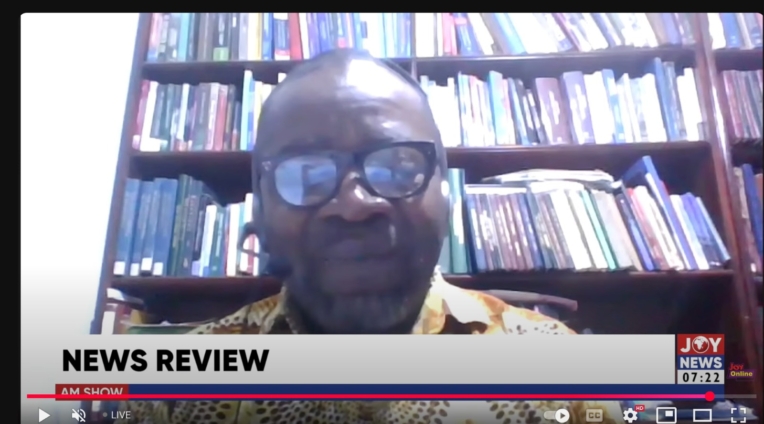
A senior lecturer at the Political Science Department of the University of Ghana, Dr. Kwame Asah-Asante, says Ghana’s fight against illegal mining, popularly known as galamsey, will remain ineffective if the government fails to involve key stakeholders, including traditional authorities, in finding sustainable solutions.
Speaking on JoyNews' AM show on the country’s renewed debate over illegal mining, Dr. Asante stressed that stakeholder engagement is the “first point of call” if the menace is to be tackled meaningfully.
“The first part of call is stakeholder engagement — that is critical. And stakeholders, once you bring them to the table, obviously you cannot do without the chiefs and opinion leaders within the communities. You need them,” he said.
He noted that while conversations around galamsey have focused heavily on pollution, state of emergency declarations, and enforcement, very little attention has been paid to those who control the lands where mining takes place.
According to him, traditional rulers have repeatedly complained that mining leases are granted without their knowledge or consent, creating a gap that allows illegal activities to flourish.
“Traditional rulers, who are the owners of the land, have said time and again that people come there with letters, having been given leases to come and work on the land without their knowledge,” he explained.
Dr. Asante also pointed to international examples, such as Chile and Brazil, where mining operations are planned in consultation with local communities to ensure better regulation, employment opportunities, and environmental protection.
Read also: NPP belittling govt’s efforts in galamsey fight – Mathias Alagbo
He argued that bringing traditional leaders, opinion leaders, and local communities to the negotiation table would make enforcement easier and ensure that mining activities are carried out responsibly.
“If you engage the stakeholders, enforcement will be part of that process. The issue of chemicalization or dechemicalization of mining processes will also be addressed,” he added.
Dr. Asante believes a locally driven, inclusive strategy will yield better results than the current top-down approach.
Latest Stories
-
When market traders want to lose weight: What are they doing and who are they listening to?
9 minutes -
‘I made the decision for him’ – Adebayor on Senaya representing Ghana
35 minutes -
Livestream: Ecobank-Joynews financial dialogue series
41 minutes -
AFCON 2027Q: Ghana face ‘difficult’ Ivory Coast clash without Kudus – Adebayor
1 hour -
Daily Insight for CEOs: Understanding the Competitive Landscape
1 hour -
IFC partners with Absa Bank Ghana and Complete Farmer to expand agricultural finance in Ghana
1 hour -
The thing that transforms An Image into Art is The Point of View
1 hour -
Mahama: Ghana’s health reset will prioritise local drug production
2 hours -
Mahama lists maternal and child health as first test of Accra Reset
2 hours -
Beyond the GH¢500b Target: A legislative blueprint to protect Ghana’s workforce (Part 2)
2 hours -
Alan Kyerematen explains why he contested 2024 election under Movement for Change
2 hours -
+233 to host Pat Thomas’ 80th birthday concert
2 hours -
EPA warns climate resilience plans face $22.6bn financing demand
2 hours -
Today’s front pages: Tuesday, September 22, 2026
2 hours -
Alan: ‘NPP has abandoned values of UP tradition, but I believe in those values’
2 hours