

Audio By Carbonatix
Bank of Ghana (BoG) Governor, Dr Johnson Asiama Pandit, says the central bank is moving to tighten regulation around financial technology and cryptocurrency operations to prevent future systemic risks.
Speaking during the ongoing IMF/World Bank Spring Meetings in Washington, D.C., he warned that fintechs and cryptocurrencies could become major sources of financial instability if not properly supervised.
“We do not have fintechs those days, but I believe that if not handled properly, fintechs, for example, that area could be an area where a risk could emerge going forward,” Dr Asiama said.
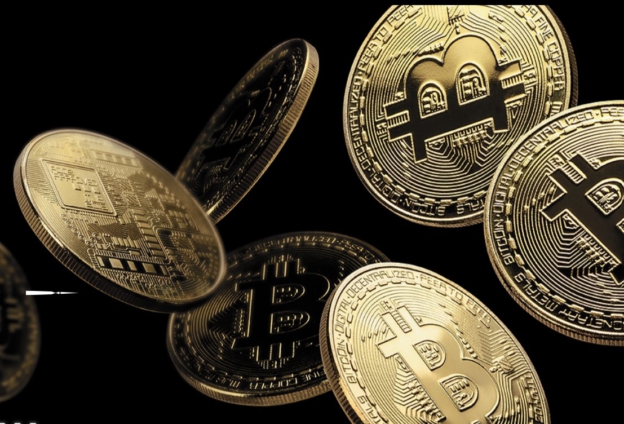
“And so we are looking at that industry well. We are mending the legislation there as well. And then you have the cryptocurrencies as well. This is another challenge for central banks. It wasn’t there 30 years ago, but I have to contend with it.”
The Governor emphasised that the Bank of Ghana must evolve to keep pace with these emerging financial trends.
“What I want to see is a central bank that is ready and able to adapt. It is critical today. It could be something else tomorrow. It could be anything. Who knows, but we should have the manpower, we should have that agility, we should have the balance sheet to be able to contend with any of these risks as they emerge in the future. That’s my vision,” he said.
Dr Pandit, who has been in office for eight months, reaffirmed his commitment to achieving price and financial stability.
“So my mandate is clear: to achieve price and financial stability. It’s been eight months now. I believe we are on course. We are on course towards achieving that,” he said.
He also expressed concern about Ghana’s persistent dollarisation problem, describing it as one of the biggest challenges undermining monetary policy efficiency.
“First of all, the issue of dollarisation. I’ve seen this for many years. I started central banking some 30 years ago. The phenomenon has been there, and so we are tackling it,” he explained.
The Governor said the upcoming “Cedi at 60” celebration on October 28 will mark a renewed effort to strengthen confidence in the local currency.
“We want that to mark a new beginning, because when we use the local currency in all transactions, that enhances the efficiency of monetary policy,” he said.
Dr Asiama said he hopes to be remembered for restoring confidence in the cedi and building a central bank that is agile and equipped to face future risks.
“It’s at the core of most of our problems, and so it’s one of the things I would want to be remembered for, that I came, I solved that problem, I made the local currency, you know, the currency of choice,” he said.
Latest Stories
-
PKO trio eye victories at Odwira Festival
2 hours -
346 Ghana Navy recruits pass out after 26 weeks of intensive training
2 hours -
Newsfile to discuss EOCO-MP arrest, drug trafficking, speech arrests and $235m water debt
2 hours -
JoyNews gets results as listeners raise GH¢40,000 to help 17-year-old student with cerebral palsy attend SHS
3 hours -
Vice President calls for stronger local pharmaceutical production to reduce medicine imports
3 hours -
The brewing tension at KNUST; Beware the Ides of October….
3 hours -
Health Ministry moves to integrate traditional medicine into mainstream healthcare
4 hours -
550 pupils in Kintampo South get educational lifeline as ‘Seeds of Hope’ reaches farming communities
4 hours -
Opoku Mensah urges Christian Council, House of Chiefs to speak up on democratic freedoms
4 hours -
Teacher unions’ strike: Minority demands immediate payment of teacher arrears, 20% deprived area allowance
5 hours -
The Accra-Kumasi Expressway: Building it right
5 hours -
Beyond gold exports: Building value and economic resilience from Ghana’s gold
5 hours -
2027 AFCONQ: Ghana under pressure as Gambia beat Somalia 2-1
5 hours -
Eastern NPP Women’s Organiser calls on AG, Police to secure bail for Salomey Baffoe
5 hours -
Poverty, illiteracy driving acceptance of vote-buying among women – Damongo Queen Mother
6 hours