

Audio By Carbonatix
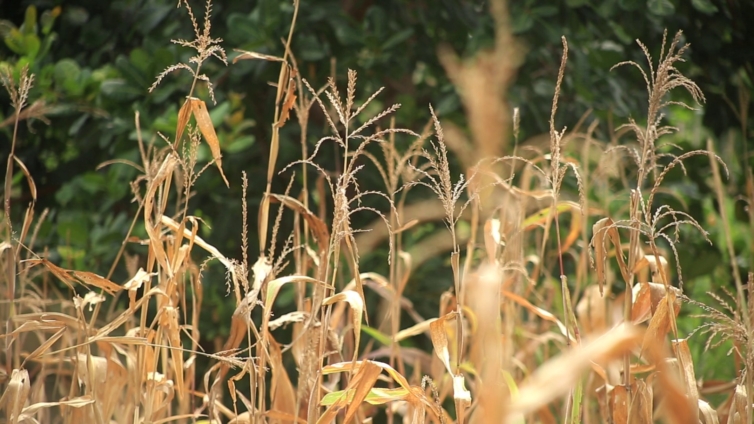
Once upon a time, the people of Nante Zongo, a small farming community near Kintampo, could count on the rains. The fields were green, and the farmers smiled.
But now, the rains no longer come when they should. The land is dry, the crops are dying, and the young people are leaving home in search of survival.
What was once a peaceful farming community has become a place of struggle.
According to the Ghana Meteorological Agency, rainfall patterns in parts of Ghana have become increasingly unpredictable over the past decade, with longer dry spells and shifting seasons affecting farming communities like Nante Zongo.
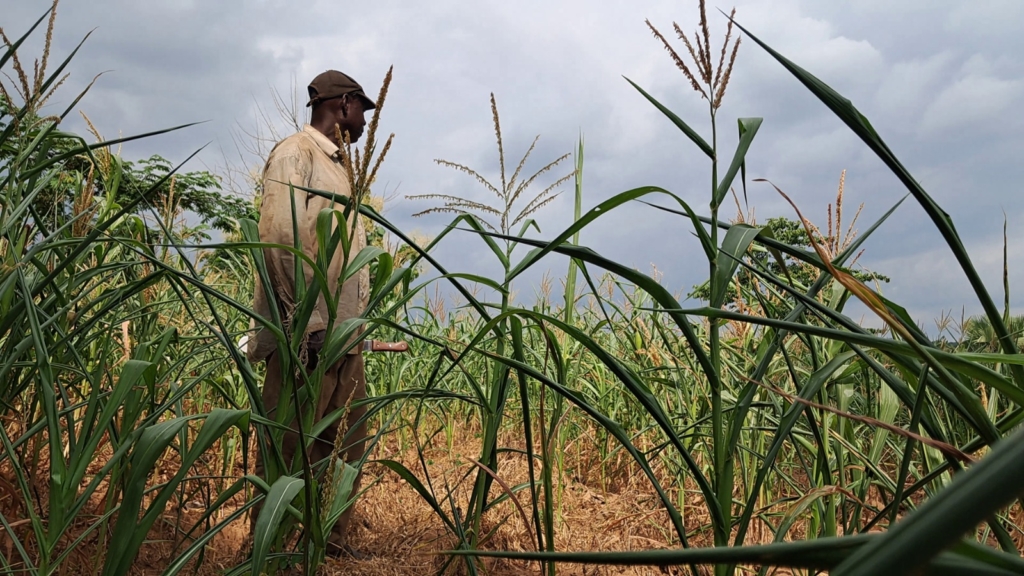
“This land used to give me plenty of maize,” says Kwadwo Boadi, a farmer who once cultivated 30 acres.
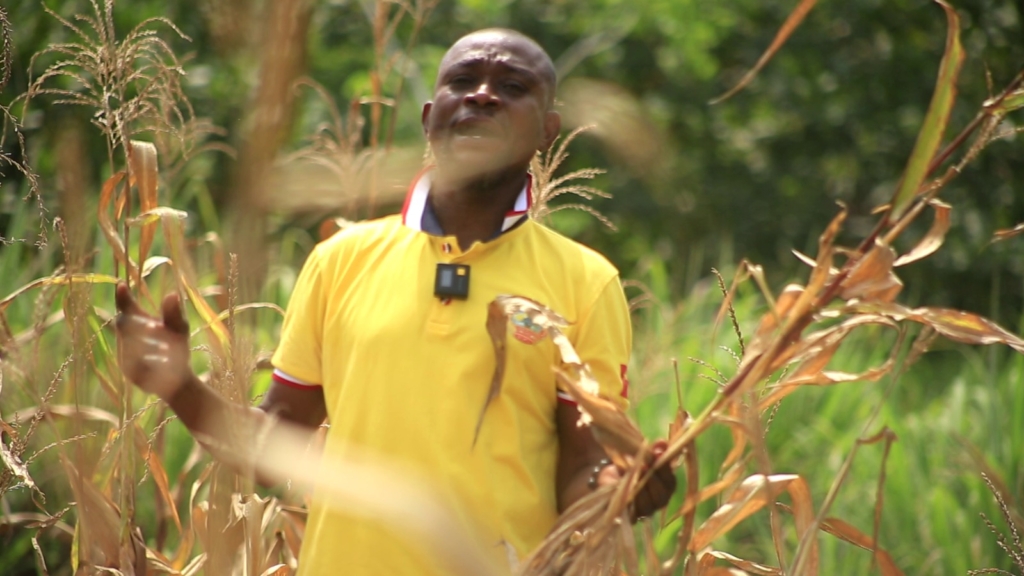
Kwadwo Boadi on his farm
He walks across the dry field, now cracked by heat. His voice is heavy with loss.
“Sometimes, I spend nearly GH₵ 60,000 every season, yet I get nothing. By now, we should be harvesting maize. But look at this land — it’s all dry. This is what happens every year now.”
Kwadwo says the last few years have been the worst he has ever seen. His crops fail again and again because the rains are delayed for months.
Nearby, Aisha Alhassan also stopped farming after losing all her okra crops.
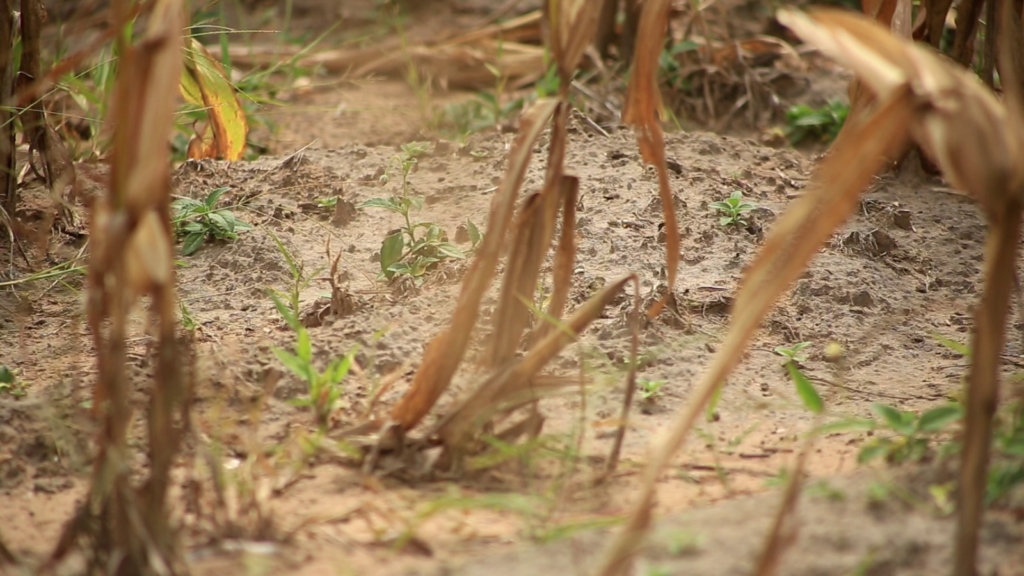
“Because of the bad weather, when we farmed our okra, it didn’t yield. The sun destroyed the plant,” she says.
For Aisha and many others in Nante Zongo, farming has become too risky. The rain is unpredictable, the soil is weaker, and farming costs are high.
Climate scientists say rising temperatures and erratic rainfall linked to climate change are making rain-fed farming more difficult across West Africa, increasing the risk of crop failure for smallholder farmers.
A global problem felt in a small village
Scientists say what is happening in Nante Zongo is part of a bigger global problem called climate change or global warming.
When people burn fuel like petrol, diesel, or coal, gases are released into the air. These gases trap heat around the Earth, making the planet hotter. As a result, rains become irregular, rivers dry up, and farmers struggle to grow food.
Findings from the Intergovernmental Panel on Climate Change show that Africa is one of the most vulnerable regions to climate change, with agriculture among the hardest-hit sectors.
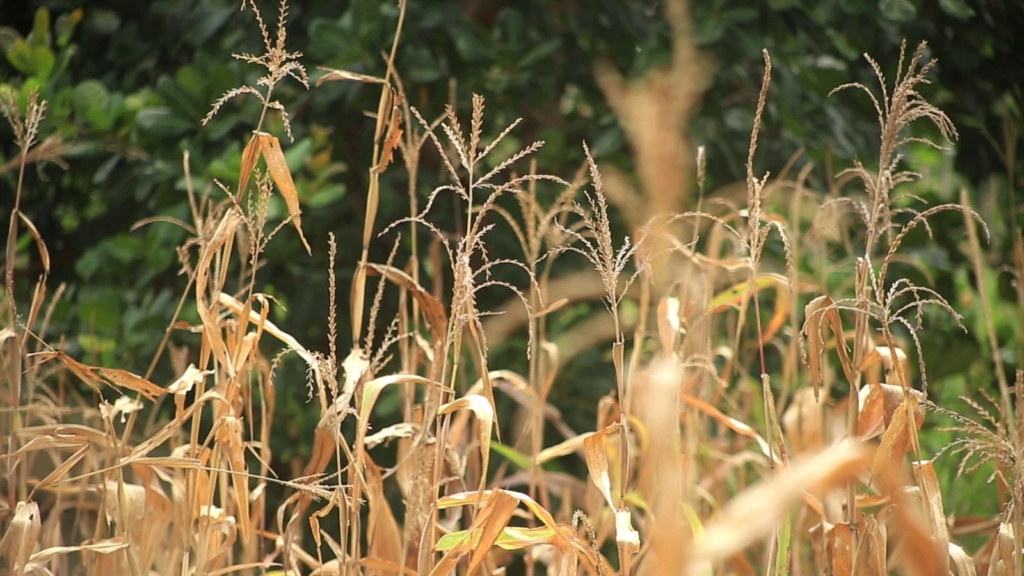
Adisah Sumani, another farmer, says she has been farming for 17 years — but things are getting worse.
“In the beginning, I would harvest around 10 bags of maize, but now, if you get even 4 bags, you are lucky. Last year and this year, we couldn’t harvest anything,” she says. “If you invest your money in farming now, it’s hard to get it back.”
The United Nations says Africa contributes less than 4% of global greenhouse gas emissions — yet it suffers the most from the effects: droughts, floods, and food shortages.
Ghana’s own climate plan under the Paris Agreement, known as the Nationally Determined Contributions (NDCs), promises to support farmers with drought-resistant seeds, better irrigation systems, and early warning information.
However, many farmers say there is a gap between these policies and what is happening on the ground, as support systems have not reached communities like Nante Zongo.
But in places like Nante Zongo, these efforts are yet to reach the people who need them most.
Kwadwo bends down to pick one of his maize cobs, breaking it open to show the few remaining grains.
“Just see what it has yielded. When you peel it, you won’t see any grains. The government has to come to our aid so that we can continue farming,” Kwadwo appealed.
The rise of climate migrants
Because of the changing weather patterns, many young people have left Nante Zongo. Experts call climate migrants — people who move not because of war, but because they can no longer survive from the land.
Experts warn that climate-driven migration is increasing across Africa as farming becomes less reliable, forcing young people to search for alternative livelihoods in cities.
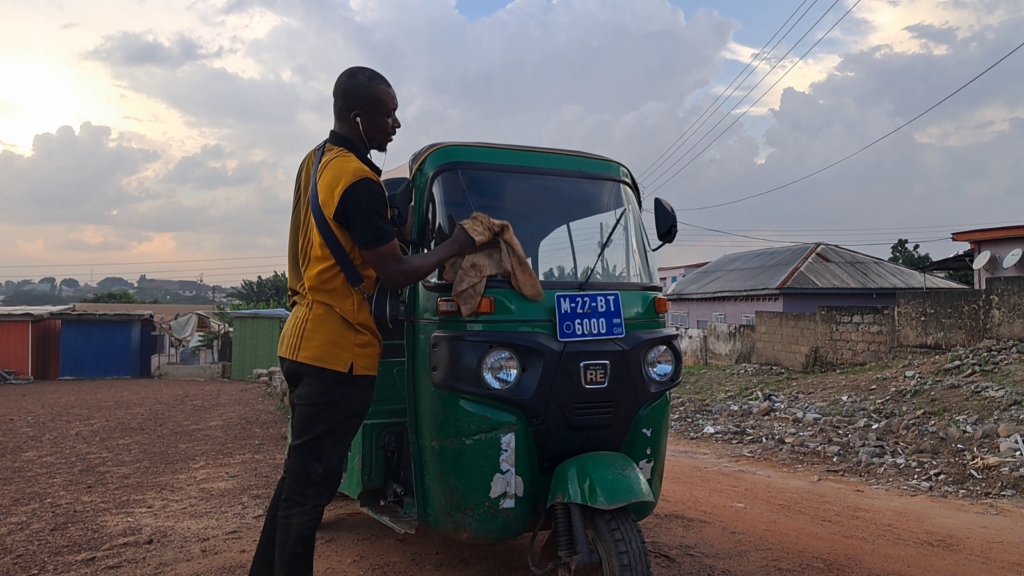
Many have settled in Kumasi, where they now work as tricycle (pragya) riders.
Nanji Ibrahim, once a proud farmer, is now one of them.
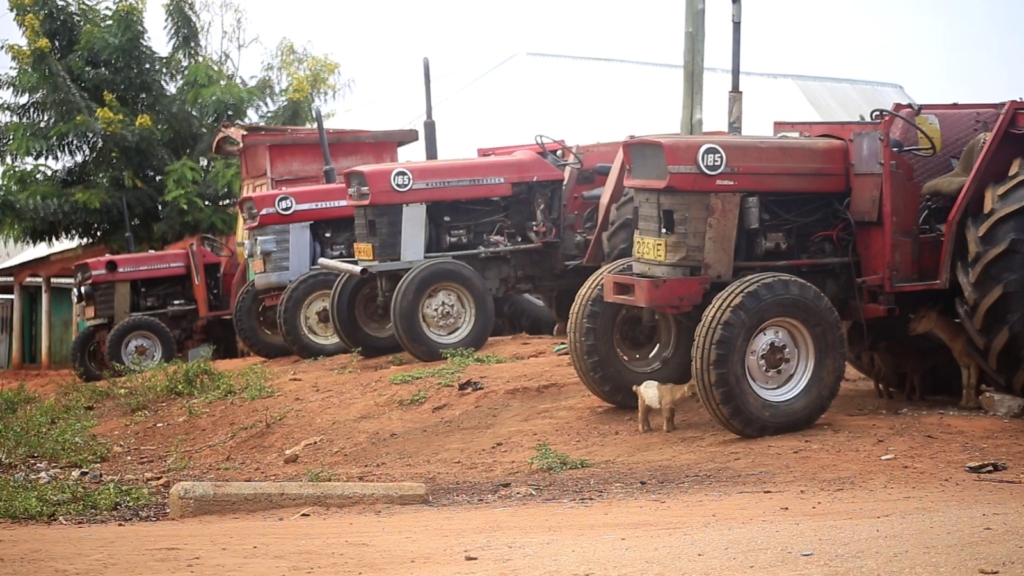
“I used to farm with my brothers — 13 acres of maize. We would get enough to fill 13 tractors. Now, you can farm all year and still not get one tractor full. It doesn’t rain like before. We had to leave. Now nobody is in Zongo again,” he says.
Experts warn that if things do not change, more people will be forced to abandon their farms.
A report by the World Bank says that by 2050, more than 80 million people in Africa could move because of droughts and floods.
A senior research scientist at the CSIR–Crop Research Institute in Kumasi, Dr. Stephen Yeboah, says changing weather patterns are already causing deep losses in farming communities.
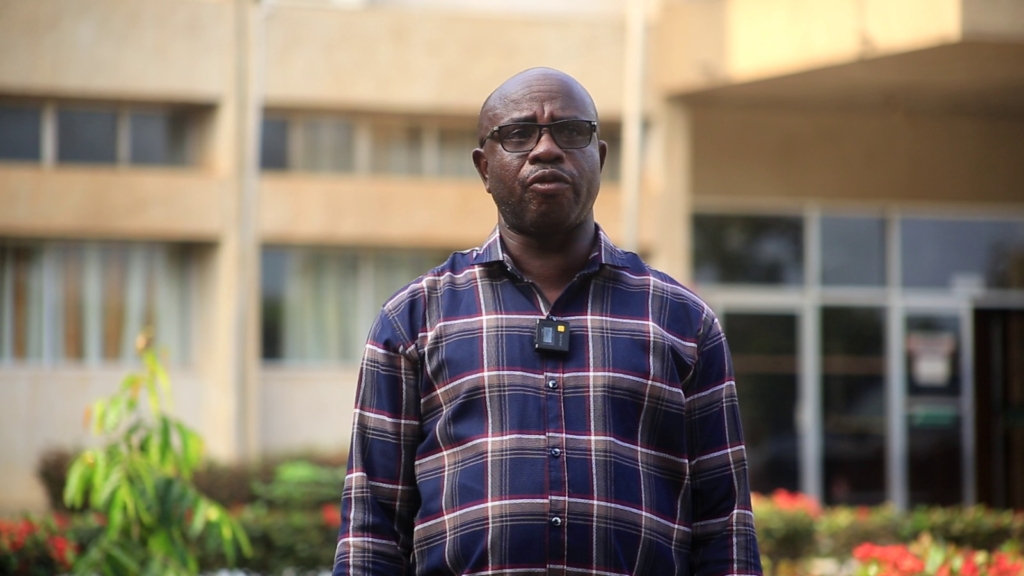
Dr Stephen Yeboah
“First, we see crop failures, livestock losses, and loss of income. This leads to migration. Many young people move away to cities to find jobs, while those who stay live in poverty because there’s a long period of inactivity,” he explains.
He believes local action can help.
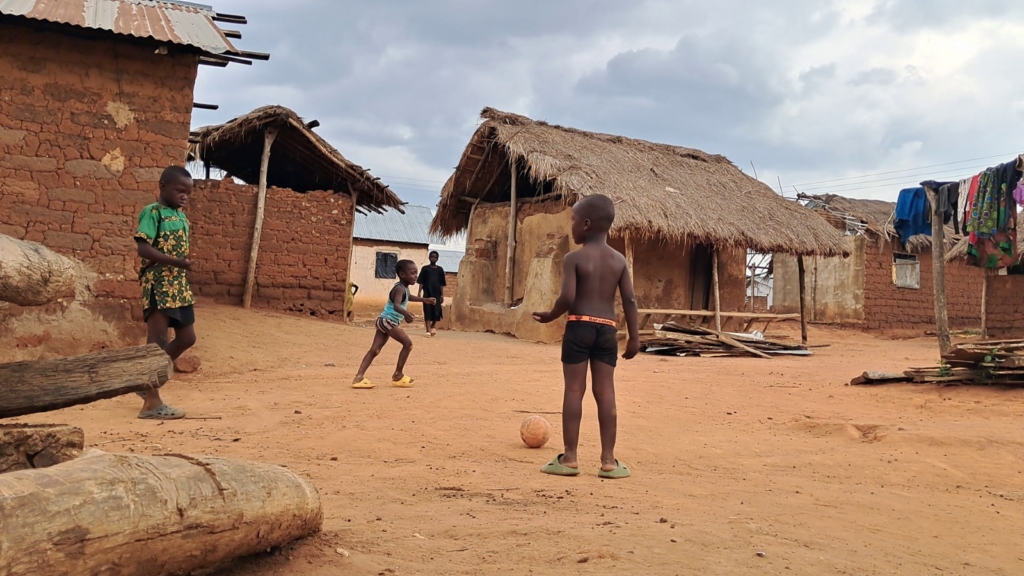
Children playing while their elderly brothers have left for the cities
At the district level, there is already a “Climate Smart Agriculture working group,” he says, and that, when it is well supported, interventions become more sustainable and have an immediate impact.
Dr Stephen Yeboah argues that this could be the foundation for a new, youth-friendly path out of hardship.
He suggests that climate-smart agriculture should go beyond seeds and irrigation — it must bring in mechanisation service providers, input suppliers, and other service providers so that farming becomes not just a subsistence activity but a viable business.
“If the government provides the enabling environment — insurance, market access, digital platforms and access to credit — and then leads the private sector, it will reduce the risks of farming activities,” he says.
He believes a public–private partnership model can turn agriculture into a real business for young people. Such a system, he says, could keep youth in places like Nante-Zongo by giving them a dependable, rewarding livelihood at home, rather than forcing them to leave their farms for the city.
Dreams of the elders
For the older generation in Nante Zongo, farming is more than a job — it’s life.
A 65-year-old farmer, Kadir, says he has watched all his children leave.
“I have about seven children who have gone to the cities for work. My friend too has six who have left. Now it’s just us old men and the small children,” he says sadly.

Another elder, Abubakar Iddi, believes the community only needs a little help to keep farming alive.
“We cannot stop farming; it’s what our fathers taught us. If we get even small support, we can continue,” he says.
The once fertile land of Nante Zongo now lies silent, dry, and cracked. The people are not giving up — but they need help.
For many farmers here, adapting to climate change is no longer a choice but a matter of survival.
They dream of the day when the rains will return, the farms will grow again, and no young person will have to leave home just to survive.
For now, they wait — between hope and the dry wind.
This is a JoyNews-CDKN-University of Ghana C3SS project with funding from CLARE R4I Opportunities Fund.
Latest Stories
-
Why I proposed Gold-for-Oil and Domestic Gold Purchase Programme – Bawumia discloses
3 minutes -
Sista Afia urges artistes to disinfect mics or get personal ones for shows
28 minutes -
Joy FM Back to School Discount Fair returns September 4–5
30 minutes -
Supporting small-scale miners to become medium-scale miners key to tackling galamsey menace – Bawumia
39 minutes -
No politician can beat Bawumia in 2028 if voters focus on issues – Miracles Aboagye
54 minutes -
Mahama reaffirms Ghana’s investment drive, calls on global investors to partner in Africa’s growth
1 hour -
Beyond the Numbers: Understanding the Bank of Ghana’s Domestic Gold Purchase Programme(DGPP)
2 hours -
AI can’t replace lawyers, Supreme Court nominee Anthony Forson warns
2 hours -
Teacher unions threaten strike over automatic promotion deadline
3 hours -
Yango Ghana earns Great Place to Work Certification for 2026
3 hours -
Over 400 companies ready to join 24-Hour Economy – Dr Rashid Pelpuo
3 hours -
Zanetor proposes CSIR funding for cassava, hemp-based alternatives to plastics
3 hours -
‘Judges don’t mingle with appointing authorities’ – Amoako Asante defends judicial independence
3 hours -
‘We’re getting close to A’ – Pelpuo rates government’s job creation B+
3 hours -
90% of planned strikes were called off under my tenure – Pelpuo
3 hours