

Audio By Carbonatix
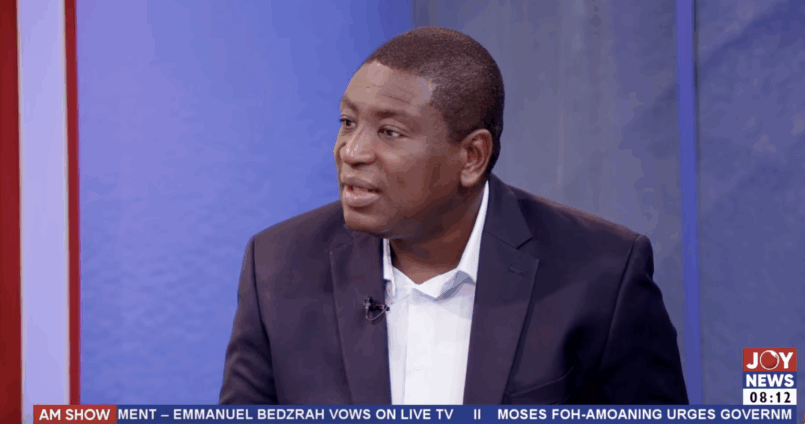
Executive Director of the Institute for Energy Policies and Research (INSTEPR), Kwadwo Poku, has accused the Bank of Ghana (BoG) of artificially maintaining the cedi’s exchange rate to create the impression of currency stability and temporarily lower fuel prices.
Speaking on JoyNews’ AM Show, Mr Poku argued that the recent reduction in petroleum product prices is not the result of improved market fundamentals but rather a deliberate intervention by the central bank and the Ministry of Finance.
“It has never been the case where the Bank of Ghana is doing the semantics they are doing to forcefully keep the dollar at a certain price when in reality we know they are using a lot of resources to do that,” he said.
The latest petroleum pricing window, which takes effect from November 1, is expected to see petrol prices fall by about 5.2% and diesel by between 6% and 8%, according to a report by the Chamber of Oil Marketing Companies (COoMAC).
Mr. Poku, however, believes the drop is temporary. He warned that maintaining the exchange rate below its realistic market value — around GH¢12.40 to GH¢12.50 per dollar — is unsustainable and could worsen the country’s fiscal deficit.
“For me, the cost of what the Bank of Ghana and the Ministry of Finance are incurring is huge because already we have a $21 billion hole in the budget due to this currency situation,” he explained.
He noted that pegging the cedi artificially low also affects government revenue collection, especially at the ports, since import duties are computed based on foreign exchange values.
According to him, the Ghana Revenue Authority (GRA) has been struggling to meet its revenue targets as a result of the government’s approach to managing the exchange rate.
“Since the FX value has been made low, it’s also affecting GRA’s receivables from the ports,” he said.
Mr. Poku further cautioned that with winter approaching, international fuel prices could rise again, putting more pressure on the cedi and potentially reversing the current price gains at the pump.
The energy analyst urged the government to adopt a more transparent approach to managing the exchange rate and fuel pricing system to avoid future fiscal shocks.
Latest Stories
-
Mahama pushes ‘health sovereignty’ agenda, says Global South needs control over resources
6 minutes -
Mahama: We are reforming systems, fighting corruption and improving use of public funds
12 minutes -
Catholic Bishops welcome task force to tackle drug menace, acknowledges NACOC’s efforts
21 minutes -
Ghana Catholic Bishops demand urgent action against drug trafficking
26 minutes -
Tamale: 5 arrested over suspected drug activities; police seize pistols, narcotics
36 minutes -
We have lost a great developer – Mankranso residents pay tribute to late DCE
38 minutes -
Ghana Law Society sets September 30 for maiden Bar Conference on legal reforms
1 hour -
GPL Week 3: Port City’s Gyetuah bags a brace as 9 outstanding players named NASCO Players of the Match
1 hour -
Visibility without substance is just noise; I don’t seek popularity—Dr Oppong-Fosu
1 hour -
The late Abubakar Sedik was an exceptional DCE – Ashanti Regional Minister
2 hours -
Black Stars must win next game against Côte d’Ivoire – Carlos Queiroz
2 hours -
Global Game Scouting Tournament set for September 25 kick-off in Accra
3 hours -
Queiroz outlines long-term plan to rebuild Black Stars for 2030 World Cup
3 hours -
‘Most important trophy now is the next game’ – Carlos Queiroz
3 hours -
Mahama to host high-level Accra Reset meeting to assess progress, renew commitments
4 hours