

Audio By Carbonatix
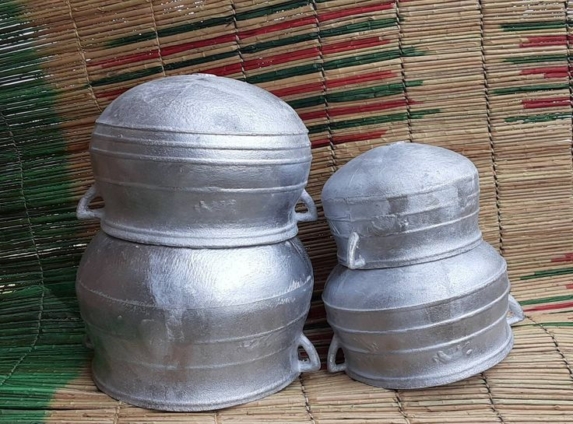
The Eastern Regional Manager of the Food and Drugs Authority (FDA), Mrs. Anita Owusu-Kuffour, has called for an immediate ban on the locally made cooking pots popularly known as “Dadesen.”
She cited dangerous levels of lead detected in its production, warning that the contamination posed serious health risks to consumers.
She made the call during a stakeholder engagement on heavy metal contamination in cereal-legume mixes held in Somanya, in the Yilo Krobo Municipality of the Eastern Region.
Mrs. Owusu-Kuffour explained that FDA surveillance had revealed that lead, a toxic heavy metal, is often added during the manufacturing process of “Dadesen” pots to soften the metal and ease moulding.
However, this practice exposed users to severe health risks, including cancer, kidney failure, and Parkinson’s disease.
“When they are making the pots, the metal becomes hard, so they add lead to soften it. The sad part is that most of the local manufacturers have no idea about the health implications,” she said. “We are therefore advising the public to stop using ‘Dadesen’ that contains lead.”
When asked how consumers could identify pots made with lead, she noted that the best solution is for artisans to stop using lead entirely and adopt safer alternatives, such as stainless steel for cookware production.
She also cautioned against careless use of nonstick cookware, warning that once the protective coating begins to wear off, it can release toxic chemicals and heavy metals into food.
“If the coating wears off, you are exposing yourself to serious health implications, including cancer, because some of these coatings also contain heavy metals,” she explained.
Ms. Owusu-Kuffour further warned that some materials used in manufacturing kitchen utensils are questionable and can become harmful when scratched or corroded.
In such cases, chemicals may leach into food and enter the bloodstream, leading to chronic illnesses.
“A good-quality stainless steel product can serve both purposes: safety and durability,” she said.
The Manager emphasised that ensuring food safety required a collective effort among producers, regulators, and consumers.
“As science and technology improve, it is important for all of us to adapt and move away from harmful practices to protect public health,” she said.
Latest Stories
-
UPSA uncovers mass results manipulation involving 178 students, over 500 results compromised
15 minutes -
ECG announces planned power outages in parts of Tema from Sept. 29 to October 1
36 minutes -
Sylvester Mensah urges Latenu FM to promote trade, export opportunities in Ga
50 minutes -
Ga language under threat of decline as children shy away from speaking it – Sylvester Mensah
55 minutes -
‘Let every Ga child you raise know the Ga language and story’ – Sylvester Mensah
1 hour -
‘We are not deterred’ – Ablakwa responds to backlash over South Africa evacuation
1 hour -
NCA announces major voice and data disruption across Northern Ghana due to fibre cuts
2 hours -
Photos: Housing solutions take centre stage at Day 2 of the 3rd Republic Bank-JoyNews Habitat Fair
2 hours -
Ghana Air Force passes out 293 recruits after six months of intensive training
3 hours -
EOCO vrs Baffour Awuah: EOCO should have secured warrant before arrest attempt at court – Inusah Fuseini
3 hours -
Triple fibre cuts disrupt telecom services across Northern, Oti regions – Sam George
3 hours -
Politicisation could undermine parliamentary probe into cocaine seizures – Dr Osae-Kwapong
3 hours -
EOCO chases MP: Can Section 41 cure lacuna in EOCO Act? – Inusah Fuseini asks
3 hours -
GNFS, GWL inspect fire hydrants in Ministries enclave; 23 found faulty
3 hours -
Gov’t directs release of 50,000 bags of grain to ECOWAS
3 hours