

Audio By Carbonatix
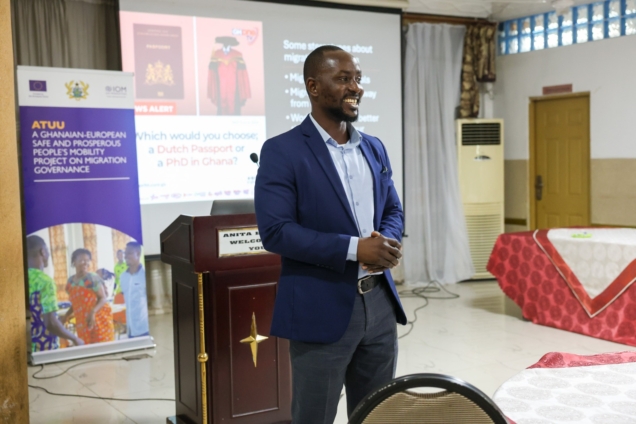
A lecturer at the University of Media, Arts and Communication (UniMAC), Dr. Stephen Tindi, has urged journalists to report migration issues with greater sensitivity and from a rights-based perspective to help shape public understanding and guide policy decisions.
Speaking during a media training on migration, Dr. Tindi said journalists play a crucial role in how society perceives migration and migrants, yet many stories fail to capture the full picture due to limited knowledge or misuse of language.
“Although migration issues exist in our society, we do not hear much about them because journalists have not reported widely on them,” he said. “Most of the migration stories we read show the need to improve journalists’ skills, such as the correct use of terminology and inclusion of diverse voices.”
He explained that the use of inappropriate terms to describe migrants can have lasting consequences, reinforcing stereotypes and discrimination.
“Regardless of the circumstances migrants find themselves in, they are human beings. It is important for journalists to adopt a rights-based approach and tell stories that reflect their humanity, even in irregular situations,” he added.
Dr. Tindi emphasised the need to train journalists to better understand migration terminology and approaches that promote empathy and accuracy. “There is no better way to shape public understanding of migration than by influencing how journalists construct migration narratives,” he said.
The training, organised with support from the International Organization for Migration (IOM), sought to enhance journalists’ capacity to report responsibly on migration issues in Ghana and beyond.
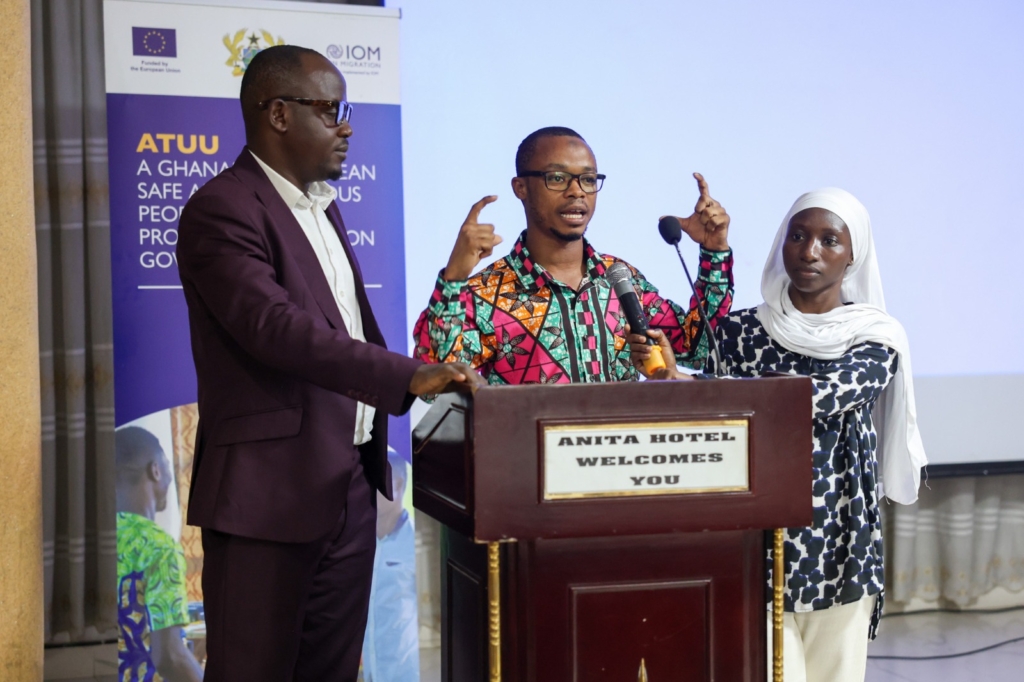
IOM Programme Support Officer, Camilla Taranta, said the session was designed to promote integrity, fairness, and empathy in migration reporting.
“Let us use this opportunity to learn from one another, to challenge assumptions, and to reaffirm our shared commitment to truth, fairness, and the fundamental rights of all people on the move,” she said.
Some participating journalists described the training as insightful and transformative.
A reporter with the Daily Guide, Eric Kombat, said the workshop deepened his understanding of migration reporting and the importance of correct language use.
“It was fascinating learning the right words and terminologies. Until this training, I never knew using words like ‘illegal migration’ was wrong. This is a new chapter in my reporting on migration,” he said.
The media training forms part of ongoing efforts by IOM and its partners to improve migration communication and promote balanced narratives that protect human dignity.
Latest Stories
-
Government procures over 2,000 transformers as Ghana’s electricity access hits 89.13% – Energy Minister
24 minutes -
UTAG-UG threatens strike on October 19 over unpaid allowance
32 minutes -
Let The Constitution direct Chieftaincy to deliver “All Development Is Local”
2 hours -
John Jinapor outlines renewable energy, nuclear power priorities for 2027
2 hours -
Ghana explores centre of excellence for hearing, communication and cochlear implant care
3 hours -
Schizophrenia-related disorders lead mental health cases recorded in Ghana
3 hours -
Dutch authorities enlist Ghana in hunt for fugitive drug lord Bolle Jos
4 hours -
Ghana housing finance conference adopts communiqué to improve affordable housing access
8 hours -
Special Initiatives Minister urges Wa Technical Institute to enrol more girls as EU-backed solar training lab opens
9 hours -
In the matter of my first year at the Bar
9 hours -
ActionAid Ghana calls for an end to child marriage, greater investment in girls’ rights
9 hours -
Newsfile to tackle World Cup visa scandal, beach demolitions, education strikes, BRICS bid
9 hours -
UK-Ghana Trade & Investment Summit: Trade Resource Centre to help businesses maximise UK-Ghana trade opportunities
10 hours -
Embassy of Denmark celebrates World Maritime Day
10 hours -
Linking LEAP to productive inclusion could cut extreme poverty by 2030 – UNICEF
11 hours