

Audio By Carbonatix
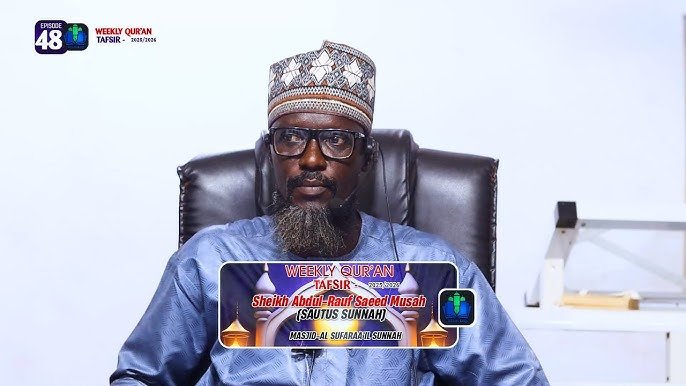
The Overlord of Dagbon, Ya-Naa Abukari Mahama II, has imposed a sweeping ban on Saeed Musah Abdul Rauf of the Anbariya Islamic Movement in Tamale, citing repeated instances of disrespectful and radical remarks despite several warnings from traditional authorities.
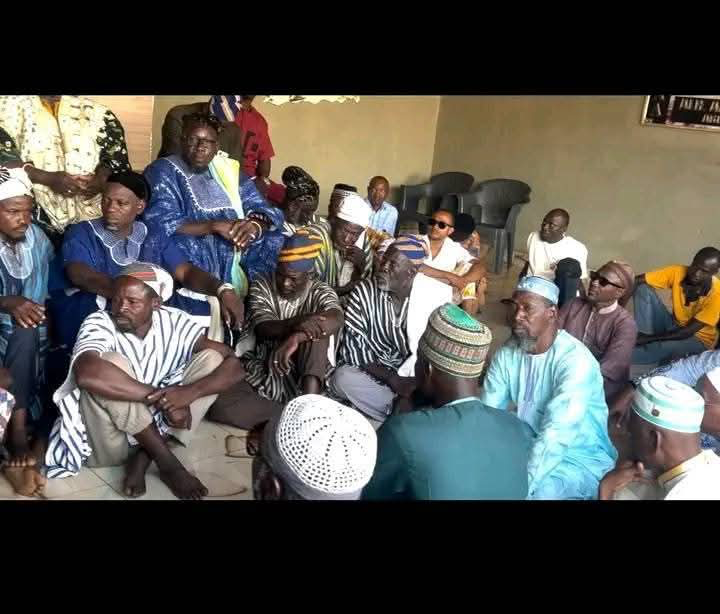
The announcement was made on Monday at the Gukpegu Naa Palace in Tamale, in the presence of the controversial Sunni preacher and leaders of the Anbariya Islamic Movement.
Announcing the decision, the Linguist of the Gukpegu Traditional Area said Imam Abdul Rauf Saeed’s recent public sermons and comments had undermined peace, unity, and the moral fabric of Dagbon, posing a potential threat to community harmony.
According to the Palace, Imam Saeed had earlier been cautioned by the Ya-Naa’s elders and representatives of the Dagbon Council of Imams following multiple complaints about his provocative and divisive preaching.
His refusal to heed those warnings led to the current sanction, which bars him from leading prayers or delivering sermons within the Dagbon Traditional Area and the Northern Region.
Sheikh Abdul Rauf has long been known for challenging both Islamic and traditional establishments. His sermons are often laced with takfirism and provocative rhetoric.
The latest ban follows a viral sermon in which he criticised a long-standing poetic appellation of the Ya-Naa — “Tihi ni mori lana,” meaning “the owner of the trees and grasses” — describing it as Islamically offensive.
The phrase, however, is a traditional metaphor that symbolically portrays the Dagbon King as protector of both the strong and the weak, and not a literal claim of ownership.
Since rising to prominence about four years ago, Sheikh Abdul Rauf has led the Anbariya Islamic Movement into conflicts with nearly all other Islamic sects in Tamale, frequently labelling them “kafir,” an Arabic term for “disbelievers.”
His criticism has even extended to respected figures such as Mallam Basha of Nuria Islamic, leader and founder of the breakaway Anbariya Sunni Movement.
Before the ban was announced, tensions were high at the Palace when leaders of the Anbariya Islamic Movement arrived without Abdul Rauf himself.
He was later compelled to appear before the Gukpegu Naa’s elders, where the sanction was formally pronounced in his presence.
Reactions to the ban have been mixed. Some residents and Islamic scholars in Tamale have praised the decision as necessary to preserve peace and mutual respect between faith and tradition.
Others, however, have called for dialogue and reconciliation between the Palace and the Anbariya leadership.
As of press time, neither the Anbariya Islamic Movement nor Abdul Rauf had issued an official statement on the matter.
Latest Stories
-
GSE showed strong performance in August 2026 despite recording more stock losses
27 minutes -
If CJ needs ethics law to know SOE comments were wrong, he may not be worthy of office – Arthur Kennedy
1 hour -
Stop touring state agencies and focus on the Judiciary’s problems – Arthur Kennedy to CJ
2 hours -
Apologise and don’t do it again – Arthur Kennedy to Chief Justice over SOE comments
2 hours -
Chief Justice remains committed to judicial independence, justice and equality – Judicial Service
2 hours -
Ghana concludes evacuation of citizens from South Africa; total returnees reach 1,900 – Ablakwa
2 hours -
Africa must define its own green transition path – Prof Fatima Denton
3 hours -
WASSCE 2026: English Language performance falls to 62.4% – WAEC
3 hours -
WASSCE 2026: Social Studies records sharp rebound as Maths, Science also improve
3 hours -
2026 WASSCE entry rises by 11% as 512,862 candidates sit exams
4 hours -
WASSCE 2026: English Language performance falls to 62.4% – WAEC
4 hours -
WAEC cancels 2026 WASSCE results of 8,295 candidates over examination irregularities
4 hours -
WAEC releases provisional 2026 WASSCE results for 512,862 candidates
4 hours -
CJ’s remarks on SOEs were made in good faith, not to undermine judicial independence – Judicial Service
7 hours -
Bright Future Alliance pays courtesy call on Akufo-Addo, invites him to African Leaders of Influence Lectureship Series
8 hours