

Audio By Carbonatix
In a world where good governance increasingly depends on evidence and accountability, one Ghanaian is making a quiet but powerful impact behind the data. Richard Adjadeh is part of a new generation of African policy analysts using numbers not just to measure development, but to shape it.
From the lakeside town of Kpando to the lecture halls of Michigan State University (MSU), and now to the analytical nerve centre of Afrobarometer, Richard’s story is one of curiosity, grit, and purpose.
“I’ve always believed data should speak for people,” he says, a simple philosophy that has guided his journey from student to scholar, and now to policy influencer.
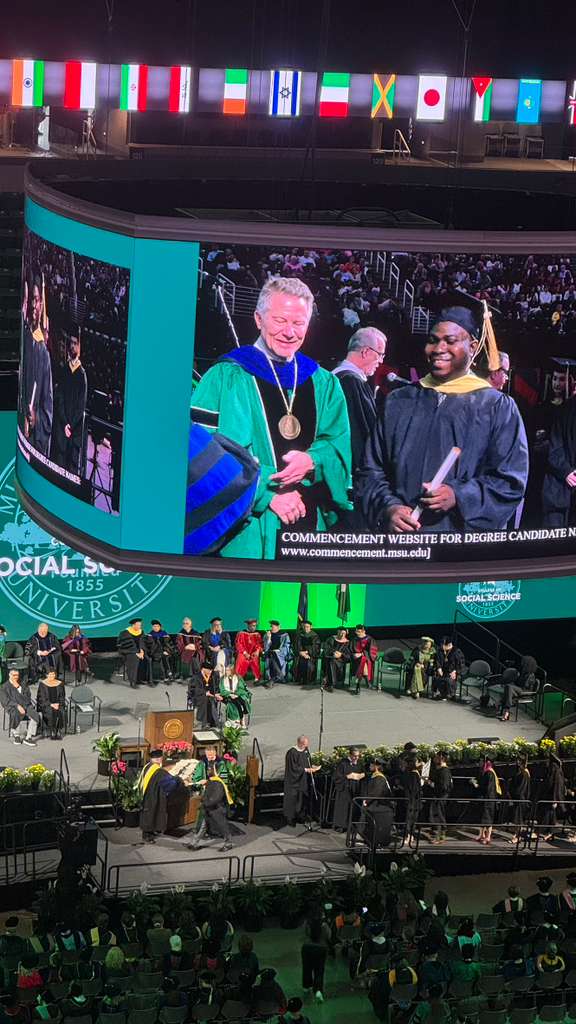
Richard’s fascination with governance began early in Ghana, nurtured by a desire to understand why policies succeed or fail, and how they affect ordinary citizens. That passion took him across the Atlantic to pursue a Master of Public Policy (MPP) at Michigan State University, where he graduated with distinction, earning recognition for his excellence in economics, policy design, and quantitative analysis.
At MSU, Richard immersed himself in a world of numbers and nuance, using econometrics and social-data modeling to answer big governance questions. But it was his work with Afrobarometer, the world’s leading pan-African survey network on democracy and governance, that truly set him apart.
Under the mentorship of Dr. Carolyn Logan, Director of the MSU-based Afrobarometer Center, Richard joined the Analysis Unit, where he helps turn massive volumes of survey data into insights that shape national and continental policy. Governments, civil society, and international organizations rely on this data to understand citizens’ views, and to design better responses.
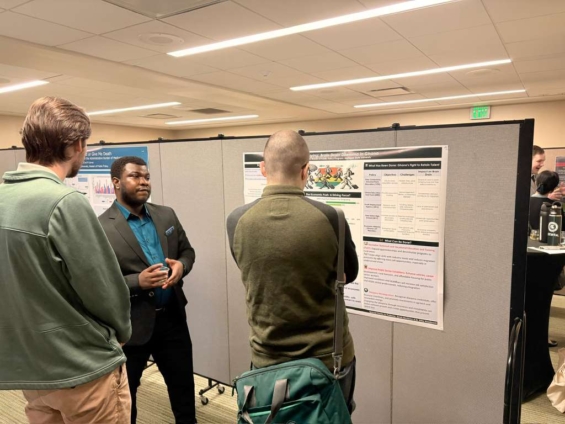
Among his standout contributions is a new data model he developed, called the Branding Identification and Bias-Adjustment Framework (BIBAF). The framework offers a scientific way to detect and correct bias that can creep into surveys through institutional branding or enumerator influence, a challenge often overlooked in opinion research. Once widely adopted, BIBAF could set a new gold standard for survey integrity across Africa.
“Richard’s work demonstrates how young African scholars are redefining the future of governance research,” said one senior Afrobarometer colleague. “He combines technical expertise with a deep understanding of context, something the continent’s data ecosystem needs now more than ever.”
Through Afrobarometer, Richard’s analyses have helped shape reports consulted by governments and think tanks across the world. Yet beyond the statistics, what drives him is something deeply human. He sees data as a language of inclusion, a bridge between policymakers and citizens.
“For me, policy shouldn’t be the preserve of experts,” he explains. “It should be a national conversation, supported by facts everyone can access and understand.”
That belief has inspired him to mentor young analysts across Africa, building capacity and promoting a culture of transparency and evidence-based reasoning in governance.
As Africa’s voice grows stronger in global policy debates, Richard stands at the intersection of local insight and international best practice. His blend of analytical rigour, policy understanding, and leadership makes him not only an emerging name at Afrobarometer, but also a symbol of the continent’s data-driven future.
From his beginnings in Kpando to his academic excellence at Michigan State, and his ongoing mission to strengthen democracy through data, Richard G. Adjadeh embodies the power of purpose-led scholarship. His story is a reminder that in the quest for progress, sometimes the most powerful voices are the ones found in the data.
Latest Stories
-
Why Muzic Mensah walked away from gospel and embraced highlife
2 hours -
Ayariga rallies public, private sector support for Jamestown waste evacuation
2 hours -
NSMQ 2026: Three schools, one trophy – PRESEC, AUGUSCO and Accra Academy set for grand finale
3 hours -
Government directs TDC to comply with TMA development control authority
3 hours -
Recognition of reparatory justice creates responsibility for Ghana – Vice President
3 hours -
KNUST SHS defeats Osei Adutwum SHS to win Luv FM High School Debate
3 hours -
Afenyo-Markin, A-Plus unite to restore peace after New Winneba clashes
3 hours -
A-Plus, Afenyo-Markin to visit families affected by New Winneba violence
3 hours -
A-Plus urges calm as authorities move to end New Winneba tensions
3 hours -
Customs explains red, green channels at Accra International Airport
3 hours -
Agyeman‑Rawlings calls for stronger child protection in armed conflict
4 hours -
History made! Accra Academy book first-ever NSMQ final spot after dominant semi-final display
5 hours -
Woman’s decomposed body found in gutter near Haatso DVLA office
5 hours -
Residents of Akaa, surrounding communities demand improved network coverage
5 hours -
‘Chief Justice’s role is to administer justice, not protect any agenda’ – Haruna replies Franklin Cudjoe
5 hours