

Audio By Carbonatix
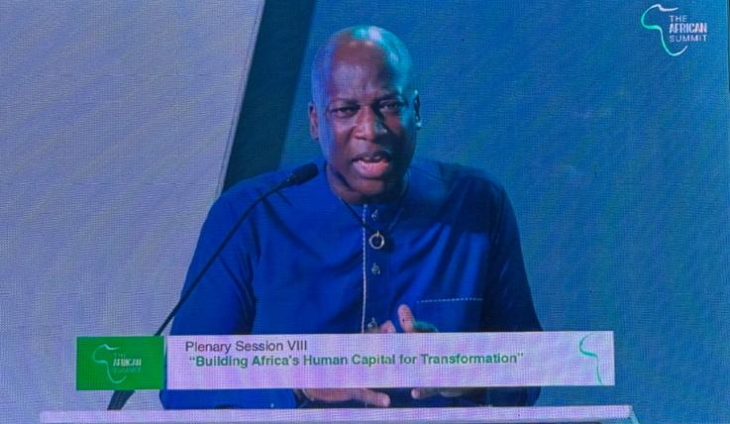
Business executive and public intellectual Yaw Nsarkoh, has called on African leaders to fundamentally rethink how “human capital” is defined and deployed in the continent’s development agenda, warning that current approaches risk entrenching elite-driven growth while leaving the majority behind.
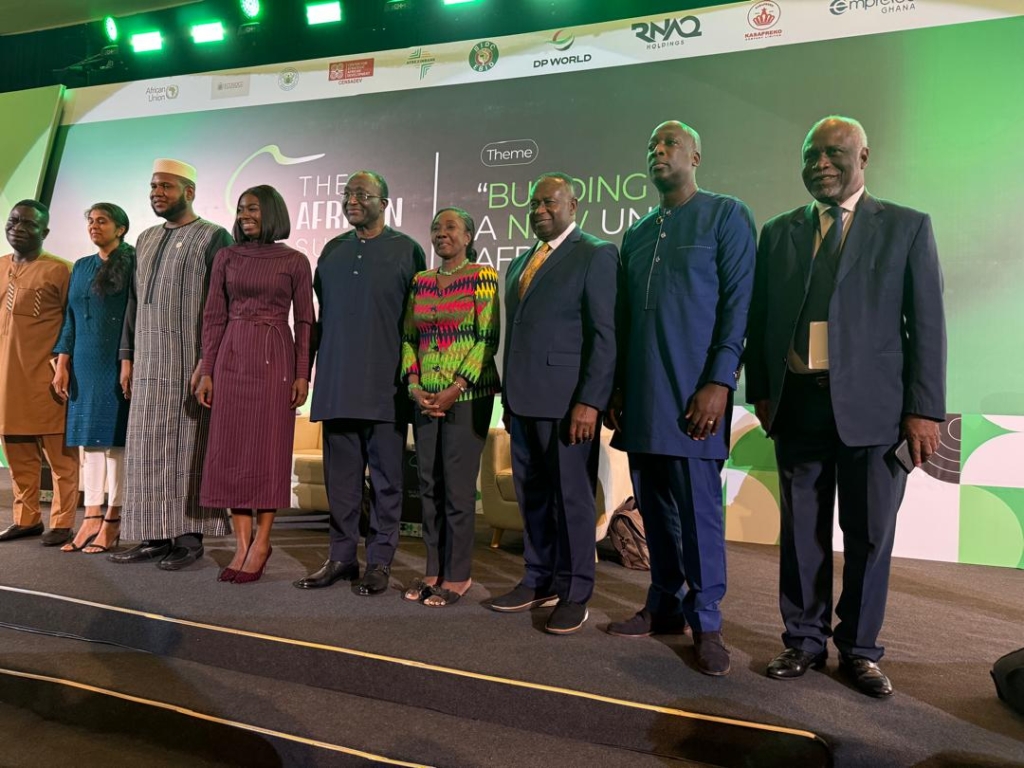
Speaking on December 17 at a high-level summit in Accra themed “Building a New United Africa”, Nsarkoh questioned whether policymakers genuinely include workers, peasants and informal-sector participants when they speak about human capital, or whether the concept has been reduced to a narrow focus on professionals and elites.
“The way human capital is used in policy spaces betrays an elite consensus,” Nsarkoh argued, asking whether this exclusion was itself one of Africa’s deepest structural problems.
Addressing the African Union’s Agenda 2063 and the African Continental Free Trade Area (AfCFTA), Nsarkoh described Africa’s long-term vision as ambitious but weak on execution, arguing that unity must be treated as a means to improve livelihoods, not an end in itself.
He challenged leaders to confront uncomfortable questions about governance, corruption and institutional capacity, noting that what he described as “Santa Claus democracies” across the continent had failed to deliver material improvements in people’s lives, contributing to democratic backsliding and renewed military coups.
Nsarkoh warned that Africa’s development debate remains trapped in outdated orthodoxies, including neoliberal reforms of the 1980s and 1990s, which he said had failed to build strong public institutions or inclusive economies.
He called for major educational reforms, a renewed focus on vocational and agricultural capabilities, and a move towards people-centred development models grounded in Africa’s lived realities.
He also urged African leaders to better read global geopolitical shifts, pointing out that Africa continues to export largely unprocessed commodities while failing to build value-added trade links with emerging regions such as ASEAN and Latin America.
According to Nsarkoh, the true measure of progress lies not in GDP growth but in improvements in well-being, echoing the work of economists Joseph Stiglitz and Amartya Sen. “If AfCFTA is only about numbers, it will fail. If it is about people, it will endure,” he said.
Latest Stories
-
BRICS Or Balance? What Ghana’s bid really means
12 minutes -
GPRTU wants full TRAFFITECH-GH implementation to start in 2027
31 minutes -
Mahama announces plans to import electric wheelchairs for PWDs
35 minutes -
KGL U17 Colts 2026: Western beat Prempeh Elite Academy to set up final final with Greater Accra Region
54 minutes -
Late Solanke strike salvages 10-man Spurs draw at Man United
1 hour -
Gender Ministry to monitor welfare of Nana Akua Addo’s children amid domestic violence case
1 hour -
Benedict Okyere Yeboah: Ghana’s football problem goes beyond sacking a coach
1 hour -
GPL 2026/27: Darkwah Wiafe’s winner sees All Blacks beat Kotoko
1 hour -
ITF World Tour : Patel Wins Boys’ Singles Final at J100 Accra
2 hours -
Ghana must pursue BRICS partnership if it brings economic benefits – Kpebu
2 hours -
Success and Wright Claims J100 Accra Girls’ Doubles Championship
2 hours -
ITF J100: America’s Wright wins J100 Accra Girls’ Singles Title
2 hours -
Expedition hopes to find aviator Amelia Earhart’s plane on remote island
2 hours -
US seeks changes to rejected $109m health compact with Ghana – Mahama
2 hours -
Nine dead in mass shooting at Pennsylvania home
3 hours