

Audio By Carbonatix
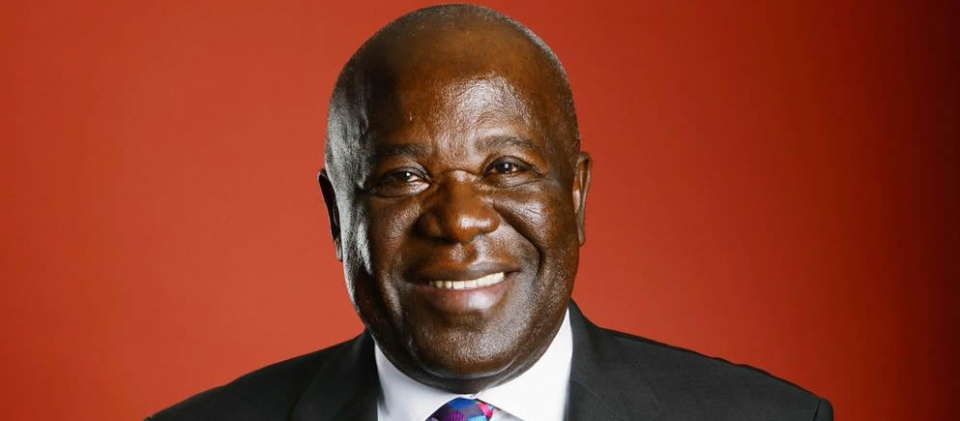
Business titan Sir Sam Jonah has challenged African governments and business leaders, insisting that the continent's colossal natural wealth provides "no excuse" for its persistent underdevelopment when compared to resource-poor nations that prioritise governance.
Speaking at the launch of the Africa Trade Summit 2026 in Accra on Tuesday, November 18, Sir Sam Jonah held up Singapore as the ultimate indictment of African leadership, using precise economic data to underscore his point.
“When Singapore became independent in 1965, it was a swampy island with no natural resources. No gold, no oil, no cocoa, no bauxite. Just people,” Sir Jonah stated.
He contrasted this bare beginning with the current economic powerhouse it has become, a nation projected to have a nominal GDP per capita of over US$94,000 by 2025, one of the highest in the world, rising from a meagre US$500 in 1965.
The mogul insisted that the Asian miracle was not accidental but engineered through deliberate policy, declaring, “Their transformation was not magic; it was management. It was competence. It was continuity of policy.”
The 'Simple Compact': Standards, Integrity, and Institutions
Sir Jonah, who recalled having the honour of meeting Singapore's founding father, Lee Kuan Yew, detailed the foundational governance philosophy that spurred the city-state's dramatic rise.
He outlined the fundamental division of labour that secured investor confidence and rapid industrialisation:
“Lee Kuan Yew... insisted on a simple compact: Government will provide stability, rule of law, clean institutions. Business must provide innovation, jobs and growth.”
According to Sir Jonah, this compact was built on non-negotiable pillars of statecraft, which Africa must adopt wholesale.
“Standards matter. Predictability matters. Integrity matters.”
Today, Singapore, a nation of just 6 million people, operates as a global hub for manufacturing, finance, and trade.
The manufacturing sector, which started with low-tech items, now accounts for nearly 25% of its GDP, focusing on high-tech areas like electronics, biomedical sciences, and aerospace.
The island is recognized globally as the world’s busiest transshipment port, with a stunning trade-to-GDP ratio of approximately 320%.
A Challenge to Africa's Resource-Rich Nations
The comparison served as a stark challenge to the continent, particularly Ghana, which boasts significant exports like gold, cocoa, and crude oil.
The core message was that natural resources are meaningless without the institutional framework to convert them into processed wealth.
“Today, that island of 6 million people is a global hub for manufacturing, finance, and trade,” Sir Jonah observed. “If Singapore, with no resources, could build industries from scratch, what excuse do we have—with all the wealth God has given us?”
Latest Stories
-
Côte d’Ivoire 2-0 Ghana: Sibo earns lowest mark as Boakye takes opportunity – Black Stars ratings
22 minutes -
Stance considering autonomy under Moroccan sovereignty ‘could constitute most feasible solution’
43 minutes -
AFCON 2027Q: Black Stars open campaign with defeat to Ivory Coast in Bouaké
1 hour -
From construction site to top of class: Daniel Doe emerges Legon’s best Computer Engineering student
2 hours -
Mahama: Peaceful political transitions prove democracy can work in Africa
2 hours -
“The law must work” – NDC rejects claims Salomey Baffoe’s bail denial is diversion from cocaine scandal
2 hours -
Police arrest two suspects over murder of Senegalese goalkeeper
2 hours -
TVET Service, Bank of Ghana explore partnership to boost skills development
3 hours -
Ghana TVET Service, OR Foundation partner to promote sustainable fashion
3 hours -
Achimota, Accra Academy, PRESEC Osu qualify for next stage of National Public Speaking Event
3 hours -
NCPTA challenges GES directive on PTA dues, cites High Court injunction
3 hours -
Majority opposes parliamentary probe into cocaine busts while investigations continue
3 hours -
Salomey Baffoe detention is a facade to divert attention from cocaine scandal – Weija-Gbawe MP
3 hours -
Francis-Xavier Sosu is doing well after GIMPA incident – Office
3 hours -
Deputy Minority Leader appeals to First Lady, Vice President over Salomey Baffoe’s detention
3 hours