

Audio By Carbonatix
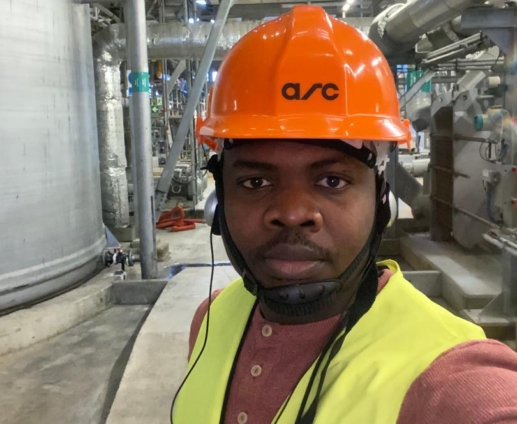
After delivering two of the most celebrated rural electrification successes in Africa, Imam Akinlade, Innovation Lead at CrossBoundary, is now taking his transformational energy strategy to Ghana. His work in Sierra Leone and Tanzania has already demonstrated how analytically driven tariff reform and targeted investment mobilisation can reshape entire markets, and the expansion into Ghana marks the next phase of a continent-wide effort to unlock affordable power for millions.
Akinlade’s impact first gained attention in Tanzania, where CrossBoundary’s pilot initiative demonstrated that lowering mini-grid tariffs can dramatically increase electricity consumption while maintaining financial viability for operators. In the pilot communities, average household energy use increased by 32 per cent within twelve months, and small business activity grew by nearly 18 per cent, driven by the sudden affordability of reliable power. The results provided rare, actionable evidence that tariff reform can stimulate both economic participation and operator revenue at the same time.
Building on this success, Akinlade led one of the most ambitious national energy reforms in West Africa. In Sierra Leone, he designed the framework for a 25 per cent nationwide mini-grid tariff reduction, a policy expected to benefit more than 550,000 people in rural and peri-urban communities. His economic modelling forecasted a 40 to 60 per cent increase in electricity consumption across most mini-grid sites, and a corresponding 22 per cent rise in productive uses of energy, including milling, refrigeration, carpentry, and small-scale manufacturing. Internal projections also showed the potential creation of over 3,000 new micro and small enterprises within the first five years of implementation.
The initiative quickly gained support from investors, government leaders, and development partners. Akinlade personally engaged more than 40 investment groups during the design phase and secured endorsement from Sierra Leone’s Minister of Energy. Analysts credit his work with establishing one of the clearest examples of how tariff adjustments, when backed by rigorous modelling, can drive broad-based economic growth.
With results in Tanzania and Sierra Leone reinforcing each other across two regions, Akinlade is now leading the expansion of this strategy into Ghana, one of West Africa’s largest and most dynamic energy markets. Ghana currently has more than 6,000 rural communities without reliable electricity access, and national studies estimate that affordable mini-grids could support over 70,000 new jobs in agriculture, trade, and light industry. Akinlade’s team is already assessing tariff structures, productive-use bottlenecks, and investment gaps in selected communities, using a data-driven approach similar to the ones that proved effective in earlier markets.
Early modelling suggests that a targeted tariff reform in Ghana could increase rural electricity consumption by 35 to 50 per cent, expand agricultural processing activity by up to 28 per cent, and improve operator revenue stability by reducing payment volatility. Local government partners have expressed strong interest in the initiative, particularly its potential to accelerate Ghana’s progress toward universal energy access.
Akinlade views this expansion not as a replication effort but as the evolution of a continental strategy. His approach focuses on aligning incentives across governments, investors, operators, and communities, supported by rigorous analytics and continuous engagement on the ground. “Affordable energy unlocks economic possibility. When communities gain the ability to power businesses, store goods, process food, or simply extend working hours, everything changes,” he has often stated.
As Ghana prepares to join Tanzania and Sierra Leone in adopting this model, observers see Akinlade’s work as a new benchmark for inclusive electrification. His combination of analytical discipline, operational leadership, and coalition building proves that energy access reforms can be both socially transformative and economically sustainable. With every expansion, he moves closer to demonstrating that rural electrification, when designed intelligently, can become one of the most powerful engines of growth across the continent.
Latest Stories
-
Is Nkrumah’s glory fading? Nkrumah’s iconic fountain at Circle runs dry
3 minutes -
Special agents’ blood and urine test results stolen in FBI hack
8 minutes -
Photos: 3rd Republic Bank-JoyNews Habitat Fair Clinic at Junction Mall, Nungua
17 minutes -
GCIF cautions public as criminals deploy AI in phishing attacks
19 minutes -
Mortuaries and Funeral Facilities Agency gives unlicensed mortuaries 10 days to regularise operations
32 minutes -
Five ‘last mile’ communities in the Upper West Region receive five ambulances after years of struggling to access healthcare
37 minutes -
Stephen Kojo Adjei
44 minutes -
Gov’t building pathways for Ghanaian youth to compete across African markets – Opare Addo
53 minutes -
DCOP Rtr Kwaku Ayesu Opare-Addo
54 minutes -
Epiroc urges businesses to deepen support for education in mining communities
59 minutes -
Jay-Z rape accuser says her allegation was false
59 minutes -
KNUST SHS, OWASS, YAGSS progress to national stage of Public Speaking Competition
1 hour -
10 rooms destroyed in Bebianiha house fire
1 hour -
Government repatriates 180 Ghanaians from Libya
1 hour -
GNAT demands independent probe into death of teacher at Gindabour
1 hour