

Audio By Carbonatix
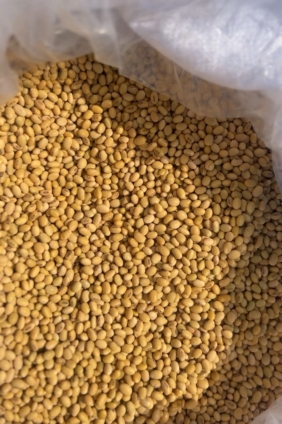
Ghana’s soybean industry is set for a major boost as the Crops Research Institute (CRI) partners with the Harnessing Agricultural Productivity and Prosperity for Youth (HAPPY) programme to scale up early generation seeds to increase local production. The initiative aims to address chronic shortages that have pushed several processing plants to the brink of collapse.
Officials say the use of improved, locally developed varieties such as the Toondana line will significantly enhance yields, support climate resilience, and strengthen the soybean value chain.
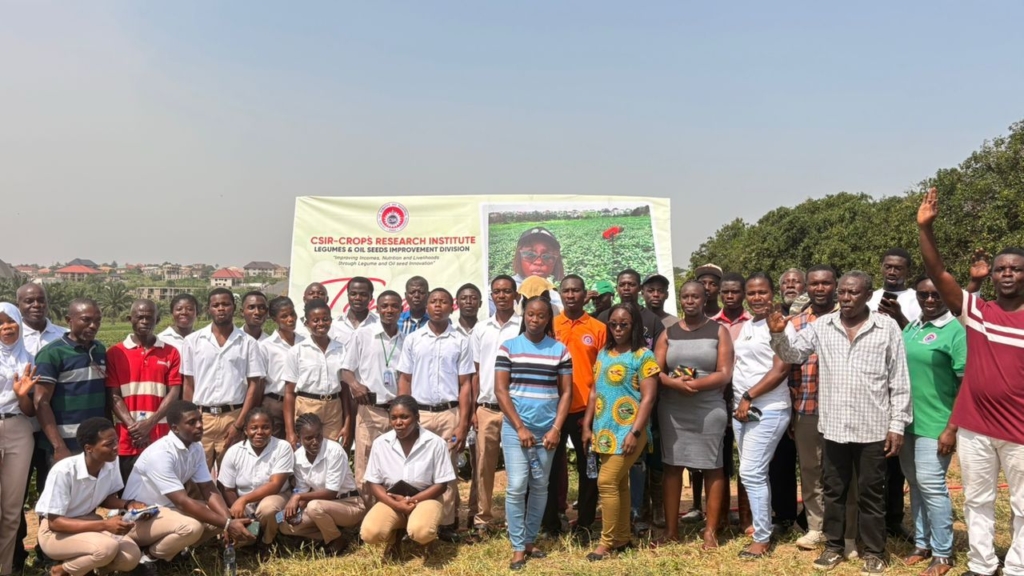
Dr Sylvester Addy, Head of the Legumes and Oil Seeds Improvement Division at CRI, said the collaboration is focused on providing quality seeds that will empower young farmers across the country.
“Partnering the HAPPY programme is seeking to assist in the production of early generation seeds so that the farmers who are the youth can adopt these certified seeds, grow them and receive higher yields and then thereby receive profits to have prosperity in their lives,” he explained.
He added that the approach aligns with the government’s job creation agenda and broader agricultural transformation efforts under programmes like Feed Ghana.
The shortage of locally produced soybeans has long been a concern for agro-processing firms, many of which face inconsistent supply due to low yields and limited access to certified seeds. The CRI–HAPPY initiative is therefore expected to help stabilise production and support long-term industry growth.
Regional Crops Officer at the Ministry of Food and Agriculture, Floris Karikari, urged farmers—especially in the Ashanti Region—to adopt the Toondana variety because of its widespread suitability.
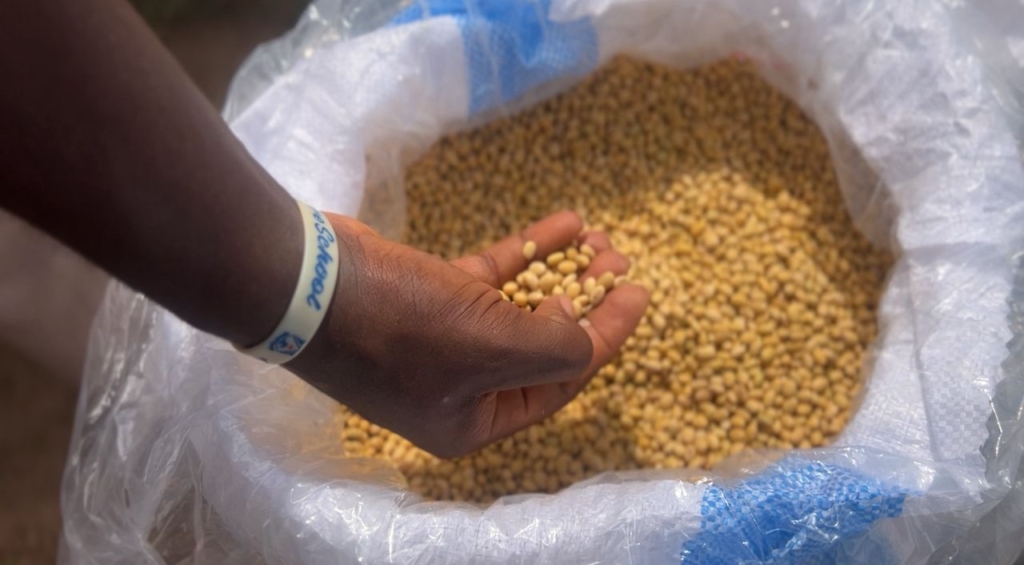
“The Toondana variety is adaptable in every part ofthe Ashanti Region. So we encourage the farmers going from next year, they should go into the production of the Toondana variety since it can do well in every part of the Ashanti region,” she said.
Beyond productivity, MoFA officers also highlighted the nutritional value of soybeans. Ms Karikari encouraged households to incorporate the crop into meals to improve family nutrition.
The initiative is also winning support from agricultural students and young farmers. Musah Yakubu from the Kwadaso Agriculture College said exposure to the project has motivated him to begin cultivating soybeans independently.
“As I leave the field for my home, I will make sure to cultivate some as a trial. That way, it will serve as a source of employment to generate some income to sustain my standard of living,” he said.
Latest Stories
-
Twelve Tribes of Israel Ghana to mark 40 years with anniversary celebration
11 minutes -
GPL 2026/27: Hearts held by Bechem as Kotoko, Samartex share spoils
31 minutes -
My Story (Kwaku Antwi-Boasiako)
38 minutes -
We expect growth rate to re-accelerate in second-half of 2026 – IC Insights
40 minutes -
The ungodliness and unrighteousness underlying the National Cathedral mess!
53 minutes -
T-bills auction: Government fails to achieve target; yield on 91-day-bill remains unchanged
1 hour -
It’s Ghana’s shame to denigrate Nkrumah when the whole world honours him as African of the Century – Asiedu Nketiah
1 hour -
No other nationalist can compare to Nkrumah – Asiedu Nketiah
1 hour -
Collateral Registry: Foreign banks accounted for GH¢19.9bn of secured credit in quarter 2, 2026
1 hour -
This government should expect scrutiny – Asiedu Nketiah
2 hours -
Two-year-old girl dies in domestic fire at Cantonments
2 hours -
Asiedu Nketiah urges better working conditions for journalists
3 hours -
JoyNews’ Precious Semevoh wins climate change reporting award at Bono GJA Awards
3 hours -
Kumasi Central Market phase 2 to begin in October after years of abandonment
3 hours -
Sentuo offers fuel supply reassurance as NPA sees steady output through December
4 hours