

Audio By Carbonatix
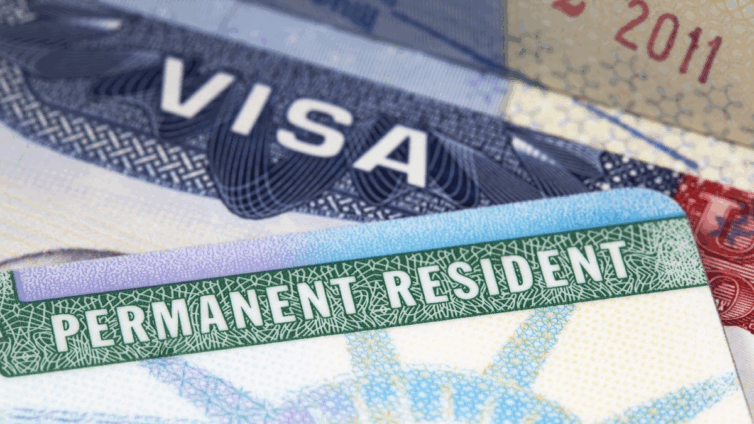
President Donald Trump suspended the green card lottery program on Thursday, which allowed the suspect in the Brown University and MIT shootings to come to the United States.
Homeland Security Secretary Kristi Noem said in a post on the social platform X that at Trump’s direction, she is ordering the United States Citizenship and Immigration Services to pause the program.
“This heinous individual should never have been allowed in our country,” she said of the suspect, Portuguese national Claudio Neves Valente.
Neves Valente, 48, is suspected in the shootings at Brown University that killed two students and wounded nine others, and the killing of an MIT professor.
He was found dead Thursday evening from a self-inflicted gunshot wound, officials said.
Neves Valente obtained legal permanent residence status in 2017, U.S. Attorney for Massachusetts Leah B. Foley said.
The diversity visa program makes up to 50,000 green cards available each year by lottery to people from countries that are underrepresented in the United States, many of them in Africa.
Congress created the lottery, and the move is almost sure to invite legal challenges.
Nearly 20 million people applied for the 2025 visa lottery, with more than 131,000 selected, including spouses, as the winners.
After winning, they must undergo vetting to win admission to the United States. Portuguese citizens won only 38 slots.
Lottery winners are invited to apply for a green card. They are interviewed at consulates and subject to the same requirements and vetting as other green-card applicants.
Trump has long opposed the diversity visa lottery. Noem’s announcement is the latest example of using tragedy to advance immigration policy goals.
After an Afghan man was identified as the gunman in a fatal attack on National Guard members in November, Trump’s administration imposed sweeping rules against immigration from Afghanistan and other countries.
While pursuing mass deportation, Trump has sought to limit or eliminate avenues to legal immigration. He has not been deterred by the fact that they are enshrined in law, such as the diversity visa lottery, or in the Constitution, as with a right to citizenship for anyone born on U.S. soil. The Supreme Court recently agreed to hear his challenge to birthright citizenship.
Latest Stories
-
Drug bust case: Only Customs officers, MPS officials in scanning room – NACOC
29 minutes -
I don’t mind being insulted; I have a crocodile skin – President Mahama
42 minutes -
Samson’s Take: Verify the badge – and verify the story
54 minutes -
President Mahama explains why Ghana must rethink regulation of TikTok, other new media platforms
1 hour -
Rule of law must be protected – GBA condemns EOCO action against Baffour Awuah
3 hours -
950,000 barrels of Sankofa crude head to TOR as GNPC deepens domestic refining
3 hours -
Scales of deception removed – Annoh-Dompreh attacks new cocoa price
3 hours -
Young Positivist Writes : My Experience with GCLP
4 hours -
Strong Day 1 turnout sets tone for Day 2 of Republic Bank-JoyNews Habitat Fair Clinic
5 hours -
Ghana Army warns new soldiers against social media misuse, uniform abuse
5 hours -
AMA calls for science-led action to tackle environmental health risks in Accra
5 hours -
NPP Canada Organizer BigMo urges Diaspora to support Kodua Frimpong
6 hours -
He entered at eight; he is now 16: Ghana’s children growing up in prayer camps
9 hours -
‘Development must not always begin from Accra’ — Anwelle Foundation launched in Jirapa
9 hours -
PKO trio eye victories at Odwira Festival
12 hours