


Audio By Carbonatix
History does not announce its revolutions politely. Ibrahim Traoré has torn into Burkina Faso’s public life with the same unsettling force that once made Thomas Sankara both beloved and feared. The comparison is dangerous and unavoidable. Traoré carries that same combustible mix of youth, discipline and refusal to bow and the country now leans forward, breath held, as he dares to conduct a national experiment in full view of the crowd that could either remake the score or burn the page entirely.
Aaaaaahhhh! The musical note hangs in the air, the sound of the orchestra tuning the deep breath before the performance. Then Doh- Re- Me-Fah-Soh,the simplest musical progression that determines the foundation of every great composition. The orchestra tunes, Doh- Re- Me drifting and humming softly through the hall and signalling that something is about to begin. See! What follows could be a masterpiece or a discordant experiment.
Burkina Faso’s (which I affectionately shorten to B’Faso, a neologism crafted as a poetic contraction and used here as my personal voice-marker) recent macroeconomic experience feels much the same and showcases an ambitious symphony with bold motifs, abrupt modulations and unresolved chords. Its economic narrative swells and dips like a classical musical score still being written, inviting listeners to decide whether they are hearing true harmonic progress or just the clever illusion of well-timed crescendos.
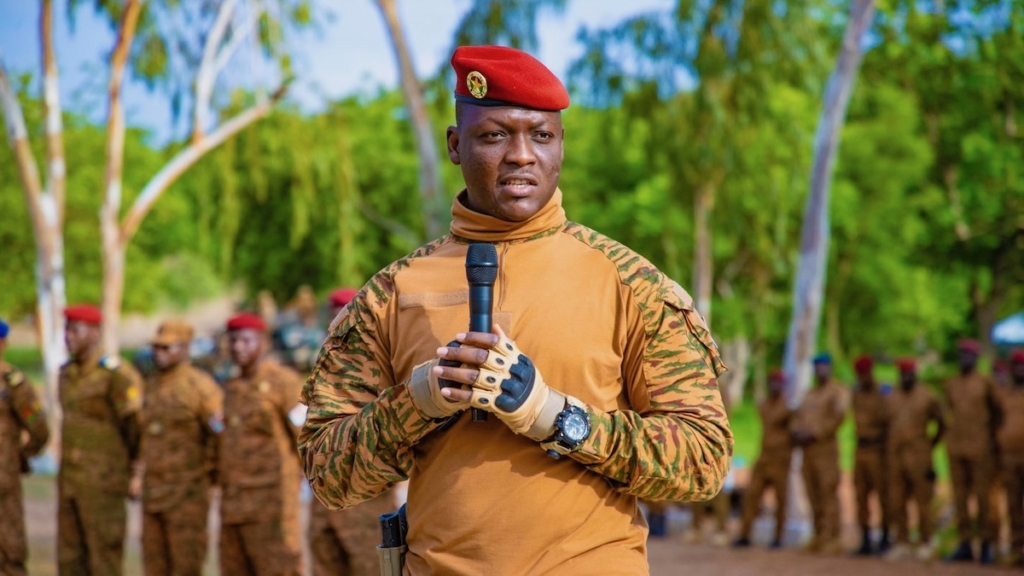
The Composer-Conductor and His Maestro of Radical Tempo
Every ambitious symphony requires a definitive interpreter. Enter Captain Ibrahim Traoré who is not just a conductor, but a composer-conductor who seized the podium, dismissed the old score and began scribbling his own in real time. Young, charismatic and draped in the symbolic berêt rouge, he is a maestro of radical tempo. But what is his compositional lineage? Is he a G. F. Handel of the Sahel, crafting bold, public-facing oratorios like “The Economic Liberation of Burkina”, full of majestic, declarative chords meant to stir the national spirit and project power to the back rows of the international arena? Or is there a darker, more complex Tchaikovsky at work, his score veering between sweeping, romantic melodies of growth and sudden, crashing crescendos of insecurity, the entire piece underpinned by a profound, melancholic bassline of debt that threatens to swallow the brighter themes? His baton cuts the air, certainly not with the metronomic predictability of institutional tradition, but with the fervent rubato of revolutionary timing, stretching moments of nationalist fervor, rushing through established protocols. The audience is fixed on him, listening for a coherent voice amidst the drama.
A Musical Reckoning of B’Faso’s Economic Gamble
Since the year 2022 this opening movement has moved far beyond any simple melody, breaking open instead as a dense and splintered Bach-like fugue where stubborn economic realities in B’Faso charge onto the score one after another in a brutal counterpoint, each insisting on its own jagged logic and refusing the comfort of harmony. The primary subject of real Gross Domestic Product (GDP) growth steps forward first in a restrained adagio, hovering around 3.0% in 2023, the tempo slowed by post-coup uncertainty and by a nation holding its breath. Then the baton comes down hard. In 2024 the strings are driven upward toward an estimated 4.9%, services and agriculture surging as the rains return and the tempo accelerates without warning, a forced modulation that sounds confident only from a distance. Even per capita economic activity, the quiet inner voice that speaks to daily survival, lifts itself from near stillness to around 2.5% growth, a fragile countermelody rising from the lower registers. But the hall is already vibrating elsewhere. In another corner a savage countersubject of inflation tears through the brass at 14% in 2022, a sound so sharp it threatens to crack the instruments, before being choked down to a thin whisper in 2023 and then crawling back again toward 4% in 2024, a reminder that silenced notes have a habit of returning. These violent swings between deafening fortissimo and hollow pianissimo strike me not as control but as force, and to my eyes as a macro and spatial economist they read like the work of a composer willing to smash the melody open with percussion and wrench the entire score into a new key by command rather than persuasion. Traoré plays at once as composer and organist, reinforcing the growth line in the bass while striking the inflation voice from the page as if crossing out an inconvenient phrase, leaving the dissonance to ferment in the silence rather than be resolved. Down in the fiscal pit the drums tighten their pattern as the deficit contracts from above 10% of GDP in 2022 to around 5% to 6% by 2024 through aggressive revenue extraction and disciplined blows to expenditure, a rhythm that keeps the state upright while grinding against the lives of a population already stretched thin. Public debt sits heavy and unmoving in the lowest register, hovering around 60% of GDP, a long and oppressive pedal note exposed to the rising pressure of global interest rates and tightening finance, and as this movement staggers toward its close there is no cadence in sight, only the unsettling sense of voices still sprinting and colliding, dragging the listener forward into the next movement without permission.
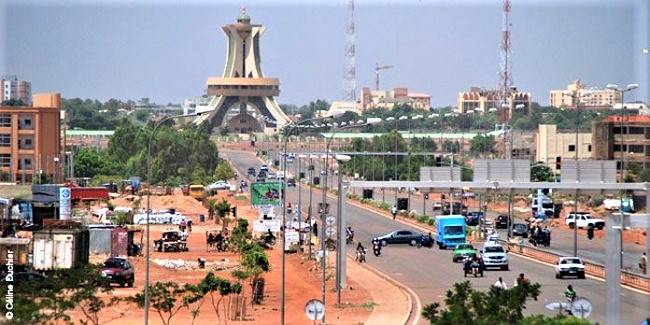
An Intermezzo Haunted by the Ghost of Mozart and the Lengthening Shadow of Debt
Between the fierce fugue and the jagged scherzo, a moment of crystalline and unsettling clarity emerges, a Mozartean intermezzo where the noise briefly recedes and the arithmetic steps naked into the light. Mozart’s genius lay in exposing raw emotion through seemingly simple and perfect notes, and it is precisely this kind of cold clarity that defines B’Faso’s debt trajectory. As a macro and spatial economist, I do not hear chaos here. I just hear order. The rise of public debt from the mid-forties to over 60% was never a cymbal crash. It was a series of grim, ascending scales in the lower registers, each new note a bond issued, each step up the staff another loan drawn. With every repetition, the entire structure of the score grew more constrained. This is fiscal necessity rendered as music, elegant in form and merciless in consequence.
The debt service burden is not an abstraction hovering above the staff lines. It consumes between 18% and 20% of revenues, a pristine and recurring motif that presses down on every other instrument, forcing choices that cannot be disguised as policy craft. In this interlude we find ourselves trapped inside a familiar Mozart serenade, except the moonlight of Eine Kleine Nachtmusik (my all-time favourite classical music) has been stripped away and replaced by the harsh glare of security imperatives and survival spending. Its melody remains unforgettable, its burden beautifully proportioned and that is precisely what makes it dangerous. The International Monetary Fund’s (IMF) shift from “high” to “moderate risk” strikes me not as a cause for relief, but as a technical verdict on the composition’s architecture, a judgment on its beams and load-bearing walls that says nothing of the people living inside. Mozart’s ghost lingers at the edge of the page issuing a quiet warning. I have learned to respect in economics as in music, that the most lethal arithmetic rarely announces itself with violence, it arrives softly, flawlessly composed and and only reveals its weight once the movement is already too far along to turn back.
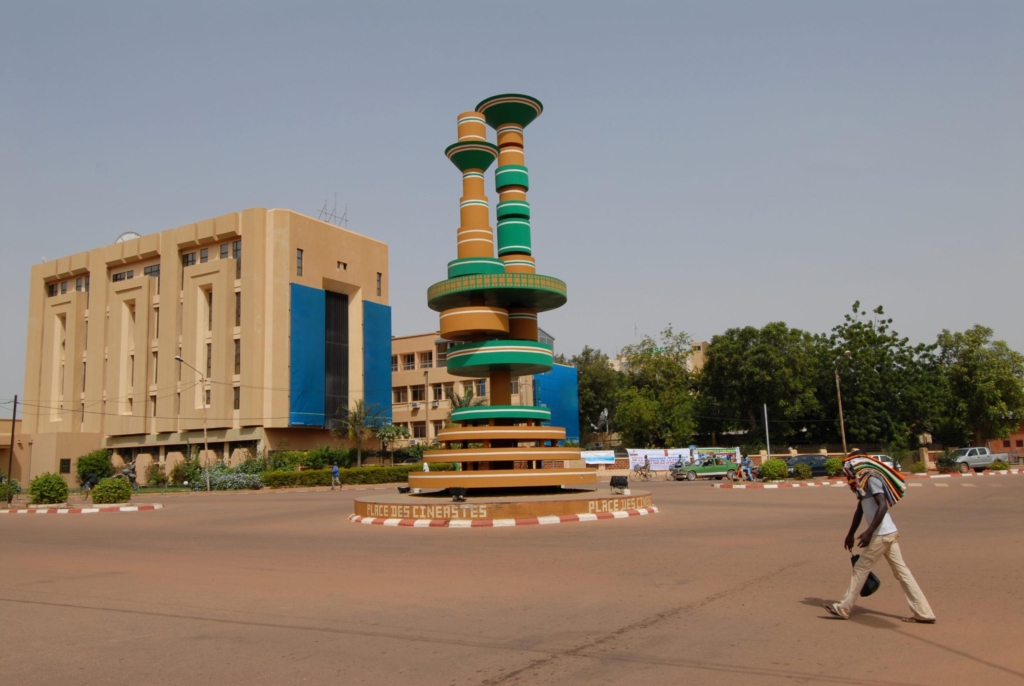
The Third Movement Scherzo e Trio as a Dance of Discipline and Dependence
The symphony now fractures into a jagged and splintered dance where nothing moves in a straight line and every directive out of the capital feels like a sudden turn taken at speed. This scherzo is no elegant waltz at all. It is a hard dance full of sharp accents and clipped phrases where momentum is gained only to be lost again. Gosh! Look at the external accounts. As a macro and spatial economist, I read the balance of payments the way others read tempo markings. B’Faso continues to run a current account deficit hovering between 5% and 7% of GDP, a structural condition driven by import dependence and the narrow spine of exports built largely on gold and cotton. When gold prices rise the melody brightens and revenues swell. Bam!!! But the same movement stretches exposure and risk because export concentration is a fragile rhythm to trust. Terms of trade swing abruptly. Wow! And with every swing the entire orchestra stumble into a new time signature.
Alliances follow the same pattern. The staccatissimo diplomacy out of Ouagadougou treats old ties to France and the West as sharply detached notes, clipped and abandoned mid phrase, followed by heavy silences before unfamiliar rhythms from Russia and Turkey enter the score. These changes do not glide. They snap. They leave gaps. The gold mining sector mirrors this instability with unnerving precision. One moment it drags through a marcia funèbre, artisanal pits struggling under security risks and regulatory strain, the next it breaks into a brisk allegretto when global prices spike and fiscal pressure force the state to lean hard on mineral rents to finance its precarious andante. Whew! Mining contributes more than 70% of export earnings and roughly 15% of government revenue, figures that look impressive until you hear how few instruments are actually playing that line.
From where I sit the rhetoric crashes into the score with repeated sforzando accents on sovereignty and patriots and liberation, words struck hard and often, while the real survival of the Burkinabè people is written pianissimo in the sustained strings of subsistence agriculture and the low hum of informal markets. Agriculture still employs close to 80% of the labour force, productivity remains hostage to rainfall and insecurity and food inflation cuts straight through household balance sheets no matter how loudly the brass declares control. This is the part most listeners miss. Beneath the spectacle unemployment and underemployment grind on, poverty rates remain stubbornly high above 40%, and displacement linked to insecurity continues to hollow out entire regions. No crescendo can drown that out forever.
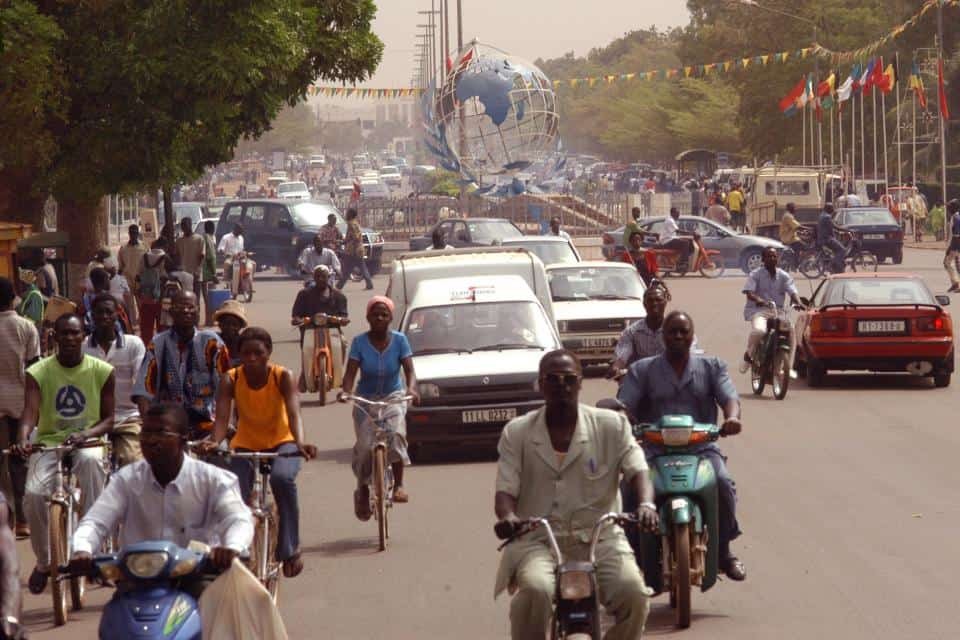
Forget the fantasy of a harmonious dance. What unfolds here is a Tchaikovskian scherzo dragged through dust and grit where discipline and dependence collide without apology. The supposed magic of gold revenues and patriotic fervour hangs by a thread tied to global commodity cycles and the thinning patience of donors and lenders. To my ears the trio section is always the moment of exposure, the place where dependence steps into the light and discipline falters, where the bassoon of reality chuckles darkly beneath the melody and reminds us that sovereignty proclaimed is not the same as resilience earned. The dance keeps moving because it must, not because it is stable, and every step forward carries the risk of a stumble that could send the whole orchestra sprawling into the next movement whether it is ready or not.
The Coda of the Unfinished, a Symphony Without a Final Cadence
Beethoven wrestled with endings and B’Faso now stands in the same uncomfortable light, not at a grand climax but in a deliberate gear shift where growth inches forward poco a poco (little by little) while inflation finally lowers its voice and exhales. I do not read 2025 as a crash of cymbals but as pencilled notation still being tested on the stand. Growth hovering in the 4% to 5% range feels earned rather than gifted, agriculture and services carrying the load where security allows, inflation bending closer to West African Economic and Monetary Union (WAEMU)discipline instead of screaming for attention. This is not accident. Kai!!! This is work. And it is here that Traoré deserves his due. He has refused the easy theatrics of instant applause and chosen instead the harder task of holding the orchestra together under pressure. As an economist, I see the discipline in the figures and I hear the courage in the restraint.
Debt still presses like a heavy dominant chord, debt service still bites deep into revenues, but the structure holds. Bam!!! No collapse. No panic modulation. Just resolve. What we are living through is not myth or propaganda but an audition in real time where Traoré stands before the jury of markets, history and a restless public and dares them to listen closely. The fermata remains long and suffocating, the baton raised, the room tense. Whew!!! The risk is obvious. Hold it too long and faith thins. Release it too early and the themes fracture. The magic, if it exists, lies in sustaining that pause without losing the ensemble. When the final cadence comes, we will know whether this was the birth of a defiant new score written under fire or the bravest possible attempt to force coherence from a country that has learned, painfully, how brutally expensive disorder always is.
References
- African Development Bank Group (AfDB)
African Economic Outlook and Country Focus Reports: Burkina Faso.
Used for medium-term growth projections, debt risk assessments, and sectoral performance analysis. - Food and Agriculture Organization (FAO)
FAOSTAT and Sahel regional food security updates.
Source for agricultural employment share, subsistence farming exposure, and food inflation pressures. - International Monetary Fund (IMF)
Burkina Faso: Staff Reports and Article IV Consultations, various years (2022-2024).
IMF Country Reports provide data on GDP growth, inflation dynamics, fiscal balance, public debt, and debt sustainability assessments. - Reuters
Reuters coverage on Burkina Faso’s gold sector, commodity exports, fiscal pressures, and geopolitical realignments, 2022-2024.
Source for export concentration, gold price impacts, and shifts in international partnerships. - Trading Economics
Burkina Faso Economic Indicators Dashboard.
Used for current account balance estimates, terms of trade trends, inflation history, and GDP growth projections compiled from IMF, World Bank, and national sources. - United Nations Development Programme (UNDP)
Human Development Reports and Burkina Faso country profiles.
Reference for human development indicators, structural poverty, displacement pressures, and livelihood vulnerability. - West African Economic and Monetary Union (WAEMU / UEMOA)
Convergence, Stability, Growth and Solidarity Reports.
Reference for inflation convergence targets, fiscal discipline benchmarks, and regional macroeconomic standards. - World Bank
Africa’s Pulse (various issues).
Regional macroeconomic context for West Africa, including agriculture, services growth, and security-related economic disruptions. - World Bank
Burkina Faso Macro Poverty Outlook and World Development Indicators, 2022-2024 editions.
Source for GDP growth, per capita income growth, sectoral contributions, poverty rates, employment structure, and inflation trends.
All macroeconomic figures cited reflect the most recent estimates available from international financial institutions as of 2024 and are subject to revision.
Latest Stories
-
“I don’t see any rational basis” – Inusah Fuseini rejects proposed five-year term
10 minutes -
Constitution shouldn’t be amended simply because years have passed – IEA
10 minutes -
Access Bank, Visa launch ‘Visa Accept’ in Ghana
32 minutes -
‘Our young people must inherit story of what Africa created, not lost’ – Mahama
34 minutes -
Afreximbank, GIIF and 24-Hour Economy Authority pact marks real progress toward 24-hour economy agenda
1 hour -
IMANI, Local Government Ministry discuss reforms on sanitation, local revenue and urban infrastructure
1 hour -
Ghana’s international reserves drop to US$11.04 billion in August as BoG pushes for significant build-ups in coming months
1 hour -
Four years enough for any government to deliver – IEA rejects five-year term
1 hour -
‘The most important players are here’ – Queiroz shrugs off Ghana’s injury crisis
2 hours -
Ayariga pledges stakeholder-led approach to Nzema, Kokomba Market redevelopment
2 hours -
Professional collaboration is key to Ghana’s land and property development – Western Regional Minister
2 hours -
‘When you play Ghana, it’s a derby’ – Kessié sets tone for AFCON qualifying showdown
2 hours -
Mahama urges global institutions to invest in Africa’s cultural infrastructure
2 hours -
Kuami Eugene joins UNICEF Ghana to promote universal birth registration
2 hours -
Renard warns Côte d’Ivoire against complacency Ahead of Ghana clash
2 hours