

Audio By Carbonatix
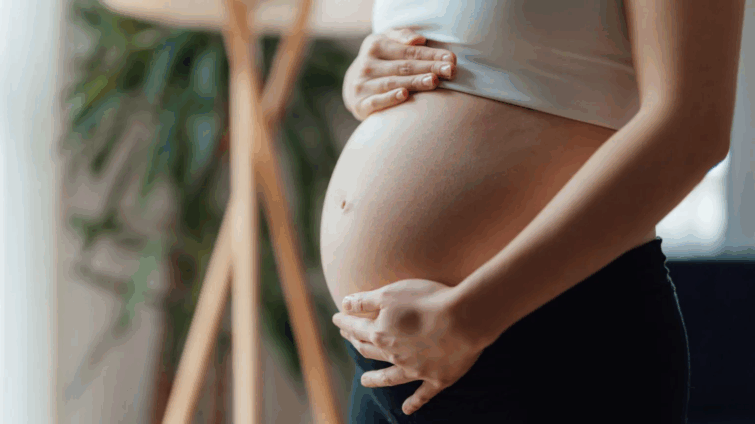
"Growing up, this isn't the life I expected at all," says 41-year-old Lucy, who had always imagined motherhood arriving in a more traditional order – a partner, a wedding, then children.
Instead, her journey to becoming a mother began with IVF and donor sperm, a choice she made during the pandemic after she realised how much she missed seeing her sister's and friend's children.
She jokingly told her parents that she could have a child on her own and recalls: "I expected them to laugh it off, but they said I should and got excited about it.
"I wasn't expecting that reaction, and it made me think I actually should do it," she told Radio 4's Woman's Hour.
In her 20s, Lucy was engaged and always thought she would be a mother. When she found herself single just before her 30th birthday, she says she went through a "real period of grief around what if that doesn't happen for me".
Lucy's first son is now almost three years old, and she is pregnant again with sperm from the same donor.
She doesn't know his identity or even what he looks like.
"I look at my boy all the time and think how much he looks like the donor, but it's impossible to know, and it doesn't matter because he just looks like himself."
She's excited to give birth to her second child and says it will be "interesting to see what the new baby looks like and whether they will look similar or have similar traits."
The number of mothers deciding to have a baby solo is increasing rapidly. Data from the UK regulator of the fertility industry HFEA, shows that in 2019, 3,147 single women in the UK received fertility treatment with donor sperm. In 2022, the most recent year for which figures are available, the number had risen to 5,084, an increase of over 60%.
Nina Barnsley, director of UK-based charity Donor Conception Network, says one of the biggest factors for women choosing the solo route is time, "both in fertility and wanting children at a certain stage in life".
Open conversation
Barnsley says choosing proactively to be a solo mum can come with additional emotional, societal and practical challenges.
Many women can expect questions around who their donor is, and while it's "usually well-meaning, it can feel intrusive."
Lucy says she's been open from the start about how she had her son.
She has already begun explaining his conception to him using language she describes as "simple but honest".
Most importantly, she wants him to "develop confidence in talking about it".
"I don't want him to think his family isn't as acceptable or as solid as someone who has two parents."
Lucy ignores those who call her decision selfish.
"A child's happiness isn't about having one parent or two, it's about love, care and time."
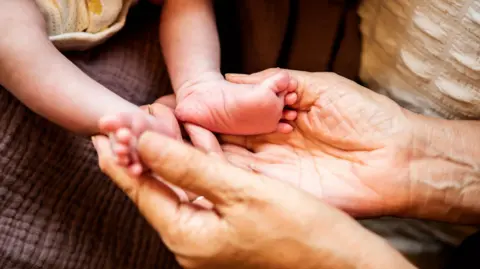
While Lucy knew that choosing this route meant she would be a single mother, she never felt alone as part of the plan was for her parents to be heavily involved.
During her pregnancy in 2023, her mum became seriously ill, a turn that reshaped not just her parenting plan, but her world.
Last year, when her son was 18 months old, Lucy's parents died within six weeks of each other.
"There were times when I thought, how am I going to do this but it was a case of just having to navigate it because there was no choice."
Yet, in those months of illness and loss, her son helped, she says.
"He made everything better because it was a huge distraction."
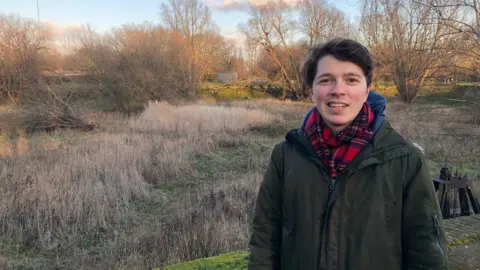
Kim, who is now 30, is the grown-up child of a mum who, like Lucy, chose to become a solo mother via sperm donor.
He was born in London in the mid-1990s, conceived through donor insemination, when fertility treatment was less advanced, and sperm donors could remain anonymous. There was no photo, no profile, no possibility of contact.
He says the absence of a father never felt like a void, and he never resented his mum, Emily, or wished his family were any different.
What has shaped him more was the way Emily, a retired social worker, raised him, rather than how she conceived him.
"Having seen how much she did by herself, it has given me a strong sense of independence," he says.
He adds that he doesn't understand those who think his mum's decision to go it alone was selfish.
"The real selfish thing to do is have a child when you're not absolutely sure that you want one."
After growing apart from a long-term partner in her 20s, Emily wasn't sure about getting into another relationship, and when she realised she could have a baby without a boyfriend, she knew "that's the way it was going to be".
She says the best part about parenting alone was not having to negotiate or compromise.
"Once I'd made a decision, no matter how hard, I never had to compromise, and I could always have it my way."
The 72-year-old says she has no regrets with how things turned out, and her son has become "just the sort of person I'd have asked for, and he couldn't be a more ideal son for me.
Latest Stories
-
UAE donates US$1m relief items to support Ghana’s June 29 flood victims
10 minutes -
Government support needed to boost recycling investments – AGI
17 minutes -
Post trained teachers to private schools to reduce unemployment – GNAT to government
22 minutes -
Republic Bank, Multimedia Group renew Habitat Fair partnership for three years
23 minutes -
The GSA Vehicle Directive: Let us focus on the real issue
29 minutes -
Photos: JoyNews, IMANI Africa drive national conversation on Ghana’s plastic waste management
35 minutes -
Republic Bank Ghana, JoyNews launch 2026 Habitat Fair
37 minutes -
Republic Bank becomes title sponsor of JoyNews Habitat Fair
44 minutes -
Prof Bokpin warns against political recruitment into civil service
50 minutes -
African unity is key to overcoming slavery’s enduring legacy – Dean Roberts Jnr
52 minutes -
Extended Producer Responsibility law to recognise and integrate informal waste collectors — EPA
54 minutes -
NADMO says UAE $1m donation can support more than 91,000 flood victims
58 minutes -
Private medical practitioners seek tax waivers on cancer treatment equipment
1 hour -
Ghana spends 0.084% of expenditure on creative industry – JoyNews Research
1 hour -
Hearts of Oak pull out of GHALCA Top-4 as Samartex take their place
1 hour