

Audio By Carbonatix
Introduction
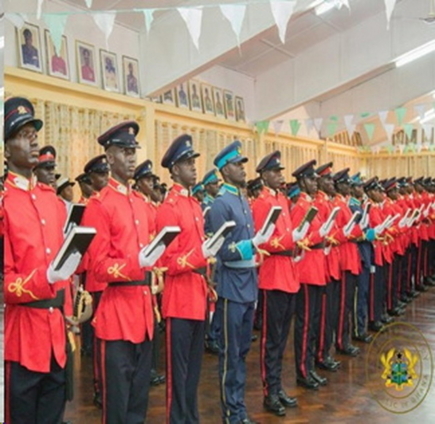
On Friday, the 30th of January 2026, at the graduation ceremony of the Ghana Armed Forceswas a striking display of discipline, precision, and national pride, as officers of Regular Course 64 and Short Service Commission / Special Duties Course 62 were formally commissioned into service. The colourful and well-coordinated parade, immaculate drills, and rich military traditions on display underscored the professionalism that has become synonymous with the Armed Forces.
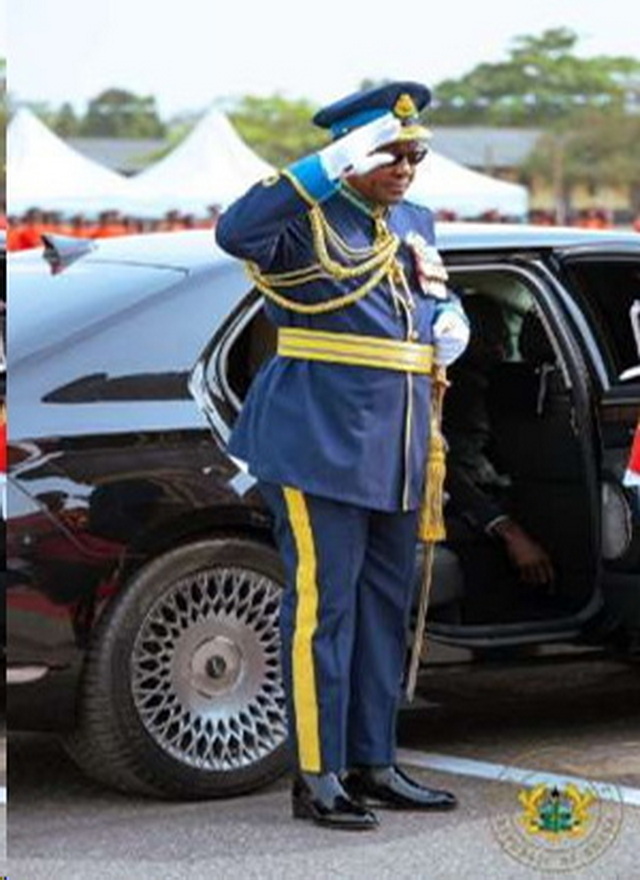
President John Dramani Mahama attended the ceremony in full Ghana Air Force ceremonial uniform. He was smartly and dignifiedly dressed during the commissioning ceremony, projecting the authority and gravitas befitting his role as Commander-in-Chief of the Ghana Armed Forces. The President’s appearance resonated well with the ceremonial atmosphere, reinforcing the sense of discipline, respect, and professionalism that define the Armed Forces.
I could not hide my joy and deep respect for the Ghana Armed Forces when Junior Under Officer Abeteye Alex Kojo confidently sought permission from a senior under officer for the parade take over. His composure, clarity of command, and impeccable bearing reflected the discipline and rigorous training instilled in the officer corps. That brief moment on the parade square spoke volumes about the quality of leadership being produced by the Armed Forces and offered a reassuring glimpse into the future of the Ghana Army.
Yet, while the ceremony showcased a modern, confident, and forward-looking military, it also brought into sharp focus an important institutional question: whether the legal framework governing the Armed Forces has kept pace with the evolving realities of contemporary security, constitutional standards, and human rights obligations. Ghana’s Armed Forces continue to operate under the Armed Forces Act, 1962 (Act 105), a law enacted more than six decades ago during Ghana’s First Republic, at a time when the country was newly independent and the military’s role in national affairs was evolving.
At the time of its passage, the nature of warfare, threats to national security, civil–military relations, technology, and international military cooperation bore little resemblance to today’s complex environment marked by cyber threats, terrorism, transnational crime, asymmetric warfare, and peacekeeping operations. This contrast raises a compelling case for a comprehensive review and possible replacement of the Armed Forces Act, 1962 (Act 105) to ensure that Ghana’s military is not only operationally excellent on the parade square, but also legally equipped to meet the demands of modern security governance.
The Legal and Constitutional Foundation
The Ghana Armed Forces derive their legitimacy, authority, and mandate primarily from the 1992 Constitution of the Republic of Ghana and the Armed Forces Act, 1962 (Act 105). Article 210 of the 1992 Constitution provides the constitutional foundation for the establishment and maintenance of the Ghana Armed Forces. It vests the power to raise and maintain the Armed Forces in the State with the President designated as Commander-in-Chief. The operational and regulatory backbone of the Ghana Armed Forces is the Armed Forces Act, 1962 (Act 105).TheArmed Forces Act, 1962 (Act 105) was passed Over six decades ago. At the time of its enactment, the law reflected the prevailing security realities of the early post-independence era, characterized by conventional military threats and a largely state-centric understanding of security. While Act 105 has provided stability and continuity in military governance, the global and regional security environment has evolved dramatically. The existing framework of the Armed Forces Act, 1962 (Act 105), does not adequately respond to modern security realities such as terrorism, cyber warfare, maritime insecurity, complex peacekeeping environments, evolving human rights obligations, and the expanding role of the military in humanitarian and internal security operations.
Assessment of the Armed Forces Act, 1962 (Act 105) as Amended
According to Socrates, “the unexamined life is not worth living.” This philosophical insight underscores the necessity of periodic reflection and critical assessment. In the same vein, laws that govern vital state institutions must be continuously examined to ensure their relevance and effectiveness. Despite its historical importance in stabilizing civil–military relations in the early years of Ghana’s independence, the Armed Forces Act, 1962 (Act 105) requires critical reassessment in the light of contemporary security operations and evolving constitutional and international standards.
The 1992 Constitution postdates the Armed Forces Act, 1962 (Act 105) and introduces important rights (e.g. right to life, fair trial, equality before the law), creating potential legal overlaps between the Act and constitutional guarantees. Section 61 of the Armed Forces Act, 1962 (Act 105) provides that
(1) Where a person triable under the Code of Service Discipline has been placed under arrest for a service offence and remains in custody for eight days without a summary trial having been held or a court martial for his trial having been ordered to assemble, a report stating the necessity for further delay shall be made by his commanding officer to the authority who is empowered to convene a court-martial for the trial of that person, and a similar report shall be forwarded in the same manner every eighth day until a summary trial has been held or a court-martial has been ordered to assemble.
(2) Every person held in custody in the circumstances mentioned in subsection (1) who has been continuously so held for a period of twenty-eight days without summary trial having been held or a court-martial having been ordered to assemble, shall at the expiration of that period be entitled to send to the President, or to such other authority as the President may appoint in writing for that purpose, a petition to be freed from custody or for the disposal of the case and in any event that person shall be so freed when a period of ninety days continuous custody from the time of his arrest has expired, unless a summary trial has been held or a court-martial has been ordered to assemble.
(3) A person who has been freed from custody pursuant to subsection (2) shall not be subject to re-arrest for the offence with which he was originally charged, except on the written order of an authority having power to convene a court-martial for his trial.
The provision authorizing the continued custody of an accused person placed under arrest for a service offence for up to ninety (90) days without trial or judicial oversight is inconsistent with Article 14(1) (3) and (6) of the Constitution, which guarantees the right to personal liberty, and is therefore unconstitutional and also stands in direct contravention of established constitutional jurisprudence, particularly the decision in Martin Kpebu v Attorney-General Writ No. J1/13/2015.
The Supreme Court emphasized that any person placed under arrest must be brought before a competent court within forty-eight (48) hours of arrest, to safeguard the constitutional right to personal liberty under Article 14(1) (3) and (6) of the 1992 Constitution. Section 61 of the Armed Forces Act, 1962 (Act 105) is thus inconsistent with the supremacy of the Constitution under Article 1(2) and is null, void, and of no effect. It is imperative that the Attorney-General take immediate steps to amend Section 61 or, where necessary, repeal and replace it so as to ensure full conformity with the provisions of the 1992 Constitution.
Appeals and Judicial Oversight
The Armed Forces Act, 1962 (Act 105) establishes a Court-Martial Appeal Courtunder Sections 89–91, which hears and determines appeals from decisions of both general and disciplinary courts-martial. Every person found guilty by a court-martial has the right to appeal on the legality of the findings or the sentence, and the Court-Martial Appeal Court has the discretion to disallow appeals in certain circumstances.
The Court-Martial Appeal Court operates entirely within the military framework, with no guaranteed external or civilian judicial review beyond the military hierarchy. This raises concerns about transparency and independence, particularly in cases with serious constitutional or human rights implications. Section 91 grants the Court-Martial Appeal Court discretionary powers to disallow appeals, which, without strict procedural safeguards, could limit access to justice for service members. Proposed reforms should, where appropriate, provide clear pathways for military appeal decisions to be reviewed by civilian courts, or for civilian judges to sit on Court-Martial Appeal Courts. This is essential to safeguard the fundamental rights of service members, reinforce judicial independence, and uphold the supremacy of the Constitution over all disciplinary and security institutions.
Cyber Security and Cyber Operations
Modern military operation recognizes cyberspace as an operational domain alongside land, sea, air, and space. Cyber-attacks, cybercrime or digital espionage now threaten national infrastructure, military command systems, and civilian data networks. The Ghana Armed Forces Act, 1962 (Act 105) contains no provisions addressing cyber warfare, cybercrime or digital espionage, cyber operations, or cyber-related offences unlike the United Kingdom where cyber operations are regulated under the Computer Misuse Act 1990 and the National Security Act 2023.
The Armed Forces Act of 1962 (Act 105) is silent on digital espionage, cyber-attacks, malware deployment, and the protection of military information systems, an omission that leaves the Ghana Armed Forces legally ill-equipped to confront modern cyber threats. Reforms to Cyber operations by the Ghana Armed Forces should be clearly defined in law, lawfully authorized, subject to civilian and judicial oversight, and fully aligned with the Cybersecurity Act, 2020 (Act 1038) and the supremacy of the 1992 Constitution.
Gender Equality, Anti-Violence and Anti-Discrimination Protections
The Ghana Armed Forces Act, 1962 (Act 105) reflects a period when military service was overwhelmingly male-dominated and lacks provisions that address the rights and protection of women within the Armed Forces. Service members must be protected from all forms of violence, including physical, sexual, and psychological abuse. Current military law under Act 105 lacks explicit measures to prevent or penalize such misconduct. Also, modern military operations and international best practices recognize the importance of gender inclusivity in building an effective and professional armed forces. The Ghana Armed Forces Act, 1962 (Act 105) as amended contains no express provisions for promoting the recruitment, retention, or advancement of female service members, nor does it establish mechanisms to prevent gender-based harassment or bias. Articles 17 of the 1992 Constitution guarantees equality and prohibit discrimination on grounds including gender. The Ghana Armed Forces Act, 1962 (Act 105) as amended fails to address discrimination on the basis of race, religion, ethnicity, or other personal characteristics unlike the United Kingdom which has codified anti-discrimination protections, ensuring that all service members are treated fairly and equitably. With the passage of the Affirmative Action (Gender Equity) Act, 2024 (Act 1121) and the subsequent Presidential assent in September 2024, it is our fervent hope that the new legal regime will pave the way for greater inclusivity and gender equity within the Ghana Armed Forces, ensuring that women are afforded meaningful opportunities in leadership, operational roles, and decision-making positions.
Parliamentary Oversight of the Ghana Armed Forces
Salihu, Naila. (November 2019). Enhancing Accountability and Transparency in Ghana’s Defence Sector. Policy Brief 7, Accra: KAIPTC notes that the oversight role of Ghana’s Parliament in the security and defence sectors remains critical to shaping national security policy and ensuring democratic control of the military, yet it requires significant strengthening. In practice, parliamentary oversight of the armed forces is exercised primarily through committees such as the Public Accounts Committee (PAC), the Appointments Committee, the Finance Committee, and the Parliamentary Select Committee on Defence and Interior. These committees, composed of Members of Parliament appointed to perform specific oversight and accountability functions, serve as the principal institutional mechanisms through which Parliament engages the defence establishment.
However, the existing legal framework limits the depth and effectiveness of this oversight. The Ghana Armed Forces Act, 1962 (Act 105), as amended, vests substantial authority in the Commander-in-Chief and the Armed Forces Council, with comparatively weak provisions for parliamentary scrutiny and transparency. This concentration of power, while historically grounded in concerns for command efficiency and national security, falls short of contemporary democratic standards that emphasize civilian oversight, accountability, and openness. In the United Kingdom, Parliament exercises control over defence appropriations, influences decisions relating to military operations, and engages in debates that shape or constrain executive authority in matters of national security. Such practices enhance democratic legitimacy and reinforce the principle of civilian control over the armed forces. Strengthening parliamentary oversight in Ghana’s security and defence sectors would boost transparency, enforce accountability, and rebuild public trust in the military as a professional institution operating firmly under civilian authority.
Conclusion
The Armed Forces Act, 1962 (Act 105) has long provided the legal foundation for the Ghana Armed Forces. However, it now requires comprehensive reform to reflect the demands of modern democratic governance, uphold constitutional principles, safeguard human rights, and address evolving security challenges. A reformed legal framework would not only enhance the professionalism and legitimacy of the Armed Forces but also strengthen public trust and reinforce the supremacy of the Constitution. Crucially, the new legal regime should be effective, just, lawful, and fully aligned with international standards, ensuring that Ghana’s armed forces are prepared, accountable, and respected both domestically and internationally.
Recommendations
- Initiate a full review of the Armed Forces Act, 1962 (Act 105) to ensure its provisions align fully with the 1992 Constitution, particularly regarding rights to personal liberty, fair trial, and protection from arbitrary detention.
- Reform the Court-Martial Appeal process to include civilian judicial oversight or independent judges to enhance transparency, accountability, and adherence to constitutional principles. Clearly define procedures and limits for appeals to safeguard service members’ access to justice.
- Establish mechanisms to prevent discrimination on the basis of gender, race, religion, ethnicity, or other personal characteristics. Promote recruitment, retention, and advancement of female service members in alignment with the Affirmative Action (Gender Equity) Act, 2024 (Act 1121).
- Develop and institutionalize training programs for military personnel on constitutional rights, human rights obligations, gender sensitivity, and cyber operations to strengthen professional competence and legal compliance.
- Establish a statutory requirement for periodic review of the Armed Forces Act to ensure ongoing alignment with emerging security challenges, international law, and constitutional mandates.
God bless our homeland Ghana and make our nation great and strong!!!
Latest Stories
-
Black Stars: Adu Kwabena a doubt for September-October games after head injury
9 minutes -
Fire guts four-bedroom apartment at Millennium City
11 minutes -
KMA seeks funding to restart stalled Kumasi Central Market Phase II project
31 minutes -
Government unveils new guidelines to improve regulation of non-profit organisations
36 minutes -
Annoh-Dompreh cautions against partisan application of law in political speech cases
43 minutes -
Oti Peace Council sensitises Assembly Members in Jasikan, Kadjebi on conflict prevention
54 minutes -
Nawara petitions Ghana Police over alleged armed raid, gold seizure and destruction of mining equipment
56 minutes -
Ahafo Ano South West DCE Abubakar Sedik dies after brief illness
1 hour -
Ghana must draw lessons from Nkrumah’s Seven-Year Development Plan — Kwesi Pratt
1 hour -
Oil hits over 1-week low on hopes of boost to diplomacy in Iran war
3 hours -
They take GH¢100, sometimes GH¢200 – Okada riders allege police extortion in Accra
3 hours -
NACOC: We’ve found no presidential escort among suspects in €225m France cocaine case
3 hours -
Don’t turn students away over trunks and chop boxes – GES
3 hours -
Italian Apple store employees strike on iPhone 18 Pro launch day
3 hours -
Apple’s Tim Cook sees Australia’s social media curbs as ‘world-leading’, PM says
4 hours