

Audio By Carbonatix
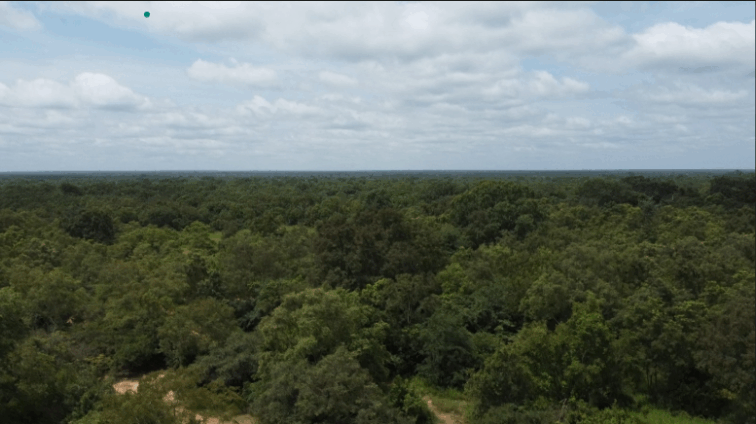
Human activities are increasingly posing a serious threat to wildlife and the ecological integrity of the Mole National Park, Ghana’s largest protected area and a critical natural buffer against climate change impacts in the northern savannah zone.
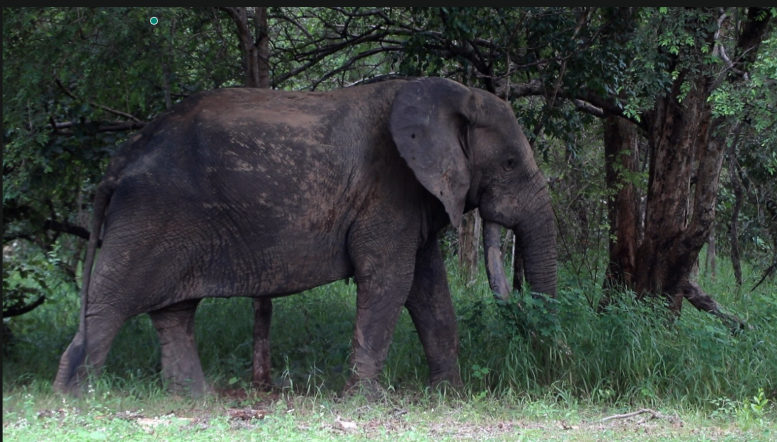
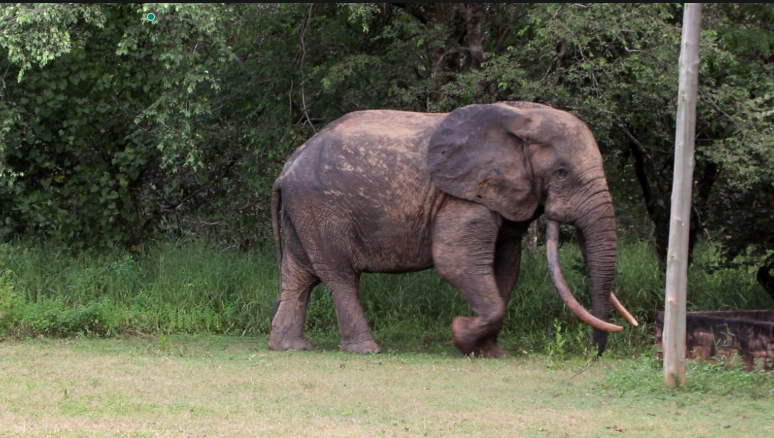
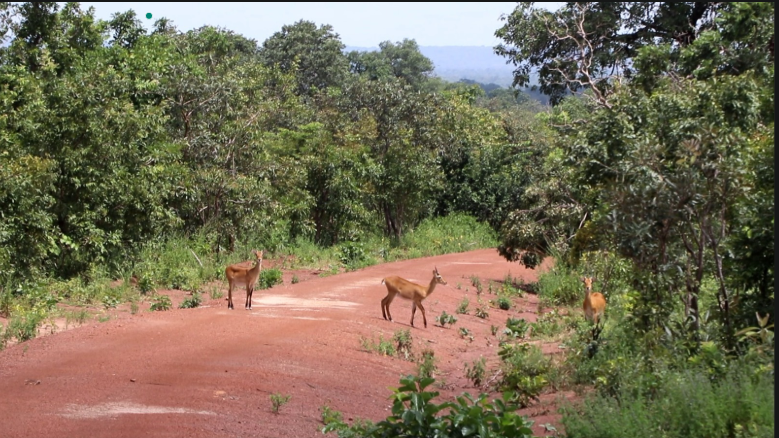
The park, which serves as a major wildlife refuge, is home to over 700 elephants, 94 mammal species, 33 reptiles, 9 amphibians, more than 330 bird species, and about 300 butterfly species. Beyond biodiversity conservation, the park plays a vital role in regulating local climate, protecting water sources, sustaining rainfall patterns, and supporting climate-resilient livelihoods for surrounding communities.
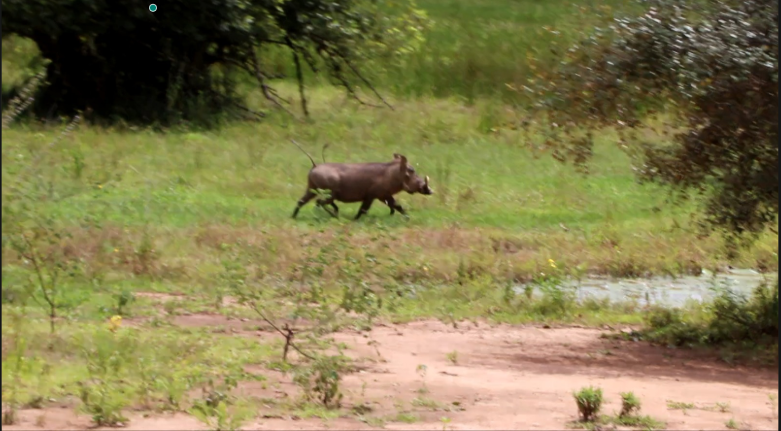
However, encroachment, bush burning, illegal logging, poaching, and harmful farming practices, particularly the indiscriminate use of agrochemicals, are placing increasing pressure on wildlife and weakening the park’s ability to function as a natural climate adaptation asset.
Human Pressure and Climate Risks
Savannah Regional Minister Salisu Be-Awuribe, Esq., expressed concern over the scale of human interference within and around the park, noting that these activities undermine both conservation efforts and climate resilience.
He explained that deforestation and bush burning reduce vegetation cover, accelerating soil degradation, disrupting rainfall patterns, and increasing vulnerability to droughts—key climate risks already affecting northern Ghana.
“We are working with partners to provide alternative livelihoods for communities living close to the park to improve their economic well-being and reduce pressure on the protected area,” the minister stated.
According to him, plans are also underway to sensitise and educate all 33 fringe communities on the importance of preserving the park, not only as a national heritage site but also as a natural defence against climate change.
Park Under Siege
Established 68 years ago, the Mole National Park spans 4,577 square kilometres, cutting across the Savannah, Northeast, and Upper West Regions and covering five political districts. It shares boundaries with 33 communities, many of which depend on agriculture and natural resources for survival.
As part of the JoyNews Climate Evidence series supported by the CLARE R4I Opportunities Fund, in partnership with CDKN Ghana and the University of Ghana’s Centre for Climate Change and Sustainability Studies (C3SSS), JoyNews visited the park to examine how human activity intersects with climate change and wildlife survival.
Chief Wildlife Guide Geli Robert Tindaana, who led the tour, explained that wildlife sightings are never guaranteed due to the park's vastness and the increasing disturbances that push animals deeper into the reserve.
Public Relations Officer of the park, Benjamin Kwesi Agbenor, highlighted the park’s rich biodiversity but warned that human actions are eroding the ecosystems that sustain these species.
“Illegal logging, bush burning, poaching, and chemical runoff from nearby farms are endangering animals, leading to diseases, habitat loss, and, in some cases, death,” he noted.
The Climate Threat
Law Enforcement Officer at the park, Martin Ndego Abodiba, pointed out that illegal logging of economic trees has direct climate implications.
“When trees are cut down, rainfall patterns change. This increases climate risks such as drought and extreme heat in the area,” he said.
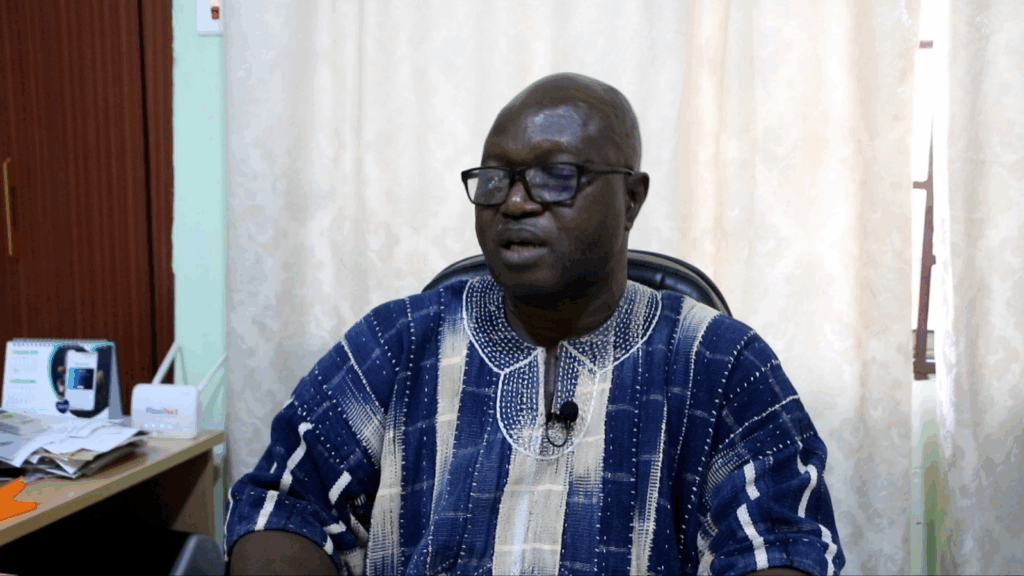
This view was corroborated by the Acting Upper West Regional Director of the Environmental Protection Agency (EPA), Jonas Kpierakoh, who lamented the growing unpredictability of rainfall.
“Because of human activities, rainfall patterns are now erratic. In some years, we receive barely half of the expected rainfall. With fewer trees, water evaporates faster, worsening dry conditions,” he explained.
Loss of Ecosystem Services
Beyond tourism, wildlife at the Mole National Park provides essential ecosystem services, including pollination, soil fertility, and agricultural productivity.
Public Relations Officer of the Wildlife Division of the Forestry Commission, Ernestina Adumia Enim, stressed that the disappearance of certain insect species has already affected pollination.
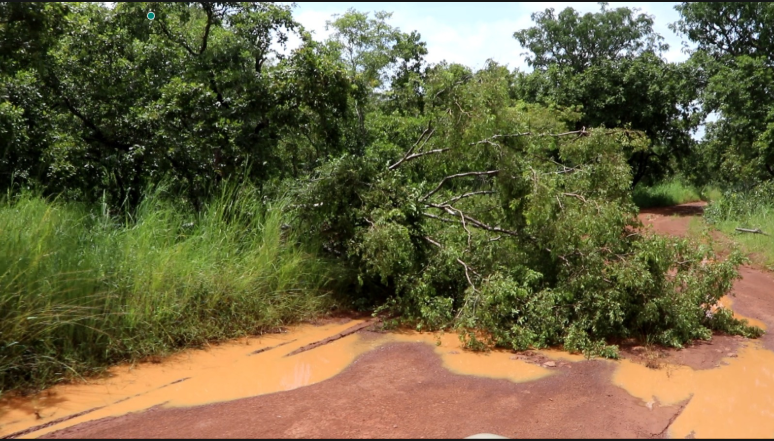
“In the past, we observed insects that supported pollination. Today, many of them are extinct due to human activities, which ultimately affects food production,” she said.
Adaptation Measures and Gaps
Some climate adaptation measures are already being implemented or planned, including:
- Alternative livelihood programmes to reduce dependence on forest resources
- Community sensitisation and education on conservation and climate resilience
- Collaborative resource management involving local communities
- Law enforcement patrols to curb illegal activities
However, Assistant Community Collaborative Resource Management Officer Mohammed Saani Zeinab warned that these efforts are constrained by limited resources and staffing.
“The proximity of communities to the park has contributed to habitat loss and, in extreme cases, the extinction of some species,” she noted.
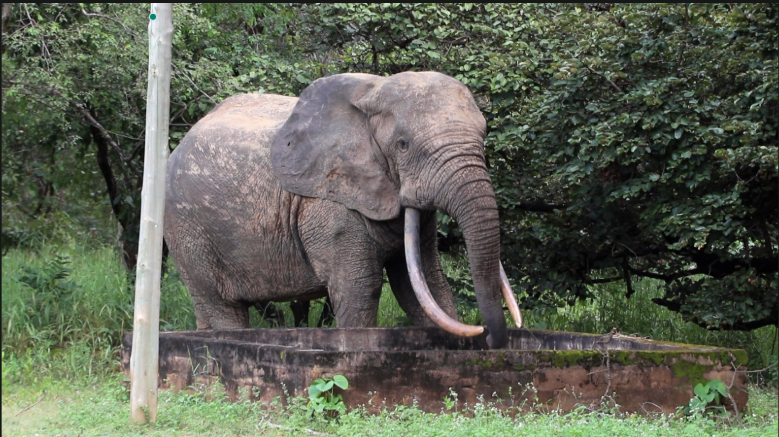
The situation is further compounded by the low number of wildlife officers, limiting effective enforcement and increasing the risk of human-wildlife conflict.
A Call for Strengthened Climate Action
Experts and park authorities agree that strengthening conservation at Mole National Park is not only a biodiversity issue but also a climate adaptation imperative. Protecting the park enhances ecosystem resilience, safeguards livelihoods, and helps buffer communities against the worsening impacts of climate change in northern Ghana.
Without urgent investment in enforcement, community-based adaptation, and sustainable livelihoods, the continued degradation of the park threatens both wildlife survival and the region’s climate future.
This story is brought by JoyNews in partnership with CDKN Ghana and the University of Ghana Centre for Climate Change Sustainability Studies, with funding from the CLAR R4I Opportunities Fund.
Latest Stories
-
Tata Group Chairman N Chandrasekaran to step down in February
2 minutes -
Private sector credit grows 41.2%; BoG governor urges banks to deepen lending
2 minutes -
New attacks on shipping as Iran war talks hit fresh impasse
3 minutes -
Israeli settlers besieging Palestinian families in West Bank village
4 minutes -
Zhu Rongji, who helped turn China into a trading giant, dies at 97
4 minutes -
Climate change is worsening water scarcity in the Northern Ghana – Youth Climate Advocate
9 minutes -
Kofi Tonto explains $800 embassy payment, denies link to alleged $19m fraud
10 minutes -
Akosua Manu questions abandonment of Zipline and Agenda 111 amid rising maternal deaths
15 minutes -
Fact Check: Chief Justice’s warrant does not limit vacation judge to emergency cases
17 minutes -
‘No pressure at all’ – Björkegren as Ghana chase World Cup lifeline
18 minutes -
Counsellor Perfect, Rev Annan speak on what keeps love alive in marriage
20 minutes -
Government weaponising judiciary against NPP – Awal Mohammed
25 minutes -
GRA outlines who qualifies for Modified Taxation Scheme and how it works
25 minutes -
FDA calls for stronger support for breastfeeding as Ghana marks World Breastfeeding Week
29 minutes -
CBG commits GH¢55m to support 3,000 women, youth under GWYESCO programme
31 minutes