


Audio By Carbonatix
A new education initiative funded by the Japan government is helping Ghanaian pupils strengthen their mathematics skills and develop independent learning habits through technology and innovation.
The initiative uses KUMON Connect, a tablet-based learning software that enables pupils to study mathematics at their own pace while nurturing focus, discipline, and time management, which are key skills for lifelong learning.
The pilot project, launched in September 2025, is funded by Edu-Port Japan, locally managed by Sozo Global Ministry and remotely operated by KUMON Institute of Education, a private Japanese education company.
In Ghana, it is being piloted exclusively at Ebenezer Baptist Christian School (EBCS) in Accra and targets pupils in Basic Three, a stage widely recognised as critical to a child’s academic development.
During a working visit to EBCS, Japan’s Ambassador to Ghana, Hiroshi Yoshimoto, observed progress on the pilot project and how teachers and pupils are responding to the new learning method.
“KUMON has a good record across the world, including Africa. It is highly effective because it focuses on self-learning. It not only improves academic skills but also develops non-cognitive skills, which lay a foundation for lifelong learning,” he said.
The Ambassador expressed satisfaction with how quickly the pupils and teachers had adapted to the KUMON learning style.
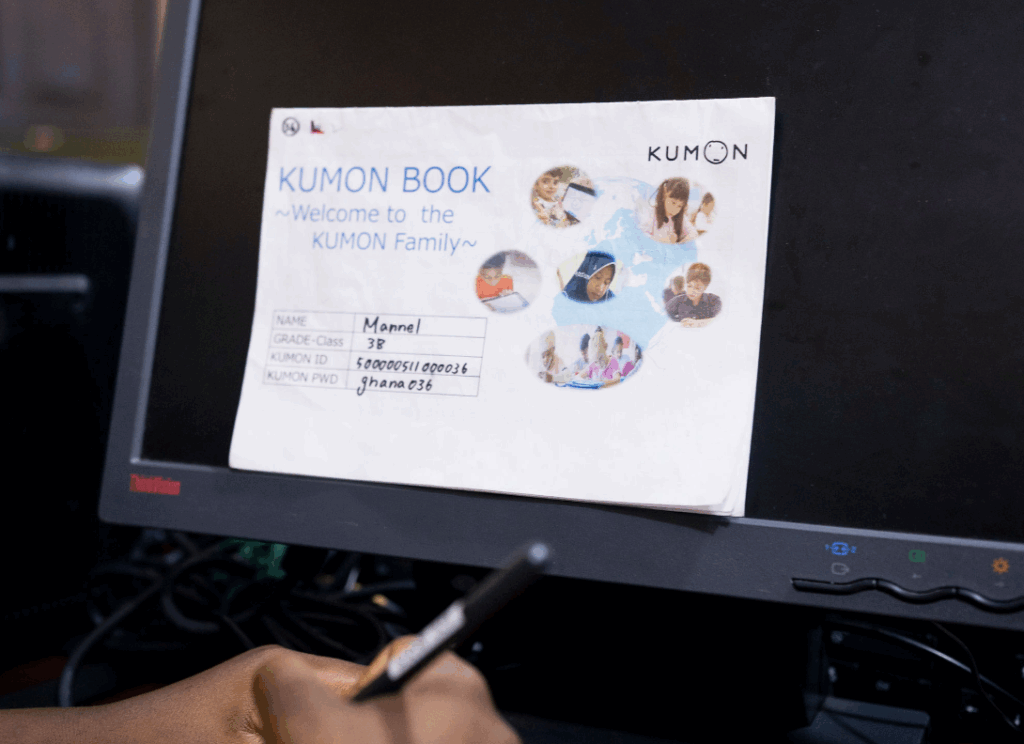
“I saw a lot of enthusiasm among both teachers and students. It’s impressive how well they are running this method,” he said, adding that discussions would continue with Japan’s Ministry of Education and KUMON on the possibility of extending the initiative beyond the pilot phase.
Dr Joseph Quarshie, a Board Member of EBCS and the National Coordinator of the KUMON Project through Sozo Global Ministry, explained that, unlike traditional learning, where all students move at the pace of the brightest, the KUMON method allows each child to progress at their own pace.
Students typically spend about 30 minutes daily on worksheets set by facilitators. Their progress is tracked through the software based on both speed and accuracy, while teachers provide feedback and additional support where needed.
Dr Quarshie added that four teachers at EBCS received training from KUMON staff, Ms Mariko Suzuki and Mr Takumi Shimojo, before the programme began.
The Head of the Primary School and KUMON Lead at EBCS, Eric Kofi Boafo, noted that the introduction of the KUMON Connect software has changed how pupils approach mathematics.
“The pupils are very happy about it, and even their siblings wish it were extended to their classes,” he said. “We’ve seen students who used to rely on finger-counting now solving problems mentally. The transformation has been encouraging.” He added.
For Nathaniel Aseda Kwasi Asare, a Basic Three Learner participating in the pilot, the KUMON method has made mathematics more enjoyable.
“It is fun, and we learn a lot. I like KUMON time because it is fun and easy. I don’t want them to stop,” he said.
The KUMON learning method marks the first step toward introducing a Japanese-style self-learning approach in Ghana’s education system. If the pilot proves successful, the programme could be expanded to more schools, particularly within the public sector.
The KUMON method is an effective tool in supporting the government of Ghana’s promotion of STEM education.
The initiative underscores Japan’s ongoing commitment to supporting Ghana’s education and human capital development through innovation, technology, and partnership.
Latest Stories
-
GNFS contains fire outbreak at Teshie Lekma Road near Lekma Hospital
57 minutes -
Samia Nkrumah rejects the narrative that Ghanaians were happy after Nkrumah’s overthrow
2 hours -
A Mother’s pain: Tribute by Ivan Baidoo’s mother
2 hours -
‘Forgive us for staying away’ — Samia Nkrumah leads family back to Nkroful, pledges to preserve Nkrumah’s legacy
3 hours -
Ernest Nuamah scores twice as Lyon beat Rennes
3 hours -
‘My dear Ivan’ – A father’s tribute to a son tragically killed
3 hours -
GNPC Explorco advances Voltaian Basin drilling preparations with 13.5km access road
3 hours -
Cabinet approves facility manager for Borteyman Sports Complex – Kofi Adams
4 hours -
Sanitation is improving; critics may be ‘living in another world’ – Salaga South MP replies Bekwai MP
4 hours -
Government must do more to tackle sanitation crisis – Bekwai MP
4 hours -
World Cleanup Day: GFF begins sanitation education in local communities
4 hours -
EU Ambassador, IGP discuss stronger cooperation on policing and security
4 hours -
Africa Nations Volleyball Championship: Ghana set up quarterfinal clash with Cameroon after beating Chad
5 hours -
Meet Dr Benjamin Appiah Osei — Ghana’s three-time tourism awards winner
5 hours -
UEFA & CONCACAF demand Fifa pays $10m to all 211 members
5 hours