

Audio By Carbonatix
The Minority in Parliament has strongly opposed government’s move to establish a 24-Hour Economy Secretariat, describing the proposed body as an unnecessary bureaucracy that will not deliver the promised policy outcomes.
The bill, presented by the Attorney-General, seeks to operationalise the National Democratic Congress’s (NDC) flagship 24-hour economy programme, a major campaign promise during the 2024 general elections.
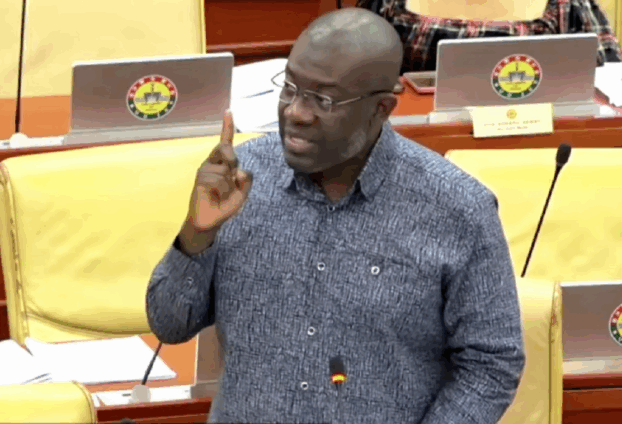
However, during debate on the floor of Parliament ahead of the bill’s passage, the Minority Spokesperson on the Economy, Kojo Oppong Nkrumah, argued that the proposed Secretariat would only create an additional layer of administration without translating into real economic transformation.
“This bill establishes a bureaucracy, not a 24-hour economy, through an unnecessary authority that will not achieve its stated purpose,” he said.
Oppong Nkrumah insisted that a dedicated authority is not required to implement a functioning 24-hour economy, citing global examples of major cities that operate round-the-clock without such structures.
“Six of the biggest cities that operate 24-hour economies—New York, Tokyo, London, Bangkok, Dubai, Berlin—none of them started off with a 24-hour economy authority,” he noted.
He warned that the bill would instead create an expensive administrative body with executives, auditors, staff, and a board that would require significant public funding.
“What this law actually does is that it sets up a bureaucracy… an authority with a chief executive, an internal auditor, hundreds of staff, a board. They’re going to ask for a budget and spend,” he argued.
Oppong Nkrumah further cautioned that the bill could mislead young Ghanaians into believing it would directly generate jobs and economic activity, when in his view, it merely creates another government institution.
However, Majority Leader Mahama Ayariga pushed back against the Minority’s claims, explaining that the Secretariat is intended to serve as a coordinating body to ensure effective implementation of the programme.
"The 24-hour economy, and the authority that is being established to implement it, is not the vehicle that will create a 24-hour economy.
"It is a coordinating secretariat, a coordinating secretariat, that will coordinate the activities of all the other sectors who, when they function and function properly, will deliver a very productive sector and will deliver employment. That is the whole idea," he explained.
Latest Stories
-
NPP’s new leadership offers no renewal after ‘micro minority’ defeat – NDC’s Abeiku Hayford
47 seconds -
Blackstar Experience to hold fashion show and summit in November
1 minute -
Prof Mike Oquaye backs Kojo Bamba’s call for stronger ballot protection
11 minutes -
If police won’t protect you, you’ll protect yourself – Prof Mike Oquaye backs Kojo Bamba’s election
12 minutes -
Spotify makes fandom the ticket with debut Surround Sound experience in Lagos
22 minutes -
Deputy Interior Minister calls for joint action to strengthen Ghana’s cybercrime response
32 minutes -
Gov’t announces plans to create 20,000 jobs in waste management, circular economy
37 minutes -
T-bills auction: Government exceeds target by 30%, but demand to remain relatively soft at next auction
39 minutes -
Election Watch Ghana raises concern over low female representation in NPP leadership
45 minutes -
Four drinks that help manage blood sugar
45 minutes -
Ray Michael Djan Jr puts Ghanaian creativity on global stage with Chelsea anthem
55 minutes -
Matilda Dibloni Kokar elected USAG president after two-year dormancy
58 minutes -
NPP delegates wanted youthful energy with Kojo Bamba’s election – Political scientist
1 hour -
Zenith Bank supports Childhood Cancer Unit at Greater Accra Regional Hospital
1 hour -
KMA empowers 64 persons with disabilities; Mayor unveils plan for sustainable skills centre
1 hour