

Audio By Carbonatix
Introduction
In today's fast-paced digital world, where content spreads in seconds and ideas are shared across borders, understanding copyright is more important than ever. Copyright serves as a crucial safeguard, protecting the creativity of authors by granting them the legal right to own, control, and benefit from their original works.
It ensures that creators can maintain control over how their creations are used, preventing misuse and ensuring that ideas are shared responsibly. Yet, it also fosters innovation by allowing others to build on those ideas while respecting the rights of the original creators.
In Ghana, copyright law is primarily governed by the Copyright Act, 2005 (Act 690), alongside relevant international agreements such as the Berne Convention, to which Ghana is a signatory. Together, this legal framework seeks to protect the rights of creators and owners of original works, while also promoting the free flow of ideas, creativity, and innovation.
The Foundation of Copyright in Ghana
The backbone of copyright protection in Ghana is outlined in Sections 1 and 2 of the Copyright Act, 2005. These sections define the types of works that can be protected under copyright and set the conditions under which they qualify. Section 1 outlines a broad array of works that can be protected, from literary, artistic, and musical works to sound recordings, audio-visual works, and even computer software. However, the protection does not extend to ideas or concepts, only the particular expression of those ideas can be safeguarded.
Key Criteria for Copyright Protection
For a work to qualify for copyright protection under the Act, it must meet three essential criteria:
- Originality: The work must be the result of the author's independent effort. It must reflect the author's skill and judgment, even if it is not necessarily novel or groundbreaking. This means that a work can be considered "original" even if it is not entirely unique.
- Fixation: The work must be fixed in a tangible form, whether it is written down, recorded, or expressed in some permanent medium.
- Connection to Ghana or International Obligation: The work must be created by a citizen or resident of Ghana, first published in Ghana, or otherwise protected under international treaties that Ghana is a party to.
The case of University of London Press Ltd v University of Tutorial Press Ltd (1916) 2 Ch. 601
offers important insight into the concept of originality. The court ruled that originality in copyright does not require novelty, only that the work is a product of the author's own effort and skill, rather than being mechanically copied.
The Case of Laughter: Can It Be Copyrighted?
At first glance, the idea of copyrighting something as natural as laughter might seem far-fetched. After all, laughter is a spontaneous, human reaction, often unplanned and effortless. Yet copyright law does not protect ideas or natural phenomena, it protects creative expression. This distinction becomes especially clear when we consider the difference between a natural sound and the process of recording it.
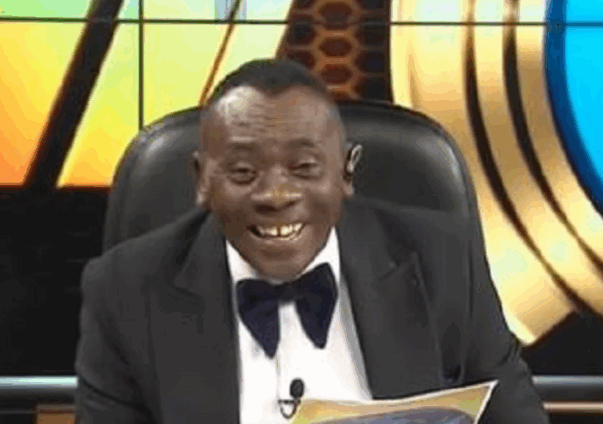
In the case of Akrobeto's famous laughter video, the issue of whether the laughter can be copyrighted is intriguing. On its own, laughter cannot be copyrighted because it is a natural, spontaneous occurrence. But once that laughter is captured and recorded especially in a creative setting like a television broadcast, things change. Copyright law does not protect the laughter itself but the technical and creative effort involved in its recording. This video can be classified as an audiovisual work under Section 1 of Act 690, which is defined as: ''A work that consists of a series of related images which impart the impression of motion, with or without accompanying sounds, susceptible of being made visible, and were accompanied by sounds susceptible of being made audible.''
Audiovisual work as a Creative Act: Does it pass the test of Originality?
Recording the audiovisual work is not a passive process. It requires thoughtful decisions, such as when to press record, where to place the microphone, how to edit the sound, and how to present it. In television production, for example, sound engineers and producers play a key role in how a sound is captured and how it is presented to the audience. These decisions reflect skill, creativity, and effort transforming a simple, spontaneous act of laughter into a polished, finished recording.
Thus, the copyright law protects not the laughter itself, but the work done to capture and present it. Even if the sound is a natural, unplanned event, the recording is considered an original work because of the effort involved in its creation. This is a crucial point in copyright law: it acknowledges the human effort involved in bringing something into a tangible, reproducible form. The result is that the person or entity responsible for the recording often a production company or television station holds the copyright to the finished product.
In essence, copyright law draws a clear line between the protection of natural phenomena and the protection of creative expression. While laughter itself, as a natural human response, is not copyrightable, its recording can be. This distinction allows copyright to protect creative works without granting ownership over every day human experiences.
This balance is important in the digital age, where content is constantly being produced and shared. It helps creators protect their work, prevents misuse, and ensures that new ideas can continue to flourish. As technology evolves and content creation becomes even more widespread, understanding and respecting copyright law will be essential for maintaining this delicate balance between creativity and freedom of expression.
The Scope of Copyright Protection Duration and the Principle of Free Use of Copyrighted
Works
Under Section 15 of Act 690, audio-visual works enjoy copyright protection for seventy (70) years from the date the work is made, or where the work is made available to the public within that period, seventy years from the date it is first made public, whichever occurs later. This provision reflects the capital-intensive nature of audio-visual productions and aligns Ghana's regime with international copyright standards.
Beyond duration, Act 690 recognizes that strict copyright enforcement could impede education, information flow, and freedom of expression. Consequently, Sections 19-23 permit limited use of copyrighted works, including audio-visual works, without authorization. These include use for private purposes, quotation, teaching, research, news reporting, and other public interest activities, provided such use complies with fair practice (Section 19). Libraries and archives may make limited copies for research or preservation (Sections 21 and 22), and broadcasting organizations may make ephemeral recordings of audio-visual content for operational purposes (Section 23). However, the Act restricts uses that could undermine the economic value of works, such as reproducing substantial parts beyond statutory limits.
Conclusion
It therefore suffices to conclude that the video satisfies the originality requirement. Although laughter, in itself, is a natural and unoriginal human act and is not created in the copyright sense, such that the act of laughing alone cannot attract copyright protection, the recording of laughter may nevertheless be original. This originality lies in the manner in which the laughter is captured and presented. Copyright law protects the expression of an idea or event, rather than the raw event itself. Accordingly, the audiovisual recording embodies independent skill, judgment, and effort through creative choices relating to the manner of recording, sound capture, editing, and overall presentation. As established in University of London Press Ltd v University Tutorial Press Ltd, originality does not require novelty; rather, it requires that a work originate from the author's own intellectual effort and not from mere mechanical copying. The video, as an audiovisual work, therefore, meets the originality threshold and qualifies for copyright protection.
*** The authors are lawyers with Parkwood & Mossane, with practice interest in entertainment law, intellectual property law and commercial law. They may be reached
REFERENCES
- Andrew Ofoe Amegatcher: Ghanaian Law of Copyright (2nd Edition) (2013)
- Copyright Act, 2005 (Act 690)
- University of London Press Ltd v University of Tutorial Press Ltd (1916) 2 Ch. 601
Latest Stories
-
They take GH¢100, sometimes GH¢200 – Okada riders allege police extortion in Accra
3 minutes -
NACOC: We’ve found no presidential escort among suspects in €225m France cocaine case
12 minutes -
Don’t turn students away over trunks and chop boxes – GES
24 minutes -
Italian Apple store employees strike on iPhone 18 Pro launch day
34 minutes -
Apple’s Tim Cook sees Australia’s social media curbs as ‘world-leading’, PM says
43 minutes -
Amazon raises minimum hourly pay by $1 to $20 for US operations workers
54 minutes -
Insurance cost has largely remained stable – NPA boss on transport fare pressure
1 hour -
Multiple unions threaten strikes at Barrick’s flagship Mali gold mine, documents show
1 hour -
Infantino invited to African summit as he faces challenge to FIFA leadership
2 hours -
NPA boss flags ‘recalcitrant’ transport operators raising fares arbitrarily
2 hours -
GPRTU fare hike put on ice after talks with government – NPA boss reveals
2 hours -
I’m greatly worried – NPA boss on threat of higher transport fares
2 hours -
We are largely import-dependent – NPA boss on Ghana’s fuel vulnerability
3 hours -
Ghana’s fuel market is built for turbulence – NPA’s Edudzi Tamakloe explains why
3 hours -
Postponement not an option as Kenya races to be ready for Afcon 2027
3 hours