

Audio By Carbonatix
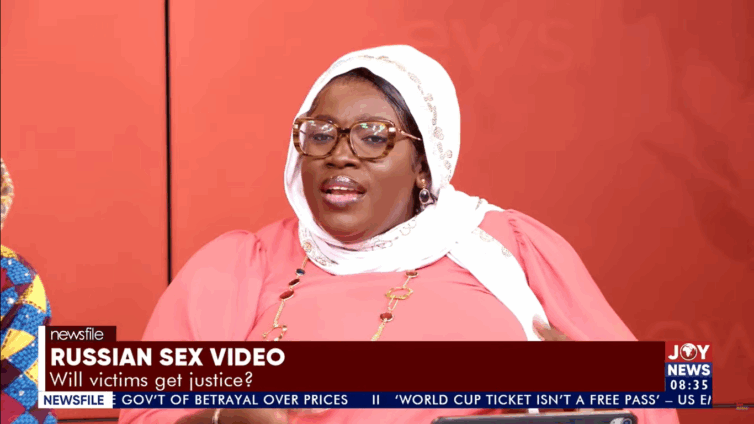
Women’s Organiser for the United Party, Hajia Gloria Amenu, has called on Ghanaians to prioritise locally produced goods and for the government to take urgent measures to safeguard women and children, particularly in light of the recent killing of eight Ghanaian citizens in a terrorist attack in neighbouring Burkina Faso.
Speaking on JoyNews' Newsfile on Saturday, February 21, Hajia Amenu highlighted the twin challenges of economic dependence on imports and regional insecurity, arguing that both issues demand immediate attention.
“The cost of production in Ghana sometimes is very, very high, and then we usually also do a lot of wastages,” she stated.
She pointed to the widespread importation of agricultural produce such as tomatoes, garden eggs, and beans from Burkina Faso, despite abundant local alternatives.
“We produce tomatoes in Ghana, but we are not used to patronising Ghana-made goods. If you go to the market, most people prefer Burkina Faso tomatoes. Not just tomatoes, we are bringing in garden eggs from Burkina Faso, we are bringing in beans, and others. Even the market women will tell you the Burkina Faso beans taste better than Ghanaian ones,” she said.
Hajia Amenu expressed concern that Ghana’s reliance on imports undermines domestic production and creates economic disadvantages for local farmers.
She also criticised the lack of preservation practices for seasonal produce, which results in significant wastage.
“Our yams come in seasons, and they go to waste, our plantains come in seasons and they go to waste. We have everything; God has blessed Mother Ghana so much, yet we frequently depend on others and make others richer than ourselves,” she lamented.
Linking the economic discussion to broader security concerns, Hajia Amenu highlighted the vulnerability of Ghanaians transporting local produce.
“Even those who are bringing in tubers of yam take the buses and label their yams and give them to the truck drivers because they are not safe. So even internally, we are failing Ghanaian women,” she said.
She framed these challenges as a wake-up call for the state to better protect its citizens, particularly women and children, both at home and abroad.
“It is a wake-up call to all of us that the government should protect Ghanaian women and children,” she insisted.
Latest Stories
-
Ablakwa urges African leaders to adopt new leadership paradigm to create opportunities for youth
2 minutes -
Photos: Mahama holds talks with Serbian President in Belgrade
11 minutes -
Local gold refining good for economy but costs must be controlled – Economist
12 minutes -
Keir Starmer announces he is standing down as MP
13 minutes -
One still missing after Grand Canyon floods kill two and prompts rescue efforts
14 minutes -
Mahama Ayariga calls for major overhaul of Ghana’s waste management system
17 minutes -
GoldBod programme contributed just 1.3% to reserves increase – Amin Adam
18 minutes -
Drive to Inspire–Africa equips UESD students with skills for future careers
19 minutes -
Diana Hamilton reveals she experiences stage fright before performances
24 minutes -
Number of ATMs declined by 0.5% to 2,272 in 2024 – BoG
24 minutes -
Look beyond government securities, GVCA tells pension funds
25 minutes -
COCOBOD settles GH¢2.3bn DDEP obligations for 2026
27 minutes -
Police arrest 6 for allegedly killing tricycle rider over failure to make sales
31 minutes -
Mahama unveils ‘Accra Reset’ blueprint for fairer global economic order
34 minutes -
Mahama calls for stronger climate finance, renewable energy investment for developing nations
35 minutes