

Audio By Carbonatix
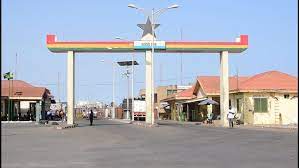
The Food and Beverages Association of Ghana (FABAG) has described the government’s decision to ban selected transit goods through the Aflao border as a lifeline for the local industry.
It urges authorities to extend the directive to all land borders nationwide.
In a statement issued on Monday, FABAG warmly commended the Government of Ghana and the Ghana Revenue Authority (GRA) for what it called a bold and timely intervention.
According to the Association, the directive banning the entry of transit goods for selected products through the Aflao border is a significant step toward safeguarding local industries, protecting government revenue and strengthening regulatory control at the nation’s borders.
FABAG noted that for several years, the influx of transit goods through land borders has posed serious challenges to legitimate businesses.
It said the situation has undermined local manufacturing, distorted market competition and disrupted the import ecosystem, particularly within the food and beverages sector, where unregulated inflows have had severe implications for local producers and formal sector operators.
While applauding the move at Aflao, FABAG cautioned that limiting enforcement to a single border could defeat the policy’s objective. It warned that goods could simply be diverted to other entry points.
The Association therefore urged government and the GRA to extend the directive to all other land borders across the country without exception.
FABAG also called for the scope of the directive to go beyond transit goods. It recommended a complete ban on the entry of the affected products through Ghana's land borders, whether for transit or direct consumption.
It argued that a partial restriction targeting only transit consignments could create loopholes that may be exploited, leading to continued smuggling, under-declaration and unfair market practices.
According to FABAG, a nationwide and comprehensive enforcement regime would protect local industries and jobs, promote fair trade and competitive neutrality, curb smuggling and illicit trade, enhance revenue mobilisation for national development and strengthen border security and regulatory oversight.
The Association stressed that Ghana’s manufacturing and formal trading sectors continue to operate under significant cost pressures, including high tariffs, taxes, logistics costs and regulatory burdens.
Allowing uncontrolled inflows of goods through porous land borders, it said, places compliant businesses at a severe disadvantage and threatens the sustainability of domestic production.
FABAG called on all relevant state agencies, including Customs, border security authorities and regulatory institutions, to collaborate to ensure strict enforcement of the directive nationwide.
It emphasised that consistency in policy implementation across all land entry points is critical to achieving the desired economic and regulatory impact.
The Association reiterated its full support for government’s efforts to sanitise the trading environment and protect the integrity of Ghana’s borders.
It also pledged to continue constructive engagement with policymakers to promote policies that support local industry growth, revenue protection and national economic resilience.
Latest Stories
-
President Mahama ends Resetting Ghana tour of Ahafo Region
22 minutes -
African negotiators seek delivery of climate commitments at COP31
23 minutes -
BoG develops AI rules for financial sector
25 minutes -
‘Big Push’: Government assures contractors of prompt payments
29 minutes -
Court fines miner for breaking into gold buying shop
39 minutes -
Tarkwa court jails labourer for three years over GH¢123,000 theft
2 hours -
GAEC must retain nuclear scientists for Ghana’s nuclear ambitions – Minister
2 hours -
Man reportedly mistaken for game and shot by hunter dead in forest
2 hours -
19-year-old mason jailed 15 years for defiling seven-year-old pupil
2 hours -
Ghana’s banking sector assets rise 20.47% to GH¢500.2bn – BoG Governor
2 hours -
22 injured as Sprinter bus overturns at Sege after tyre burst
2 hours -
UN housing expert urges Ghana to strengthen Rent Control Department amid housing affordability concerns
2 hours -
Delta-BCI partnership reaches 166,000 people with breast cancer education
3 hours -
Power restoration fault suspected in Kumasi Central Market fire
8 hours -
The 7-foot giant of Ngleshie Amanfro: Seven-foot Ghanaian Ephraim Saawa dreams of joining the national basketball team
8 hours