

Audio By Carbonatix
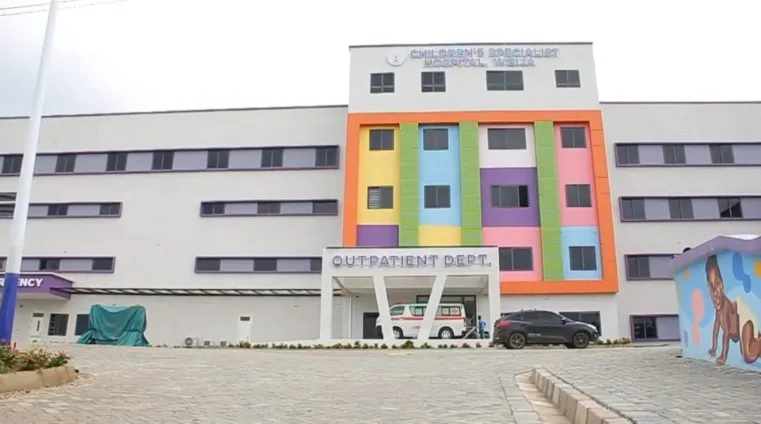
The World Bank has urged the Government of Ghana to expedite the operationalisation and opening of the Weija Paediatric Hospital, stressing that the multi-million-dollar health facility was constructed to strengthen the country’s healthcare delivery system, particularly for children.
According to the Bank, the 120-bed specialised paediatric hospital at Weija was built and equipped under the World Bank-funded COVID-19 Emergency Preparedness and Response Project at a total cost of US$10.15 million.
In a response on the status of the facility, the Bank said it remained “strongly desirous” of seeing the hospital opened to the public as soon as possible to enable Ghanaians to benefit from the investment made in the project.
On Monday, May 25, the Bank explained that although the project officially closed on December 16, 2025, after a six-month extension, a number of critical activities linked to the hospital were still outstanding at the time of closure.
“The Government constructed and equipped the 120-bed hospital under the World Bank COVID-19 Emergency Preparedness and Response Project (P173788) at a cost of US$10.15 million,” the statement noted.
It further explained that the extension period had been granted “to allow for the completion of key activities for which Government had not released IDA spending.”
Despite the extension, the Bank indicated that several components of the project remained unfinished, including the installation of some medical equipment and the implementation of selected environmental and social safety measures required under the World Bank’s Environmental and Social Framework for health facilities.
The Bank clarified that the government could still utilise undisbursed International Development Association (IDA) funds under the project to settle outstanding eligible obligations until June 16, 2025.
However, it stressed that the responsibility for completing all remaining environmental and social safeguard requirements now rests solely with the Government of Ghana.
“Government is responsible for providing its own resources to complete the outstanding environmental and social safeguard obligations under the project and to settle any obligations it has incurred for expenditures ineligible for IDA financing,” the statement said.
The World Bank further explained that beyond infrastructure completion, the facility could only become fully operational after the government deploys the required medical and administrative personnel to the hospital.
“To fully operationalise the hospital, the Government will need to complete these necessary actions and assign staff to the facility,” it stated.
The Bank reaffirmed its continued engagement with Ghanaian authorities to ensure that the facility is opened to serve the public without further delays.
The Weija Paediatric Hospital was conceived as part of Ghana’s broader efforts to strengthen emergency healthcare infrastructure during and after the COVID-19 pandemic, particularly in specialised child healthcare services.
Health sector observers say the opening of the hospital could significantly ease pressure on existing paediatric facilities, especially in the Greater Accra Region, where congestion at major referral hospitals remains a persistent challenge.
The statement also touched on procurement compliance under World Bank-financed projects, explaining that all borrowing countries are required to comply with the Bank’s procurement regulations to ensure transparency, accountability and value for money.
It noted that where procurement reviews reveal breaches of established procedures, the Bank reserves the right to declare affected contracts ineligible for IDA financing.
“Under IDA loan agreements Borrower must follow the World Bank’s Procurement Regulations aimed at ensuring transparency and value for money. Where a post procurement review finds that the Regulations have not been followed, the World Bank exercises remedies,” the statement added.
The Bank, however, indicated that such procurement reviews are not publicly disclosed, although interested parties may seek information through the appropriate national channels within the borrowing country.
The development comes amid increasing public interest in the status of the Weija hospital project, with many stakeholders calling for its immediate completion and commissioning to improve healthcare access for children and reduce pressure on existing public health institutions.
Latest Stories
-
PKO trio eye victories at Odwira Festival
2 hours -
346 Ghana Navy recruits pass out after 26 weeks of intensive training
2 hours -
Newsfile to discuss EOCO-MP arrest, drug trafficking, speech arrests and $235m water debt
3 hours -
JoyNews gets results as listeners raise GH¢40,000 to help 17-year-old student with cerebral palsy attend SHS
3 hours -
Vice President calls for stronger local pharmaceutical production to reduce medicine imports
3 hours -
The brewing tension at KNUST; Beware the Ides of October….
4 hours -
Health Ministry moves to integrate traditional medicine into mainstream healthcare
4 hours -
550 pupils in Kintampo South get educational lifeline as ‘Seeds of Hope’ reaches farming communities
5 hours -
Opoku Mensah urges Christian Council, House of Chiefs to speak up on democratic freedoms
5 hours -
Teacher unions’ strike: Minority demands immediate payment of teacher arrears, 20% deprived area allowance
5 hours -
The Accra-Kumasi Expressway: Building it right
5 hours -
Beyond gold exports: Building value and economic resilience from Ghana’s gold
5 hours -
2027 AFCONQ: Ghana under pressure as Gambia beat Somalia 2-1
5 hours -
Eastern NPP Women’s Organiser calls on AG, Police to secure bail for Salomey Baffoe
5 hours -
Poverty, illiteracy driving acceptance of vote-buying among women – Damongo Queen Mother
6 hours