

Audio By Carbonatix
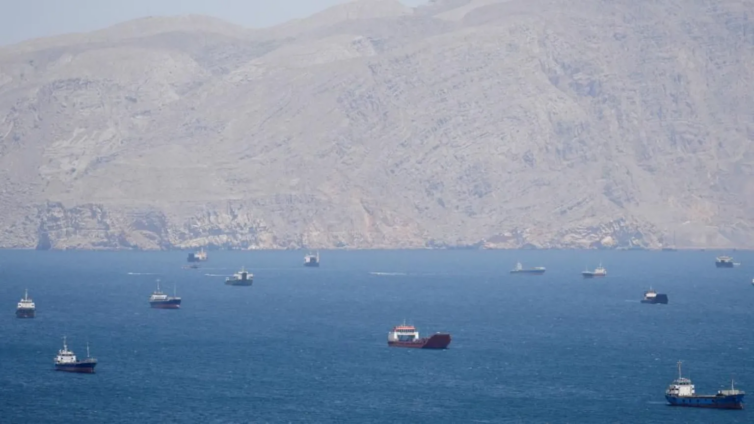
A United States Army AH-64 Apache attack helicopter went down early Tuesday near the strategic Strait of Hormuz. Its two crew members were safely rescued by an unmanned drone boat. This marks a historic first for American forces. The helicopter gunship was patrolling the regional waters off the coast of Oman. The incident occurred at approximately 3:30 a.m. local time. U.S. Central Command confirmed that the cause of the crash remains unknown. An investigation is currently underway.
The downing of the aircraft comes at a critical juncture for the Middle East. The region is still reeling after Iran and Israel exchanged fire the previous day. Those direct strikes represented the biggest blow yet to the straining ceasefire initially established in April. The two adversaries subsequently stepped away from the clash. This pause allowed oil prices to fall and markets to recover. However, the regional security environment remains precarious. Iranian state television reported Tuesday that the Israeli attacks killed at least two members of the country’s air defence units.
Historic Maritime Rescue Operation
In a milestone for American military operations, a Task Force 59 unmanned surface vessel successfully located and rescued the two soldiers. Central Command spokesperson Capt. Tim Hawkins confirmed the historic nature of the maritime recovery. He stated that both soldiers were receiving medical care.
The extraction was a coordinated joint effort in the Gulf of Oman. Central Command noted that multiple assets converged to complete the rescue within two hours of the crash. The operation included U.S. Navy and Air Force personnel. They worked alongside the Army’s 82nd Airborne Division and a special naval drone unit. In a statement published on X, Central Command reported the crew members were in stable condition.
Washington Reacts to the Crash
President Donald Trump provided early confirmation of the crew's safety. He spoke to journalists at John F. Kennedy International Airport in New York. This occurred on Monday night after he watched the NBA Finals. Trump sought to ease immediate concerns regarding casualties in the strategic waterway.
“The pilots are fine. Yeah,” Trump said. “Nobody injured. We are going to issue a report tomorrow. But the pilots are fine.”
The Apache represents a vital element of the American military framework. These assets enforce a blockade on Iranian crude oil shipments and tankers. The U.S. military has previously lost a handful of fighter jets during this conflict. It has also lost roughly 30 unmanned MQ-9 Reaper drones to hostile and friendly fire since the conflict began on Feb. 28. However, this incident marks the first Apache lost in the war.
The heavily armed aircraft are routinely deployed close to Iranian-controlled islands in the strait. They serve to deter small-boat attacks and intercept drones. This aggressive posture persists despite the memory of a tense encounter in April. In that incident, two crew members of an American F-15E Strike Eagle were shot down by Iran. They were rescued deep in hostile territory. The current deployment also follows the short-lived Project Freedom. During that operation, Central Command imagery showed Adm. Brad Cooper flying over the strait to help guide commercial ships through the blockade.
Tehran Signals Caution Amid Ceasefire Friction
Regional reactions to the downing have been carefully measured. Both sides continue to monitor the fragile ceasefire. Iranian media appeared to acknowledge the incident. The semi-official Mehr News Agency reported Tuesday that no claim of responsibility had been made by Iran. The Islamic Revolutionary Guard Corps has yet to issue an official statement on the matter.
The lack of an immediate claim of responsibility coincides with a delicate diplomatic backdrop. The war has severely disrupted the global economy since the U.S. and Israel began striking Iran on Feb. 28. It has driven up energy prices worldwide. It has also inflated the cost of basic commodities like food.
Iran has maintained a tight grip on the Strait of Hormuz since the outbreak of hostilities. One-fifth of the world’s oil supply normally crosses this conduit. In response, the United States enacted its own counter-blockade on April 13. American warships have turned away 134 vessels since that date. The Navy has also disabled seven other vessels that ignored warnings to turn back. This included a Palau-flagged oil tanker steaming through international waters on Monday.
Diplomatic Standoff and Trump's Optimisation
Despite the loss of the aircraft, President Trump expressed renewed optimism regarding backchannel negotiations. He wants to end the war and permanently reopen the shipping lanes. Speaking Tuesday about a potential deal with Iran, he told reporters that the two sides are nearing a significant diplomatic breakthrough.
“We’re in the final throes of what will be a very, very good deal that will not allow in any way, shape, or form nuclear weapons,” Trump said. “The strait will open up right away. It’ll open up immediately upon signing, which could be in two or three days.”
Trump suggested an agreement could even be finalised quickly. “In one hour, if you want to know the truth,” he asserted. He stated that he didn't “think there are any sticking points.” He reiterated his preference for a diplomatic resolution over continued military action.
“I think we’re very close to having a very, very good, strong, powerful deal,” the president said. “If we go and bomb — which we could do very easily if we want, and we spend another two or three weeks bombing — they’ll have nothing left whatsoever. But you won’t have the Strait open for months.” He added, “If we do the bombing, you know, a lot of people are going to be killed. Who wants to do that? I don’t.”
Structural Hurdles and Regional Complications
Trump has predicted an imminent deal repeatedly over the past two months since the initial ceasefire. Yet, a binding agreement has failed to materialise. Mediators led predominantly by Pakistan have spent weeks attempting to finalise terms. Still, both Washington and Tehran maintain rigid core demands.
The United States insists that Iran must relinquish its stockpile of highly enriched uranium. This material is believed to remain entombed underground following American airstrikes during the 12-day war in 2025. Iran has flatly refused this condition. Instead, Tehran demands immediate sanctions relief. It also wants the release of frozen assets before signing any final papers. The Trump administration explicitly rejects this sequence.
Highlighting this disconnect, Iranian parliament speaker Mohammad Bagher Qalibaf issued a sharp critique on Monday. He stated that Trump’s remarks “contradicted the agreed-upon sections, showing that (the U.S. is) neither seeking a ceasefire nor dialogue.”
The geopolitical equation is further complicated by intense fighting in Lebanon. Israel continues to expand its military campaign against the Iranian-backed militia Hezbollah. Reflecting the regionalised nature of the talks, Lebanon’s army chief, Gen. Rodolphe Haykal, travelled to Pakistan on Tuesday. He met with Pakistan’s army chief, Field Marshal Asim Munir. Munir remains a key intermediary in the U.S.-Iran negotiations.
Concurrently, Lebanon's domestic political fractures have widened. The Lebanese government has adopted an increasingly firm stance against Hezbollah. However, it remains incapable of disarming the powerful militia. On Tuesday, Hezbollah publicly thanked Iran for striking Israel. The group stated the attack was “in defence of our Lebanese people.” They also urged the Lebanese government to leverage the moment to deepen ties with Tehran.
Escalation on the Lebanese Front
As diplomats track the fallout from the helicopter incident in the Gulf, the southern front in Lebanon continues to deteriorate. The Israeli military issued a fresh evacuation warning Tuesday for the southern port city of Tyre. This latest directive specifically encompasses the city's Christian quarter. This area had previously been spared from destructive airstrikes.
The targeted warning follows claims made by Israel last week. The Israeli military asserted that Hezbollah members were embedding themselves within the Christian neighbourhoods. These districts had recently become a refuge for thousands of Lebanese Shiite Muslims. These civilians fled intensive Israeli bombardment along the Mediterranean coastal area over the past two weeks.
Following the initial warnings, the Lebanese regular army deployed directly to the Christian district of Tyre. This was an effort to signal that Hezbollah maintains no armed presence there. The army hoped to avert an Israeli attack. However, Avichay Adraee, the Israeli military’s Arabic-language spokesperson, signalled on Monday that an operation was imminent. He posted on X that the Israeli military “will have to act against their terrorist activities in the neighbourhood soon.”
The Fragile Interplay of Deterrence and Diplomacy
The convergence of maritime tension in the Strait of Hormuz and combat operations in Lebanon underscores a highly fragile situation. The Middle East security paradigm remains extremely volatile. Automated technology managed to prevent American casualties at sea on Tuesday. However, the broader diplomatic architecture remains deadlocked. Both sides remain at odds over deeply entrenched atomic and economic demands.
Regional facilitators continue to manage backchannel mediation. The defining variable remains whether they can reconcile Washington’s firm counter-blockade with Tehran's insistence on immediate relief. This dynamic will dictate whether the region achieves a permanent settlement or slides back into unrestricted war.
Latest Stories
-
Nkrumah Never Dies: Celebrating the visionary who awakened a continent
44 minutes -
Hassan Ayariga calls for Ghanaian ownership in strategic investment deals
45 minutes -
Black Stars: Thomas-Asante receives late call-up for September-October games
2 hours -
NPP Techiman South demands immediate release of detained Nurse Salomey Awiti Baffoe
2 hours -
‘Let’s stop the politics’ — Dafeamekpor calls for united fight against drug trafficking
2 hours -
Chief Justice Baffoe-Bonnie leads new 11-member Council for Legal Education and Training Board
2 hours -
Decades of silent diplomacy: Baba Issifu Kamara at 70
2 hours -
30% transport fare hike still on the table, talks resume Tuesday – GPRTU
2 hours -
KATH marks 70th anniversary with inter-directorate games
3 hours -
Black Stars: Godwin Attram replaces Desmond Ofei as assistant coach
3 hours -
Nkrumah never dies
4 hours -
CalBank ‘Abakade Promo’ rewards 5 customers with GH¢25,000 in first draw
4 hours -
Ecobank, Joy Business to host financial dialogue on green finance and inclusive agri-growth in Ghana
4 hours -
Nkrumah’s vision remains relevant to Ghana’s future — Mahama
4 hours -
Hitz FM announces Beach Rave for October 31
4 hours