

Audio By Carbonatix
The H5N1 strain of bird flu has for the first time been found in Australia, the country's agriculture ministry confirmed. It means the highly contagious variant has now reached every continent.
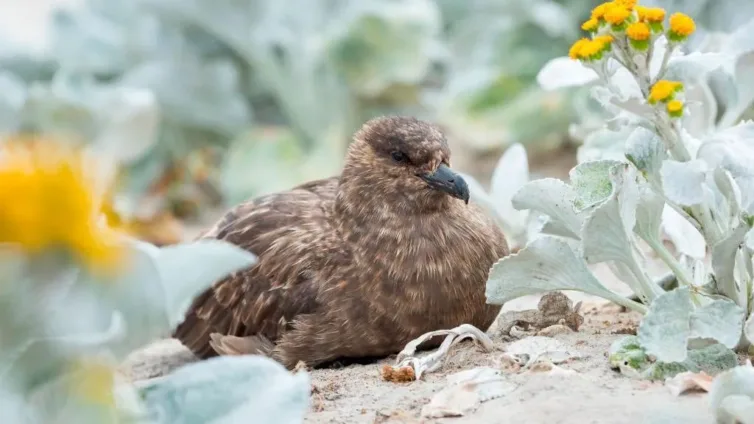
The disease was found in a migratory seabird, a brown skua, in remote Western Australia, Agriculture Minister Julie Collins said on Saturday.
The bird was found on a beach at the Cape Le Grand National Park near the town of Esperance, about 700km (434 mi) south-east of Perth, according to local media.
Australia was previously the only continent where the H5N1 bird flu strain had not been found.
The strain can spread quickly among poultry and wild bird populations. Human cases tied to the disease remain uncommon.
"We all knew we couldn't be bird flu-free forever," Collins told a press conference.
Collins added that there was a second suspected case of bird flu - a southern petrel that was found exhausted on an Esperance beach, though she added that there was no "evidence of mass mortalities at this time".
Threatened Species Commissioner Fiona Fraser said authorities would know "within a few days" if the virus was present in any other animal populations in Australia, according to a report by the national broadcaster, the ABC.
The report also quoted the country's Chief Veterinary Officer Beth Cookson who said authorities had been "preparing for this event for a long time" and that the committee for emergency animal disease had convened on Saturday.
The H5N1 strain of bird flu was detected on the remote Australian territories of Heard and McDonald Islands in October last year - located in the southern Indian Ocean.
A study released this week estimated that around 13,000 baby seals from a group of 17,000 on Heard Island were killed by the H5N1 strain of bird flu since last August, more than 75% of the entire group. They also found higher than expected deaths in penguin populations.
Scientists believe bird flu was likely introduced to the islands last August from migrating birds from the French-owned Crozet Islands, about 1,800 km away.
Bird flu is a disease caused by a virus that infects birds and sometimes other animals, such as foxes, seals and otters.
The major strain - circulating among wild birds worldwide - is a type of the virus known as H5N1. It emerged in China in the late 1990s.
Bird migration has led to outbreaks in domestic and wild birds- and in very rare cases also infected humans, usually from contact with sick animals.
Latest Stories
-
The Mid-Block Trap: Why Michael Carrick can’t deliver Manchester United’s modern dynasty
19 minutes -
NSMQ 2026: St. John’s Grammar crushes St. Mary’s Sem., Zion College to book one-eighth spot
20 minutes -
GRIDCo announces power interruptions in parts of Greater Accra for tower repairs
22 minutes -
NSMQ 2026: West Africa SHS powers past Oda SHS, Mankessim SHTS to book one-eighth spot on 80th anniversary
40 minutes -
Patrons defy rains at JoyNews-Republic Bank Habitat Fair Day 2
1 hour -
Volta Council of State member engages US investor over investment opportunities in the region
1 hour -
Ghana lacks resources to immediately fix outage-causing infrastructure – Nsiah
1 hour -
Emergency GRIDCo repairs to cause power interruption across parts of Accra on Sunday
1 hour -
Rescuers dig through Ukraine mall wreckage as Zelensky condemns ‘despicable’ Russian strike
2 hours -
Galamsey: Akufo-Addo’s gov’t tried and failed, NDC gov’t is not trying – Kofi Bentil
2 hours -
NSMQ 2026: Adiembra SHS outwits T.I. Amass in riddles to secure automatic one-eighth spot
2 hours -
Galamsey fight has failed; water quality shows we’re retrogressing – Senyo Hosi
2 hours -
NSMQ 2026: ‘Wey Gey Hey’ shrugs off SIMMS SHS, Nkwatia Presby to secure one-eighth spot
3 hours -
Sammy Gyamfi accepts Vanderpuye’s apology, urges NDC unity
3 hours -
Man assaults over 90-year-old aunt over witchcraft allegations in Navrongo
3 hours