


Audio By Carbonatix
Christmas is fast approaching and the usual feeling of merry making is gradually gathering momentum. Pretty soon people will be preparing their shopping lists covering a wide array of items, and certainly food and drinks will feature as top priorities.
The Yuletide is characterized by a number of social gatherings which come with lots of eating and drinking. Some of the food may be home-made (i.e. prepared by members of a household for their own use or for visiting friends and relatives), or provided by a contracted caterer or simply one served in eateries (Restaurants, Food Joints etc.).
Irrespective of the source of the food, the most important issue of health concern to the consumer should be the safety of what is eaten. Food safety should be of paramount interest to all; food handlers and patrons alike.
Food safety is best assured if all stages along the supply route till final consumption are carefully guarded to prevent potential contaminants, from getting into the food. These contaminants could be physical, chemical or biological in nature.
The safety of the food places huge responsibilities on all players along the food supply route: farmers, transporters of food, distributors, retailers and caterers. The food regulator also plays a key role in ensuring that adequate measures are in place and are monitored to promote food safety.
KEY No. 1 - KEEP CLEAN
For ease of application of the thoughts shared here, this article focuses on what the food handler must do to promote food safety. We wish to dwell on the principles of the Five Keys to Safer Food as propounded by the World Health Organization (WHO) to elucidate these thoughts.

HOW
- Wash your hands before handling food and often during food preparation
- Wash your hands after visiting the toilet
- Wash and sanitize all surfaces and equipment used for food preparation
- Protect kitchen areas and food from pests and other animals
WHY THE NEED TO KEEP CLEAN?
While most microorganisms do not cause diseases, dangerous microorganisms are widely found in soil, water, on animals and on people. These microorganisms are carried on hands, wiping cloths and utensils, especially cutting boards and the slightest contact can transfer them to food and cause food-borne disease
KEY No. 2 - SEPERATE RAW AND COOKED FOOD
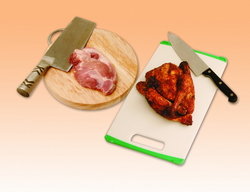
HOW
- Separate raw meat, poultry and seafood from other foods
- Use separate equipment and utensils such as knives and cutting boards for handling raw foods
- Store food in containers to avoid contact between raw and prepared foods
WHY THE NEED TO SEPARATE RAW AND COOKED FOODS?
Raw foods, especially meat, poultry and seafood, and their juices, may contain dangerous microorganisms, which may be transferred onto other foods during food preparation and storage
KEY No. 3 - COOK FOOD THOROUGHLY
HOW
- Cook food thoroughly, especially meat, poultry, eggs and seafood
- Bring foods like soups and stews to boiling to make sure they have reached over 700C. For foods such as meat and poultry, make sure that their juices are clear and not pinkish.
- Reheat cooked/leftover food thoroughly before eating
WHY THE NEED TO COOK FOOD THOROUGHLY?
Proper cooking kills almost all dangerous microorganisms. Studies have shown that cooking food to a temperature of 700C or more can help ensure it is safe for consumption. Foods that require special attention include minced meat, rolled roasts, large joints of meat and whole poultry
KEY No. 4 - KEEP FOOD AT SAFE TEMPERATURES
HOW
- Do not leave cooked food at room temperature for more than 2 hours (Room temperature, which is 250C is within the temperature danger zone and ideal for microorganisms to grow)
- Keep hot foods hot (e.g. boiled rice, porridge etc. above 600C) and cold foods cold (e.g. salads below 50C)
- Refrigerate promptly all cooked and perishable food (preferably below 50C)
- Do not store food too long even in the refrigerator
- Do not thaw frozen food at room temperature
WHY THE NEED TO KEEP FOOD AT SAFE TEMEPRATURES?
Microorganisms can multiply very quickly if food is stored at room temperature. By holding food below 50C or above 600C, the growth of most dangerous microorganisms is slowed down or stopped.
KEY No. 5 - USE SAFE WATER AND RAW FOOD INGREDIENTS

HOW
- Always use safe (potable) water for cooking. Boil it if necessary to make it safe
- Use only potable water in making ice
- Select fresh and wholesome fruits and vegetables for your cooking
- Use pasteurized milk. It is safer than unpasteurized milk.
- Wash fruits and vegetables properly using potable water. Sanitize them to make them more safe. Remember these may be eaten raw, uncooked.
WHY THE NEED TO USE SAFE WATER AND RAW FOOD INGREDIENTS?
Safe (potable) water is free of microorganisms that can cause food borne illness.
Fresh food ingredients such as fruits and vegetables may be carrying large numbers of dangerous microorganisms. Selecting safe food ingredients or simple practices such as washing and sanitizing them reduce the microorganisms to safe levels
Latest Stories
-
Muzic Mensah selected for Boomplay’s inaugural ‘NEXT WAVE’ Programme
3 hours -
Prime Insight to tackle legal vacation controversy and $1million AKSA bribery case
3 hours -
Ghanaian evacuee from South Africa dies on arrival in Accra
4 hours -
POS Foundation raises alarm over student cohabitation, sexual harassment on university campuses
5 hours -
Nandom NPP primary heats up as four candidates enter 2028 race
5 hours -
Mangione admits killing healthcare CEO and pleads guilty to federal charges
5 hours -
The Invite to The Odyssey: 12 of the best films of 2026 so far
5 hours -
Ayra Starr on her secret relationship and teasing Stevie Wonder
6 hours -
NPP Ashanti holds vigil in support of Wontumi as lawyers appeal conviction
6 hours -
TCDA targets higher crop yields as farmers receive inputs
6 hours -
Kofi Amoako Attah inducted into 11th Corporate Ghana Hall of Fame
6 hours -
Newsfile to discuss AKSA energy deal, legal vacation and GoldBod losses
6 hours -
Gushegu MCE says slain Yiidana was targeted as police investigate killing of chief and son
7 hours -
President Mahama reiterates commitment to link regional capitals with good roads
7 hours -
Ex-Cambridge professor at centre of plagiarism row found dead
7 hours