


Audio By Carbonatix
The National Premix Fuel Secretariat has issued a firm notice to landing beach committees that operated between 2017 and 2024 to render full accounts of how premix fuel proceeds, particularly the 53 per cent community development fund, were managed during that period.
Administrator of the Secretariat, Ebow Mensah, said the accountability drive cannot be forward-looking only, stressing that unresolved questions about past funds continue to undermine trust in the premix system.
“For committees that operated between 2017 and 2024 and have not rendered accounts to their communities or explained what projects the community funds were used for, we will deal with them,” Mr Mensah said during engagements under the Premix Accountability Series.
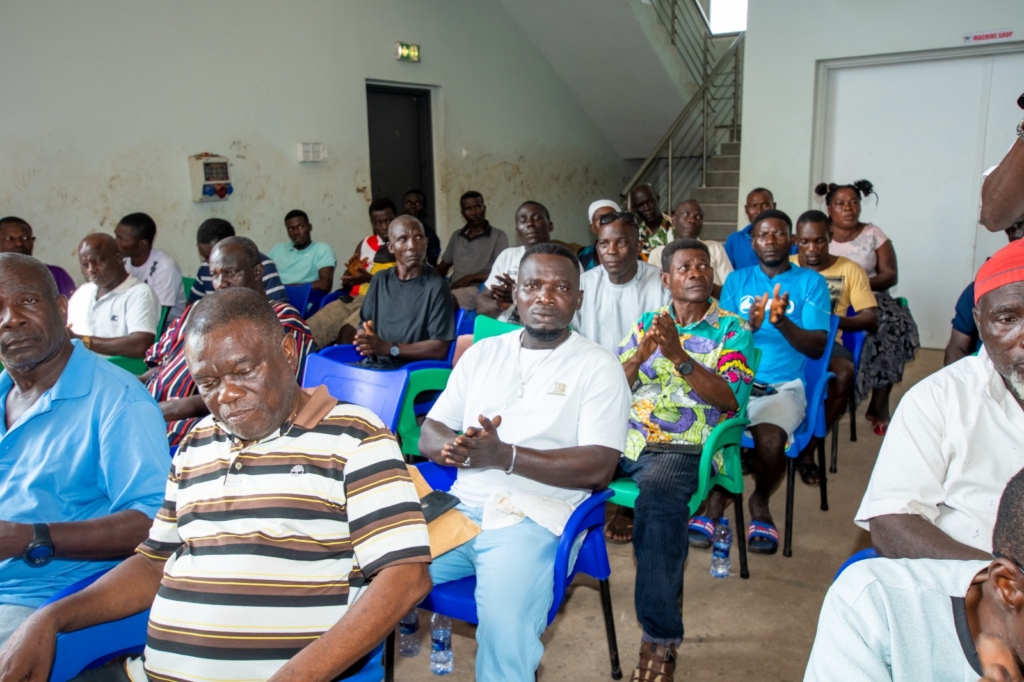
He explained that premix margins are public funds created through state subsidy and governed by L.I. 2233, which clearly allocates more than half of those proceeds to fishing communities for development purposes.
“These are not discretionary funds,” he said. “They belong to the community, and communities have the right to know how much accrued to them and what it was used for.”
Mr. Mensah noted that the absence of historical accounting has fuelled persistent disputes at some landing beaches, with fisherfolk often unsure whether projects attributed to premix funds were actually financed from the community share.

According to him, addressing the 2017–2024 period is critical to restoring confidence in the system.
“You cannot build trust by ignoring the past,” he said. “If people do not understand what happened to earlier funds, it becomes difficult to convince them that the system is now working in their interest.”
The Secretariat said it will work closely with metropolitan and municipal chief executives, who are mandated by law to oversee landing beach committees, to ensure that past records are retrieved, reviewed, and presented to communities where possible.
Chief fishermen, who chair landing beach committees in most communities, are also expected to play a central role in demanding explanations and mobilising community participation.
“Fortunately, chief fishermen are relatively stable in their positions,” Mr Mensah said. “We intend to empower them to insist on accountability and ensure that premix funds serve the purpose for which they were created.”
He added that the current accountability series, which has so far covered only three communities, is intended to test the framework that will later be applied nationwide.
“Come early 2026, this will be done across the country,” he said. “All committees will be expected to render accounts, discuss the community development funds, and confirm that the monies have been lodged in accounts established by law.”
Mr Mensah stressed that confronting the accountability gap from 2017 to 2024 is essential to protecting the long-term credibility of the premix subsidy.
“If we do not account for the past, the future of the premix system remains at risk,” he said.
For many fisherfolk, this was the first time they had seen figures, bank statements, and explanations laid out openly before the community.
“I have been fishing here for more than 20 years, but this is the first time I am seeing them show us the books like this,” said Kwame Essel, a canoe owner at the Sekondi landing beach.
“When they mentioned the amounts and showed where the money is kept, it gave us some confidence.”
Under L.I. 2233, 53 percent of premix fuel margins is reserved for community development. Yet in many communities, fisherfolk say they only hear about the fund in passing, without knowing how much has accrued or what it has been used for.
At New Takoradi, fishmonger Esi Armah said the accounting session answered long-standing questions.
“Before now, when we asked about the premix money, people would say, ‘It has been used.’ Used for what? We didn’t know,” she said. “This time, they told us how much came in and where the money is. That is what we want.”
Some fisherfolk said the transparency reduced tension almost immediately.
“When people don’t know, they suspect everything,” said Yaw Mensah, a crew member at Abuesi. “Today, when they showed the bank statement, the shouting reduced. Even those who were angry became calm.”
The figures also surprised many. At Sekondi, the committee disclosed that about GH¢126,000 had been raised for community development over the past 10 months.
“I didn’t know the money could reach that level,” said Mary Koomson, who sells smoked fish near the landing beach. “If we manage it well, we can do something meaningful for the whole place.”
For others, the exercise raised new expectations. Fisherfolk said rendering accounts should not end with figures on paper but lead to visible projects.
“We have seen the money now,” said canoe owner Kofi Blay. “The next thing is to sit down as a community and agree on what to use it for. If we see toilets, lights, or repairs at the beach, everyone will support the system.”
There was also a strong call for consistency.
“If they do this only once, it will not help,” said Abdul Rahman, a fisherman at New Takoradi. “They should come every quarter or every year and tell us the same thing. That is how trust will stay.”
Officials from the National Premix Fuel Secretariat said the reactions from fisherfolk reinforced the purpose of the Premix Accountability Series.
Administrator Ebow Mensah noted that transparency changes attitudes on the ground.
“When communities can see the figures and ask questions, the system becomes stronger,” he said. “That is how premix moves from suspicion to shared responsibility.”
As the sun set over the landing beaches, fisherfolk lingered in small groups, still discussing the figures, the bank accounts, and what projects might come next.
For many, the numbers mattered. But what mattered more was the feeling that, for once, the premix story was being told in the open.
“As long as they keep doing this,” Kwame Essel said quietly, “we will also protect the system. Because now, it feels like it truly belongs to us.”
Latest Stories
-
Young woman found dead at Kasoa Peace Town
27 minutes -
Livestream: The Law examines lawful arrest in Ghana
52 minutes -
Mahama urges African governments to treat healthcare as an investment, not budget cost
1 hour -
Bawumia congratulates John Boadu and new NPP executives, pledges support ahead of 2028
1 hour -
‘No talent should be left out’ – Bawumia pledges inclusive NPP campaign for 2028
2 hours -
Prof. Mike Oquaye recounts how he blocked Special Prosecutor’s attempt to arrest Bawku Central MP
2 hours -
Make health sovereignty a priority for Africa – Mahama
2 hours -
Dorimon Naa, Wa West DCE lead massive clean-up exercise; threaten sanctions against recalcitrant residents
2 hours -
Photos from Adom FM Y2K Jam
2 hours -
Praye Tiatia steals the show at Adom FM Y2K Jam [Watch]
3 hours -
Boakye Agyarko congratulates John Boadu, pledges support for NPP leadership
3 hours -
Antwi HiMight thrills fans with Antwi ne Antwi hits at Adom FM’s Y2K Jam [Video]
3 hours -
Amb. Edward Boateng congratulates Boadu, Kodua on election wins
3 hours -
John Boadu pledges to rebuild NPP from grassroots and restore ‘winning machinery’
3 hours -
Ashaiman Assembly deploys monitoring system to curb dumping in storm drain
4 hours