

Audio By Carbonatix
A Cuban man deported by the United States to the African nation of Eswatini is on a hunger strike at a maximum-security prison, having been held there for more than three months without charge or access to legal counsel under the Trump administration’s third-country program, his U.S.-based lawyer said Wednesday.
Roberto Mosquera del Peral was one of five men sent to the small kingdom in southern Africa in mid-July as part of the expanding U.S. deportation program to Africa, which has been criticised by rights groups and lawyers, who say deportees are being denied due process and exposed to rights abuses.
Mosquera’s lawyer, Alma David, said in a statement sent to The Associated Press that he had been on a hunger strike for a week and there were serious concerns over his health.
“My client is arbitrarily detained, and now his life is on the line,” said David. “I urge the Eswatini Correctional Services to provide Mr. Mosquera’s family and me with an immediate update on his condition and to ensure that he is receiving adequate medical attention. I demand that Mr. Mosquera be permitted to meet with his lawyer in Eswatini.”
Mosquera was among a group of five men from Cuba, Jamaica, Laos, Vietnam and Yemen deported to Eswatini, an absolute monarchy ruled by a king who is accused of clamping down on human rights. The Jamaican man was repatriated to his home country last month, but the others have been kept at the prison for more than three months while an Eswatini-based lawyer has launched a case against the government demanding they be given access to legal counsel.
Civic groups in Eswatini have also taken authorities to court to challenge the legality of holding foreign nationals in prison without charge. Eswatini said the men will be repatriated but have given no timeframe for any other repatriations.
U.S. authorities said they want to deport Kilmar Abrego Garcia to Eswatini under the same program.
The men sent to Eswatini were criminals convicted of serious offenses, including murder and rape, and were in the U.S. illegally, the U.S. Department of Homeland Security said. It said Mosquera had been convicted of murder and other charges and was a gang member.
The men’s lawyers said they had all completed their criminal sentences in the U.S. but are now being held illegally in Eswatini, where they have not been charged with any offense.
The Department of Homeland Security has cast the third-country deportation program as a means to remove “illegal aliens” from American soil as part of President Donald Trump’s immigration crackdown, saying they have a choice to self-deport or be sent to a country like Eswatini.
The Trump administration has sent deportees to at least three other African nations since July under largely secretive agreements: South Sudan, Rwanda and Ghana. It also has a deportation agreement with Uganda, although no deportations there have been announced.
International rights group Human Rights Watch said it has seen documents that show that the U.S. is paying African nations millions of dollars to accept deportees. It said the U.S. agreed to pay Eswatini $5.1 million to take up to 160 deportees and Rwanda $7.5 million to take up to 250 deportees.
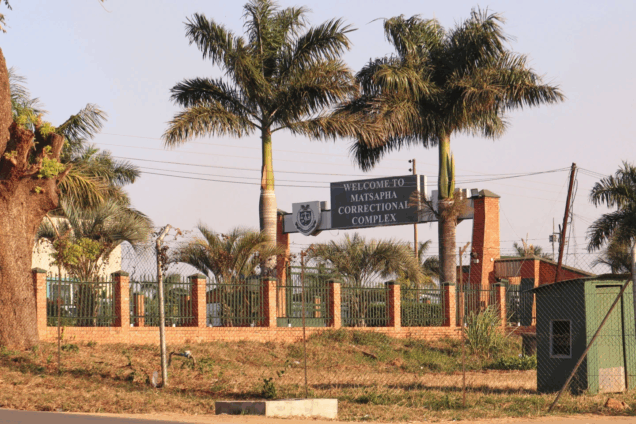
Another 10 deportees were sent to Eswatini this month and are believed to be held at the same Matsapha Correctional Complex prison outside the administrative capital, Mbabane. Lawyers said those men are from Vietnam, Cambodia, the Philippines, Cuba, Chad, Ethiopia and Congo.
Lawyers say the four men who arrived in Eswatini on a deportation flight in July have not been allowed to meet with an Eswatini lawyer working there as their legal counsel, and phone calls to their U.S.-based lawyers are monitored by prison guards. They have expressed concern that they know little about the conditions in which their clients are being held.
“I demand that Mr. Mosquera be permitted to meet with his lawyer in Eswatini,” David said in her statement.
“The fact that my client has been driven to such drastic action highlights that he and the other 13 men must be released from prison. The governments of the United States and Eswatini must take responsibility for the real human consequences of their deal.”
Latest Stories
-
I have supported highway authority financially to fix roads in my constituency – A Plus
16 minutes -
US, Iran fail to reach peace agreement after marathon talks in Pakistan
40 minutes -
ECG kicks off Phase Two of transformer upgrades at Lashibi; brief outages expected
1 hour -
Port crises loom as 11,000 drivers threaten four-day strike
2 hours -
A source of excellence across generations – Vice President Opoku-Agyemang lauds Mfantsipim
3 hours -
(Photos) Mfantsipim School launches historic 150th anniversary
3 hours -
Knights and Ladies of Marshall group backs Catholic Bishops’ stance on anti-LGBTQ+
4 hours -
Bright Simons writes: All the Filla in the Ibrahim Mahama/E&P – Gold Fields Saga
5 hours -
Monetise Idiocy In Ghana
5 hours -
The Ghanaian prophet and the mysterious death of his scottish wife Charmain Speirs
6 hours -
Nearly 400 sentenced in Nigeria for links to militant Islamists
6 hours -
Ghana’s recovery supported by gold strength despite global oil price pressures – Standard Bank Research
6 hours -
Methodist Church hails Mfantsipim@150; calls for “fresh consecration” to excellence
6 hours -
‘Excellence is our inheritance’ – Nana Sam Brew-Butler hails Mfantsipim’s 150-year reign in leadership
6 hours -
Kwaku Azar writes: A-G vs OSP
7 hours