

Audio By Carbonatix
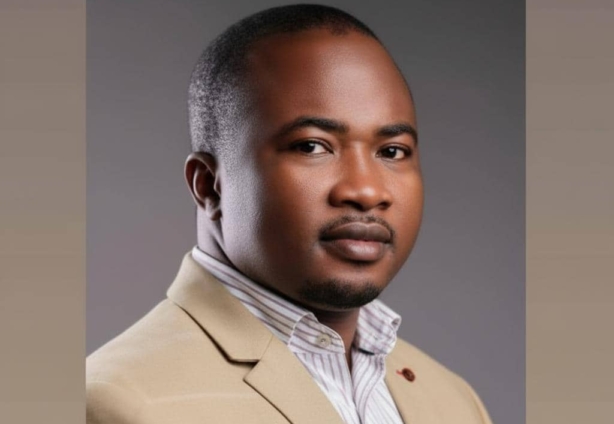
Q1: Who is Okasha Salia? Can you share a bit about your background and journey to becoming Managing Director of BAT Ghana?
I am first and foremost, a proud Ghanaian. It is therefore a privilege to return home in this role, to drive BAT’s transformation agenda in Ghana. My professional journey with BAT spans over 18 years across several markets in West and Central Africa. I started as a management trainee, worked across Commercial and Corporate Affairs Functions, and have had the opportunity to lead multi-country operations where I gained firsthand experience of both the opportunities and challenges that businesses face across our region.
Being appointed Managing Director of BAT Ghana is not just a personal milestone; it is a moment that demonstrates the Company’s belief in local talent. For me, it is about using that experience to reconnect BAT with Ghana’s stakeholders, ensuring that we continue to play a meaningful role in the country’s economy and society.
Q2: What does your appointment mean for BAT Ghana and the wider market?
My appointment signals a new chapter for BAT Ghana, more so bringing a seasoned local perspective to the organisation to accelerate the Company’s transformation agenda. While we closed our factory in the country in 2006 on the back of a business model change, we continued to invest in Ghana in various ways, including through trade investments, partnerships with retailers and distributors, which had continued to sustain livelihoods, as well as meeting the needs of our consumers through high-quality and innovative products. Over the years, we have paid consistently paid all our taxes and operated within the laws, thereby contributing to the country’s socio-economic development.
Being the first indigenous Ghanaian appointed as Managing Director in the last two decades also makes this moment particularly significant, as it reflects BAT’s commitment to empowering local leadership. This moment is about rebuilding and deepening engagement with our stakeholders and communities and ensuring BAT Ghana is seen not only as a business, but also as a partner in national development. For the wider West and Central Africa markets, it also represents the growing importance of cross-border synergy through local leadership— leaders who can bridge the company’s global direction with the realities of our local context.
Q3: How would you describe BAT Ghana today and your vision for the company under your leadership?
Today, BAT Ghana is a resilient business with deep roots in the country’s economy through our value chain of retailers, distributors, and partners. Under my leadership, While BAT has a rich heritage in Ghana spanning over 70years, we are transforming into a business that has sustainability at the front and centre of everything we do. This is anchored on BAT Group’s ambition to reduce the health impact of its business, enabled by a strategic sustainability agenda focused on five focus areas: tobacco harm reduction, Climate, Nature, circularity and Communities.
On the back of this, I want BAT Ghana to be known for innovation, quality and Talent leadership, as well as doing the right thing while also being a strong supporter of national development priorities. To do this, it is important that we proactively and transparently contribute to national dialogue on various pertinent matters, including sustainable policymaking. In essence, my focus is on strengthening trust and ensuring that our contribution to Ghana extends beyond commerce, to long-term social-economic impact.
Q4: BAT has been undergoing a transformational journey globally. What priorities underpin this, and what does this mean for Ghana and the West & Central Africa markets?
BAT’s global transformation journey is anchored on its purpose to create A Better TomorrowTM by building A Smokeless World. This is not just transitioning into a smokeless world, but evolving into a multi-category business centred on providing adult consumers with reduced-risk alternatives.
In the immediate to medium term for Ghana and the wider West & Central Africa markets, this transformation translates into a sharper focus on sustainability. This will be enabled by a progressive, consultative and evidence-based fiscal environment, for which we transparently engage with policymakers and contribute to the process in line with our civic duties.
Sustainable and predictable regulation is critical here as businesses, including ours, can only plan, invest, and grow with confidence if the fiscal and regulatory frameworks are stable, transparent, and forward-looking.
In the same breath, the key to enabling fiscal policy is a focus on combating illicit trade in cigarettes. This is an area to watch, as we see that illegally tax-evaded products are creeping into the Ghanaian market and threatening legal enterprise and legitimate livelihoods.
Illicit trade deprives the government of much-needed revenue and undermines national development goals. A united, multi-stakeholder effort to tackle this challenge will safeguard jobs, protect consumers, and strengthen Ghana’s fiscal stability.
On the other side of this is our commitment to deliver with integrity and ensure that we operate our business in compliance with applicable local laws. In addition, we are embedding sustainability in practical ways — through waste reduction, energy-efficient operations, and responsible trade practices that align with Ghana’s development priorities.
Q5: Beyond transformation, how is BAT Ghana contributing to the economy and supporting national development priorities?
At British American Tobacco Ghana, our commitment to national development goes far beyond the transformation of our business. We are proud to be a longstanding contributor to Ghana’s economy through excise duties, corporate taxes, and other levies and a responsible corporate citizen aligned with the country’s development priorities. We are embedded in a broad value chain that supports retailers, distributors, and service providers, whose livelihoods are tied to our business in Ghana and across the wider West & Central Africa region.
As a Ghanaian leading BAT Ghana, one of my personal priorities is people, specifically, building a legacy of local leaders. At BAT Ghana, we are deliberate about creating pathways for Ghanaians to grow and succeed in their careers, through various programmes such as the graduate trainee programme, as well as a consistent participant of the National Service Personnel program,m e providing world-class training and mentorship. We also have in place leadership development initiatives and mentorship platforms that prepare the next generation for meaningful roles in the wider economy.
Q6: Looking ahead, what can stakeholders and Ghanaians expect from BAT Ghana under your leadership?
Looking ahead, our focus will be on strengthening collaboration with our stakeholders and transparent engagement with regulators to support Ghana’s development priorities. This includes advocating for sustainable, predictable regulations that create a level playing field for legitimate businesses.
We recognise the challenges that issues such as illicit trade pose to the economy, and will support a multi-stakeholder approach to tackling this issue, as it requires robust efforts which will help safeguard legitimate industry and government revenues as well as protect legitimate businesses. Illicit trade is not just a business challenge; it is a national challenge that robs Ghana of critical resources needed for its economic recovery and growth. We are keen to play our part, within the wider business community, in helping the government realise its turnaround strategy by ensuring that legal, tax-paying enterprises thrive.
More broadly, stakeholders can expect BAT Ghana to play a leading role as a trusted partner, contributing to socio-economic development in various ways, such as job creation and driving sustainability.
For us, these efforts go beyond defending our industry; they are about aligning with Ghana’s broader economic recovery plan. BAT Ghana is positioning itself as a responsible partner in building a more resilient and sustainable economy.
Latest Stories
-
Dome-Kwabenya MP hands over library to boost learning at community SHS
13 minutes -
When the School Bell Rings for Violence: A National Wake-Up Call
29 minutes -
Who has ever heard of the Department of Community Development?
36 minutes -
Debt, dignity and the cocoa farmer: Separating political noise from structural truth in Ghana’s cocoa crisis
45 minutes -
NDC and NPP are parties of the elites – Yaw Nsarkoh laments political drift
58 minutes -
Talking 2028 in 2026 – Yaw Nsarkoh blasts NDC and NPP ‘party of the elites’ politics
1 hour -
Justice is not for lawyers alone – Yaw Nsarkoh demands broader national conversation
2 hours -
‘The long term is where we will live’ – Yaw Nsarkoh urges future-focused leadership
2 hours -
What is the UK’s new travel system and how are dual nationals affected?
2 hours -
I was rejected at some shows because I sing in Yoruba – Asake
3 hours -
[Video] Popular Nigerian actor Okemesi is dead
3 hours -
Asake emerges as most-streamed artist of all time on Spotify Nigeria
3 hours -
I love you with the love of God – Tonto Dikeh tells ex husband, Churchill
3 hours -
Tell the story properly – Yaw Nsarkoh calls for identity, solidarity over guilt
3 hours -
Don’t turn reparations into escapism – Yaw Nsarkoh warns Africa
4 hours