

Audio By Carbonatix
The Majority Leader, Mahama Ayariga, has cautioned that dissolving the Office of the Special Prosecutor (OSP) will not prevent the prosecution of implicated former government officials.
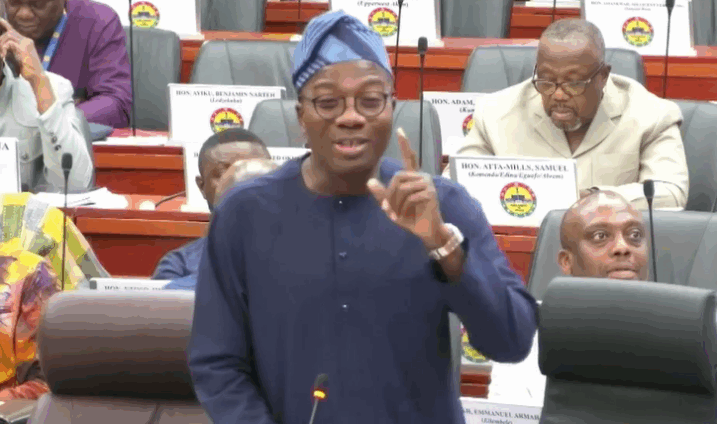
Addressing Parliament on Thursday, December 4, during discussions on the arrest and detention of private legal practitioner Martin Kpebu by the OSP, he stressed that accountability processes will continue regardless of whether the office is abolished.
“Mr Speaker, let me sound a warning that abolishing it will not let off the hook those who we are considering prosecuting for violations of the law when it comes to corruption,” he said.
“I can assure you that abolishing the Office of Special Prosecutor will not let off anybody who is found culpable.”
He noted that the call to scrap the OSP should not be misinterpreted as an attempt to protect officials who may face prosecution.
“People should not see the call for the abolition of the OSP as an indication that those who are going to be held accountable will be let off the hook. Indeed, I will ensure that the process is even expedited,” he added.
Mr Ayariga reiterated his firm position that the OSP has outlived its usefulness and should be dissolved, whether through a private member’s bill, as previously suggested by former Speaker Prof. Mike Oquaye, or by an executive-led amendment.
According to him, the establishment of the OSP was a “futile constitutional experiment” rooted in the wrong assumption that a politically appointed Attorney General cannot effectively fight corruption.
“Is the OSP coming from space? Who is nominating him? The same political process is going to generate the occupant,” he argued.
“You will not be freed of that political pressure.”
He maintained that genuine anti-corruption success depends on strong political leadership, not the proliferation of new institutions with “fanciful names” and big budgets.
“This government has been in office for about 11 months now. We haven’t reported a single scandal because of the political commitment to ensure accountability,” the Majority Leader said.
“Political corruption is a function of political leadership. If political leadership is determined not to be corrupt, they will not be corrupt.”
The Majority Leader insisted that the resources allocated to the OSP should instead be channelled to the Attorney General’s office, which is constitutionally mandated to prosecute criminal cases.
“The money that we are giving to the Office of Special Prosecutor, let’s resource the Attorney General’s office, and I’m sure this particular Attorney General will produce the results we expect of him,” he added.
Latest Stories
-
NPP criticism of anti-LGBTQ Bill ‘nothing more than political posturing’ — Kwakye Ofosu
3 minutes -
Joy FM was birthed over a bowl of fufu’ – Tommy Annan-Forson shares interesting story
9 minutes -
World Athletics to introduce standalone World Marathon Championships from 2030
14 minutes -
Africa’s voice in global journalism grows as funding, AI and misinformation shape newsrooms
16 minutes -
First Atlantic Bank holds Annual General Meeting, reports strong growth and bold 2026 outlook
18 minutes -
Ghanaian-founded fintech WeWire secures Canadian PSP license to bridge African, global payments
21 minutes -
Uganda confirms 2027 AFCON dates
29 minutes -
40 convicted in Northern Region crime crackdown
29 minutes -
‘We’re days away from parts of the world experiencing actual shortages:’ Eric Nuttall on energy
39 minutes -
‘I’m Obroni in every country’ – Coco Blasian on music, survival and making Accra home
40 minutes -
IMANI wants NIC to probe possible conflicts of interest in reinsurance arrangements
52 minutes -
First Atlantic Bank strengthens balance sheet as net interest income surges 67%
56 minutes -
Choplife Gaming donates to Korle Bu Radiotherapy unit for Women’s Week 2026
58 minutes -
Would President Mahama have reduced cocoa prices if this were an election year ? – Annoh Dompreh asks
1 hour -
Passion, not survival, should drive career choice – Dr Kofi Annan
1 hour